I meet Thorsten for the first time in the homeless centre: a large room, a long window front on the left, a coffee dispenser and cups on a table at one end of the room. There are neat rows of chairs, each with a table in front of them. Not all the seats are taken. I tell the people present about the project. Some people listen to me, a few are busy with other things, talking or dozing. Thorsten looks over at me and nods. I go to him and ask if he is interested in participating. He smiles and says he would find it interesting to join.

A few weeks later, I have an appointment with him for the interview and meet him here again. As always, he is wearing his sunglasses with dark, round lenses – he suffers from a sensitivity to light, as he tells me later, and does not take them off for this reason – and not for lack of politeness. As he looks up from his laptop, which is in front of him, I ask him if we should go to a nearby café for our conversation. He nods, turns to the young man behind him and asks him if he can watch his stuff while he’s gone.
As we walk to the café, Thorsten talks quickly and a lot: who he is, what has happened in the last few years, what has led to the situation he is in now. After I have ordered two coffees and sat down with him in the sun again, I take out my recorder and ask him if he can briefly summarise again what he has just told me. „Just very briefly about my professional career: I’ve done everything – so much already that it’s hard to get it in order. So I’m a trained stockbroker, investment banker, I worked in England for eight years. Then I came back to Germany and worked here, among other things, as a lecturer in adult education, namely German studies. You can definitely call that a personal interest of mine. In addition, I built up a nursing agency that still exists here in Essen, palliative nursing service, which was also very dear to me, with over 50 employees. My ex-wife continues to run it. But there is no contact with her. After the divorce, my daughter decided to side with my wife – I don’t blame her – but unfortunately contact has broken off.“ He also talks about his parents, whom he and his then wife took in and cared for at home, as both were seriously ill: Parkinson’s and Alzheimer’s. Both died before his separation. „That was actually an eventful time, but relatively bad.“ After the divorce, he goes to Austria to live with an acquaintance. They know each other through work in an advertising agency, she is in arts and crafts. „Then after some time – after almost three years – the private part of it had ended. We had also finished what we wanted to do together professionally and then I came back and ended up in the Eifel. You have to know that I’m not alone: I have a dog.“ – „Where is he right now?“ I ask, surprised. „Yes, he’s in the Eifel,“ he laughs. „He lives there in paradise.“ He takes out his mobile phone and shows me his background picture: a dog on a huge meadow, in the middle of nature, in front of a forest. „He’s turning twelve now. It was a bit difficult for me to say he’ll stay there, but he’s living in paradise there. And since my ex-girlfriend is really taking very good care of him, it’s simply more important to me to leave him there than to drag him through the difficult situation here, I wouldn’t have had the heart to do that.“ Thorsten’s dog was also with him during his time in Austria. „As I said, he has been with me 24/7 since birth. That’s why it was clear that I would look for a place with a nice landscape and ended up in the Eifel. And then just by a stupid, stupid, stupid – by a failure to register – you won’t believe it, actually,“ shaking his head, he laughs softly. „Because the private thing didn’t work anymore, I said: ‚Come on, I’ll stay here in Essen for now‘. And then I tried to sort out my things here and found out that my address where I was registered no longer existed. Of course, I didn’t really give it much thought because it wasn’t a priority for me.” During his time in Austria, Thorsten still had a flat here in Essen and was registered here. However, he had not registered in Austria, so his Austrian address was not known to the German authorities. During his absence, the owner of the apartment building changed and so did his landlord. „The landlord who bought the house I lived in wanted to use it for temporary workers, he has a temporary work agency. And of course he wanted to get all the people out of there. And of course he took this as an opportunity to clear out the whole flat at short notice, without looking for me any further – because I couldn’t be found in Austria. I had books, I had 1,500 books, some of them unique from the 17th century. Everything was lost! Because I couldn’t be found. I was in Austria and forgot to register there. I simply couldn’t be found, and that’s the point. I paid my rent, I paid my electricity bills, I paid everything and thought I’d come back. But when the time came, I suddenly found myself standing in front of a locked door. And that’s stupidity, of course. It was simply carelessness. I just didn’t think it was that important.“ When he visits the house sometime later, he finds a few more books in the basement. „The most valuable book I found there.“ Everything else is gone. Fortunately, he had the most important, personal things with him in Austria. In general, however, there are few material objects to which Thorsten is attached. What means much more to him are memories. „The relationship with my parents was extremely good, extremely close. My parents, born 1930 and 1932 respectively – you wouldn’t normally assume that their own upbringing was so liberal that they still pass that on to their children, but the relationship with my parents was loving! So, as far as that is concerned, there are a lot of memories for me that I still benefit from today. Because my parents were only children, I am an only child, which means I no longer have a family. And since contact with my own child has broken off, I am – you could say that – alone. And of course I draw a little bit from the memories. But that gives me a basis that others don’t have, because I simply grew up in an incredibly cosmopolitan, liberal – left-liberal – family.“ His father was the Stadtdirektor of the city of Dortmund and as such the head of the social welfare office, his mother the director of a cooperative bank. „So I also grew up in relatively wealthy circumstances.“ They lived in a suburb of Dortmund, he went to school in Dortmund Nordstadt.
He goes on to talk about what it was like when he stood in front of a locked door when he went to his former flat. „You first have to admit that you can’t cope with it. Then I did what is completely wrong, which is not to realise at first that with the loss of the flat and the loss of the registration address actually comes homelessness. I didn’t realise that at all. I had to realise it – as I said, I did the wrong thing, because I more or less withdrew to a friend’s place here in Essen. I lay there on the couch in the guest room, if you like, and let a few weeks pass because I didn’t want to realise that I had to change this situation. Because the situation – I saw myself a bit as a victim: ‚It’s not your fault!’ The difficulties were there automatically, everything came together. I had no more financial savings, so I was very, very, very tight in terms of my own provision. And then, of course, I also had no prospects of how I could continue to live where. And so I wasted this time, wasted it senselessly. Of course, at some point, because there was no other way, I did some research: Where can you get a registration address? And then I came across Lindenallee, at the Diakonie. And for me that was – of course that was…“, he exhales, „that’s something you don’t want, isn’t it? So that’s something you resist. Especially since my contacts through my ex-partner to Caritas and Diakonie…“ – „So was that shame then, or what was the feeling?“, I ask. „That was – first and foremost that was reluctance towards this … to be thrown into the social dregs, as I said. Also dealing with the people who were there in Lindenallee, who had the same fate as I did. And then I said to myself: ‚My gosh, you’re not too young anymore, just try to accept this situation – as you’ve always done.’”
Thorsten tells me about other moments in his life, about setbacks, turning points. About the police visiting him shortly before his wedding and serving him with a criminal warrant – „from the time I worked as an investment banker: commercial exploitation of the stock market inexperience of third parties“. He took the situation calmly, accepted that it was the way it was. „I then said, ‘What’s the worst that can happen to me? It’s only a year! After eight months, two thirds, you’re out again.’ And then I really had the school-camp-life there in the open prison.“ He didn’t perceive it as something negative; he was allowed to leave the correctional institution regularly, his wife at the time supported him, and he could still work. „And that’s actually how it was now, too, that I said, ‚You just accept it as it is and mark it as ‚experience you have to make‘.‘ Like so many other experiences, because I never really had particularly constant, long-lasting activities. I was always looking for something new at a certain point in time. I’m the one who can build something, but when a business is running, that’s no longer interesting for me. I find the building part super exciting, everything else is routine afterwards.“
This point, the acceptance of his situation, was a turning point for him: „I accepted it. So after four weeks, at the beginning of December, I accepted it.“ He turns to the homeless aid, files for a registration address, goes to the emergency shelter. „I immediately made sure that I had my own space in the shelter, and I got on well with the staff right from the start. So – without wanting to put too fine a point on it – I consider this to be a certain privileged position and situation that I find myself in. But of course it also has something to do with the fact that I don’t cause any problems. So I don’t have an addiction affinity – those are the things you think about: what kind of homelessness is there? And I don’t think that homelessness – or the quality of homelessness – varies through the differentiation if I have a place to sleep in the emergency shelter or in the hotel, or I have to sleep rough.“ Instead of distinguishing between whether one has to sleep on the street or sleep in the shelter, Thorsten sees the difference in what the respective reasons for homelessness are. „If the reason is an addiction, be it drug addiction, alcohol addiction or – what for me is the very, very worst – gambling addiction, then that will also lead to them having to remain relatively rigid in this state of homelessness, because the chances, the possibilities of getting out of there are necessarily linked to how I have also organised my social life, and that cannot be possible with such an addiction, of course.“ Thorsten is sure: „The reasons that lead to homelessness are also those that then characterise the condition of homelessness.“ He sees his personal situation as clearly temporary, a temporary state that will pass again.
I ask him what it was like for him at the beginning in the shelter. „Okay. From the beginning there were younger homeless guys who helped me and showed me how things worked. They took me under their wing and I was the senior who could give them a something back and they were a bit proud: ‚We are the ones who take care of Thorsten‘. So that was quite nice, that was okay.“ I ask him what he thinks the proportion is between people who sleep in the shelter and those who sleep outside. It changes, he tells me. Some people don’t come to the shelter for a while; the problem is often the house rules. Not being able to go out at night to have a smoke, not being able to drink or not being able to bring along your dog for some people means that the shelter is out of the question. Thorsten tells me about a man he thinks is suffering from schizophrenia. He often gets into trouble at the shelter, talks a lot, incessantly and incoherently. Right now he sleeps in a tent, but occasionally comes to the day centre during the day. „These are individual cases where I say that support is needed right there, and it is not being provided.”
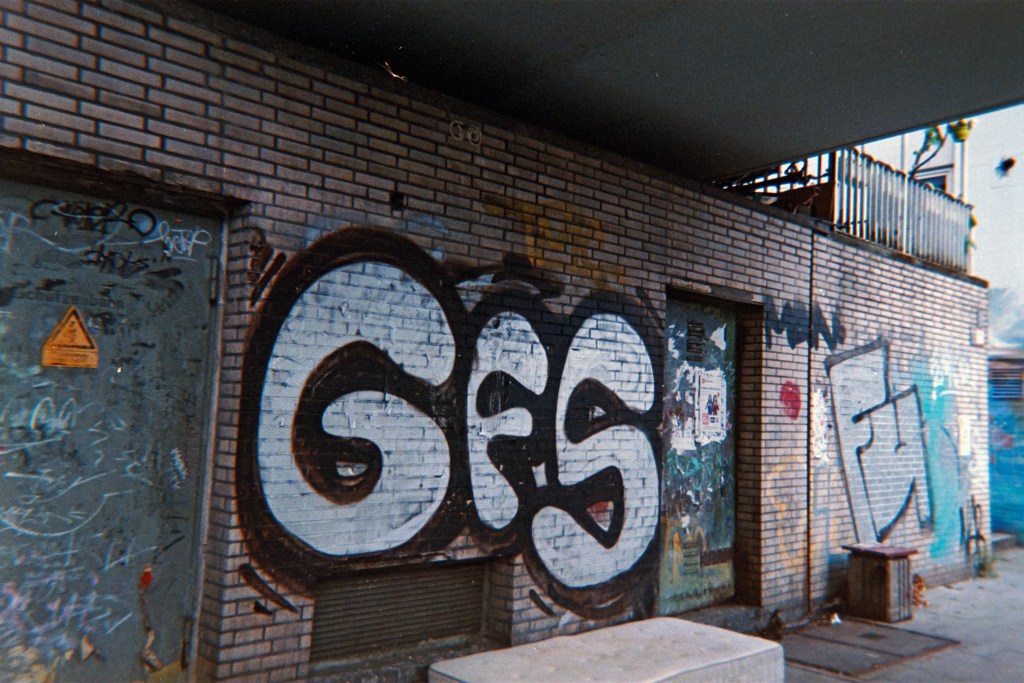
Sleeping outside would be a next level for Thorsten, a step further he would be afraid of. „Definitely! That would be something I wouldn’t be able to handle. I slept outside one night, under the Ruhr bridge down in Steele. It’s not possible. I can’t. It was bad. I even had a physical confrontation at night with three people who wanted to steal from me. One of them hit me with a bottle, broke my toe, my toenail came loose, all that kind of stuff. I was no longer able to walk. And that was the point where I said, okay, this is as far as I go and no further. Then I dragged myself to Lindenallee with the trolley.“ At that point, Thorsten is in a bad way. On New Year’s Eve, his ex-partner sends him a message. He replies and sends a photo from the homeless shelter. She responds with an audio message, crying and distraught; says she didn’t know what situation he was in; thought he was just telling stories, exaggerating to get back with her. She was not aware of the consequences of the break-up for Thorsten, he says now.
The holidays, Christmas and New Year’s Eve, were especially hard for him. Although Thorsten does not believe in God, Christmas has always had an emotional meaning for him. He associates the time with family, love and security, he likes the traditions during the holidays. Spending these days alone in the shelter pushes him to his limits, emotionally and psychologically. „It does something to you. So it would be wrong to say that everything is so super relaxed. It isn’t. But I’d say I’m coping.“ We talk about that time; about how he was doing and what happened during that time. „Then another thing happened: the person with whom I first had the closest contact, he had a ruptured stomach here in Rottstraße and he also died here. In the common room where you were standing just now.“ Thorsten wasn’t there at that time; he had an appointment in Lindenallee that day. „When I arrived, he was just being wheeled out, he was dead.“ He tells me more about the deceased. „He was also one of the elderly – well, what does that mean: elderly? He was in his mid-50’s. And became unemployed due to a misstep with his employer, tried to ride out the situation and then of course became homeless. I can understand him so well because he also has a wife and two children and was therefore – like me, probably – used to a certain social status, but couldn’t accept that it was no longer that way. So he tried to compensate by some kind of projection, and that can’t work – it can’t work here! Because when you are challenged existentially, you are not in a position to maintain what you have lied to yourself about in some made up fabric, because mentally and intellectually you don’t have this energy. It just doesn’t work.“
Since January, Thorsten has no longer been staying at the shelter, but in a hotel room rented by the city of Essen to alleviate the situation in the overcrowded shelters during the pandemic. He shares the room with Michael, the young man who is looking after his possesions while Thorsten is talking to me. Michael has become Thorsten’s closest social contact. The two of them want to move in together. „Quite simply because with two basic incomes you have a bit more leeway, you have more options. And we just get along great. Have roughly the same interests.“ The two work well together, have been looking for a flat for a while now. If they don’t find anything, he is thinking of going back to the Eifel, of moving into his ex-partner’s house once again. Not as a couple, but together. However, he is not sure whether he really wants to and whether he can. „Of course, there is also a bit of mistrust, because Ute slammed the door in my face when I was here in Essen. And so I’m worried that if that happens again…“ The relationship between the two has improved again, but his trust has been permanently shaken. „I don’t think I could approach this again with as much composure and calm as I did when I came back from Austria. Once the door has slammed shut – or been slammed shut – then you have that in the back of your mind that the risk is still there. And I would like – I’m saying this now – it’s the first time that I feel a bit older now. Then I think you’re quite well advised at 61 if you don’t have to think about what can happen, what you have to prevent – but can live carefree. And I simply exclude things that could limit that from the start. And that includes getting involved in a relationship that I wouldn’t know how stable it is.“ He longs for security and peace more than he has in the past. „I don’t want to – I know, with Michael, it’s not a relationship. At some point, when we’ve gained a foothold and each of us has reaped the benefits, I’m sure that at some point – regardless of the friendship that has developed – it will simply dissolve, in terms of status, and that will be the last time that I make another change in where I live.“ He wants a secure base to which he can always return and which is not linked to a relationship with another person.
The search for housing is difficult, the reactions very negative. Their registration address in Lindenallee, the homeless centre, „gives away“ the two flat seekers as homeless. However, Thorsten is open about it and informs potential landlords about his situation right at the beginning. „I say this because I believe that I personally have nothing to hide. Of course, these are the resentments that you encounter, which also have to do with ignorance. I don’t think that if I was sitting in front of you, you would say to me: ‚I won’t give you a flat because you come from Lindenallee and are homeless‘. First of all, I don’t think I’d give it away visually or in terms of attitude. And on the other hand, I also feel a bit of solidarity with those who are sitting there in the day centre and are really my acquaintances. They are my social contacts. And I can only do that if I accept that we are all in the same situation, then I can also convey that to the outside world, I WANT to. I also say quite clearly – I also talk about it very offensively with others, if it’s possible, and it’s the same with finding a flat.“ The reactions are direct, not very subtle. Sometimes they just hang up the phone. Even when landlords or estate agents are looking for tenants who receive social benefits – the rent is paid regularly and punctually by the welfare service – „even then the distinction is still made, even then it is still the case that people say: ‚No, please no one from Lindenallee!’” Thorsten continues and reports that he also sees time and again that people, even if they have found a flat, are often homeless again a short time later. „It’s at the intersection of being homeless, and also dealing with your own problems that have led to homelessness, and trying to overcome them – there’s just a lack of support. In other words, there is support to manage this state – to manage the state of homelessness as such and then to ‚pacify‘ this condition somewhere in a minimal effort. There is no support at all at the point when someone says: ‚For example, I am psychologically troubled, I am addicted‘. Only this state is managed. There’s no support in the process of rebuilding something.“ I ask him how the situation was for him personally, whether he was asked specific questions about how he got into the situation, about what he needs, how he can be supported. „Never at all, never, never, never! Not at all. That’s exactly what doesn’t happen. And of course, you can’t blame anyone, the social workers, the people who are in Lindenallee, of course you have casual contact with them through a certain exchange, there are also some with whom you are on first-name terms, you are happy when they come down to help out and you can have a chat with them. But that has nothing to do with helping you out of the situation. There is no help at all. It is not even on offer. They think they do, they think they provide this help, but it doesn’t happen.“


We talk about how people treat you when you are homeless. „First of all, you experience how you are perceived by others, or how you partly imagine it. I had the problem that I was dragging a chequered trolley behind me at the beginning. And because I walked up and down Kettwiger Straße three or four times in a row, I suddenly had the impression that people had already created a certain visual memory point for me, so that I was somehow pushed into this corner.” – „What did that do to you?” – „That I gave away the trolley and the things that were more conspicuous, and I tried to stay in other areas more often and to arrange my routes in such a way that this perception of ‚I as a homeless person‘ is not possible. Because one must not forget that I was an entrepreneur here. I was co-chairman of the Federal Association of Care Providers and well … it’s – so if you have this past, then you want to, simply out of shame, you want to prevent that.“ – „Because it just doesn’t go together with the image you have of yourself?“, I ask. „I don’t think I actually have an image of myself. I think it’s much more like that, I’m very dependent on it, also in the perception of others, to perhaps evoke such an image that I like best. But I don’t follow any fixed images. There is simply what I don’t want: homelessness, a lower social class. I’m really left-wing, really radical left-wing, and if you look at it that way, something doesn’t fit: namely that I was really wealthy at the time when I had the nursing agency with my wife. I once had a seven-figure sum in my bank account. I had a Mercedes, a vintage car, a holiday home in Emsland, two houses here in Frillendorf – a perfect life! I had a wife, dogs, a daughter, horses – my daughter had horses – basically everything was perfect, but when I separated from her, I said I didn’t want that anymore, I’d give it all up. At that point I was really – and this is my nature – fed up. And then I make a cut and turn around. And that’s why, when you see that and compare it to this, then of course it becomes clear that this life is something I can’t accept under any circumstances. And then you look for a bit of distance, you try to stand out a bit. Although on the other hand, as I told you – and this is very important to me – I also see myself as one of them, but just different. This difference is what I have kept for myself in order for my identity not to completely crumble – and there is no need for that.“ Choosing one’s own identity and determining for oneself what is part of it and what is not is very important to Thorsten. „It helps enormously when you already have your own identity, which you can preserve for yourself, then I think you have the necessary prerequisite to change it. The fact that it’s taking so long now is something that has to do with the housing situation. That all is – that’s a situational experience. It has nothing to do with how I see myself, what I do. It’s simply something that reflects an external condition, but no more and no less. I don’t let that get to me at all. And not because I don’t want to, but simply because it’s not important enough. The reference is only the situation, nothing else. It hasn’t changed me.“ He adds, „I chose this term earlier: school camp. It’s a bit like that. I can’t take it more seriously then that, then it might become really problematic,“ he says with a laugh.
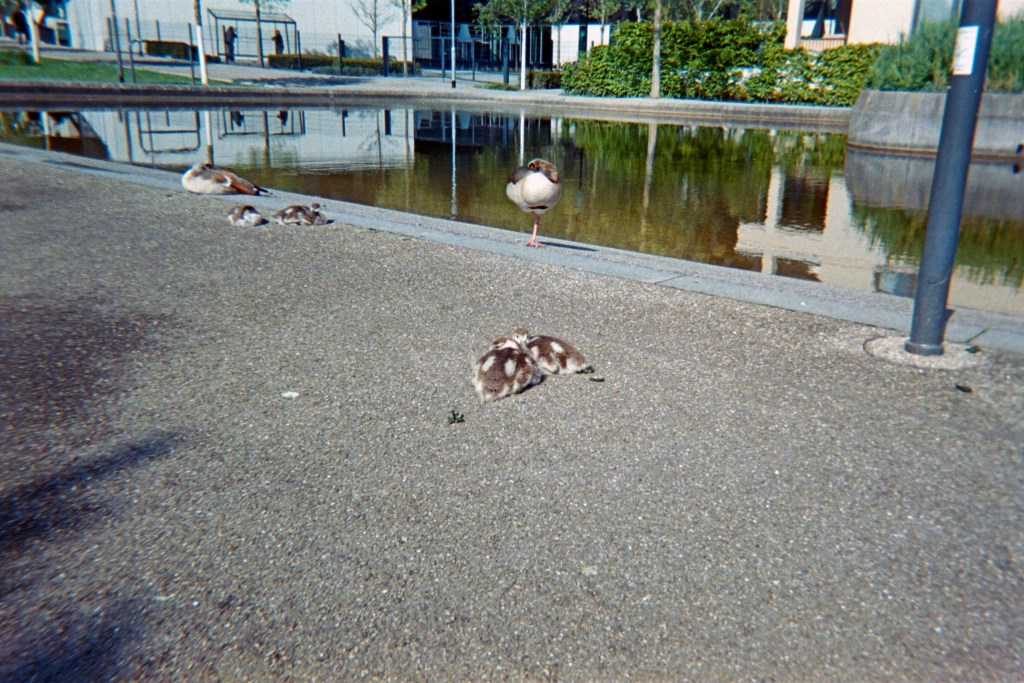
We have already talked for a long time, the two cups of coffee in front of us are no longer half full. The photos Thorsten took are still in my backpack. As I take them out now, Thorsten says: „I deliberately concentrated on not choosing the city centre, but the whole thing is a route I took a few times, because I wanted to see what the artificial lakes behind the Grüne Mitte are like, what kind of recreational area has been created in Essen. And I walked along this very path and suddenly saw that there were some camps for homeless people. But I didn’t want to photograph them because I didn’t want to invade their privacy. So I just described this path, more or less with the corresponding industrial wastelands, what you can see there.“
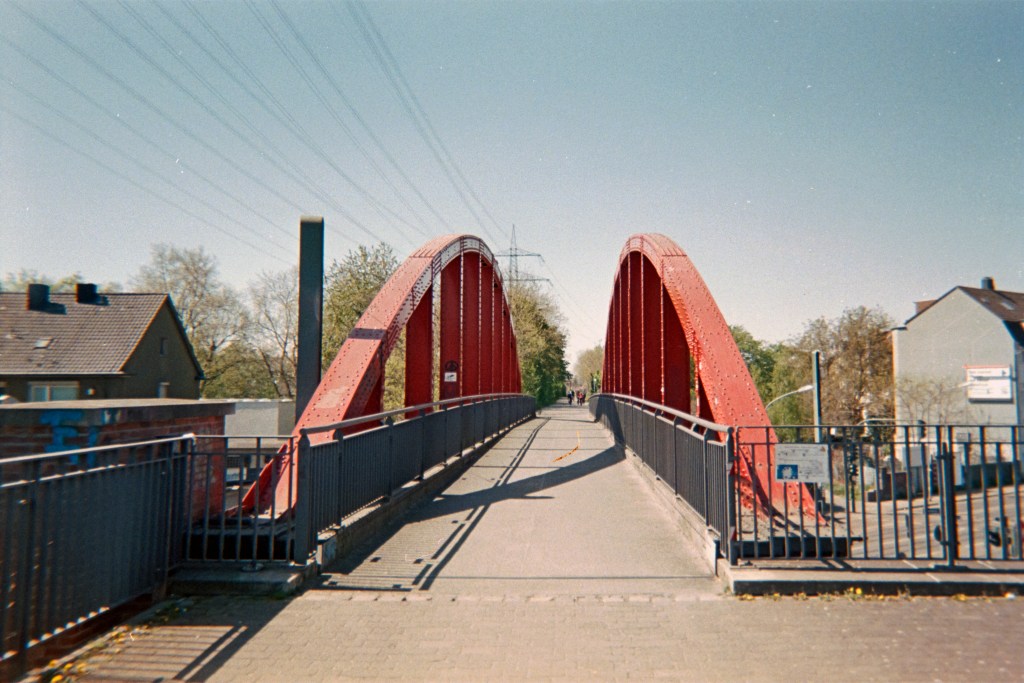
The first picture shows the cycle path leading to Niederfeldsee. Thorsten explains that it was one of the first beautiful days. He and his roommate Michael wanted to find a place at the lake where they could lie down to sleep a little. „Because one thing is the biggest problem: you can’t sleep in. You have to get out in the morning at a certain time, both from the hotel and from the shelter.“ They are not allowed to be in the hotel room during the day, they have to be out by eight o’clock. „It’s just really blind idiocy. It has to do with the fact that the status of homelessness can only be maintained by having a gap, namely the gap between having to get out of there in the morning, but then also not being able to get into the day centre until a certain time when it opens. If there was no gap, then it wouldn’t be homelessness. Because I have a roof over my head during the day and a roof over my head at night.“ So they have to get out on time every morning – no matter how short or bad the night was – and wait for an hour, in rain, cold or snow, before they can get into the day centre. In the evening, too, they have to wait for an hour after the day centre closes and before they can get into the hotel. „It actually shows exactly the value that you have as a homeless person for the municipal administration.“
We turn back to the photos and Thorsten’s walk. He tells me that he went to places he didn’t know yet or didn’t know well. He wanted to see these places anew, also through his new perspective of homelessness. „And then along the way I realised that I started to see many things differently. It is actually the case that when I walk across the street, I know and I see by now who is homeless and who is not. My view has become completely different. It’s an experience that I probably would never have noticed before if I hadn’t been in this situation. And that’s something – I wouldn’t say I’m grateful for it, but it’s interesting to have the experience. In any case, it’s nothing I reject, that I have this experience now.“
On his photo walk as well Thorsten no longer sees only the obvious, the city of Essen that he knows, but his perspective has broadened and he perceives things that he would have overlooked in the past. „Personally, I actually feel that I myself perceived many things very superficially. I won’t perceive them more intensively now, but I do perceive them. I perceive them in at all.“ He tells me that he often uses the 9-euro ticket to visit a friend in Hamm whom he still knows from his time in London. „Social participation is not possible without mobility. I see that in the trains right now – I’ve never been annoyed by the overcrowding, quite the opposite, I’ve almost been happy about it, because people suddenly get to go out. You see these masses of people who suddenly start moving just because they have the opportunity to do so. And that is something that makes a society, that there is not this separating aspect – who can do it, who can’t? – but that there is this mutuality: We can all do the same thing. And when I see that, I also know that I perceived certain things differently before than I perceive them now.“ He used to drive to his holiday home in his Mercedes, he says, unaware of many other realities of life. „On such a level, you don’t get whether there are people who are simply not even able to visit relatives regularly because they don’t have the means. There’s the perception that I think has changed within me.“ I ask him what feelings he feels when he becomes aware of this simultaneity of different realities, of social inequalities. „Anger. That is anger. This is exactly the anger I had when I was young.“ While he sees anger as a motivation to change things, at the same time he feels powerless. „Being aware of a powerlessness. And that’s just frustrating.“ He does not understand why there is not more solidarity in society, more awareness of injustices and inequalities.
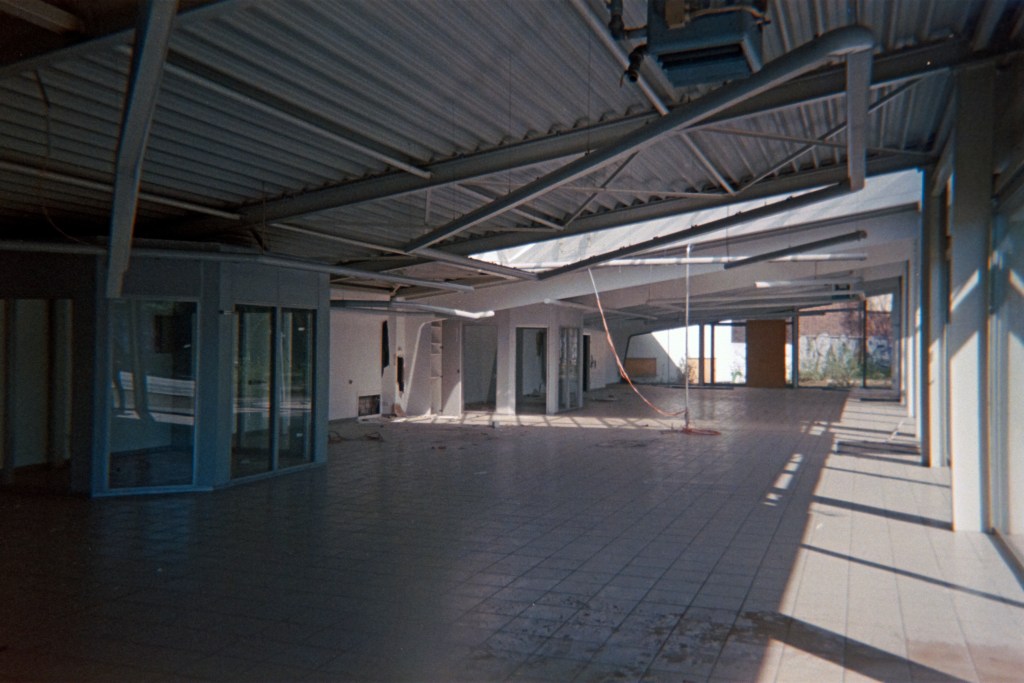
The next photo shows a former car dealership. In one corner of the empty building, some homeless people have set up a camp. Thorsten has been in the car dealership before, back when it was still in operation. We talk about the aesthetics of the abandoned building. „Industrial wastelands have always interested me,“ says Thorsten. He talks about industrial sites in Dortmund, the city where he grew up. I ask him if he ever thought about going back to Dortmund. „No. No. My parents both died on the same date, two years apart. On December 7th. And with the death of my parents‘ last friend, Dortmund-Mengede lost its appeal for me. Dortmund as such never attracted me. I just lived there because it was the most obvious option, that’s all it was. Not the feeling of being at home, it was just the way it was.“ – Is there a place like that for you, something like home?“ I ask. „No. But there’s a place where I’d like to spend the rest of my life.“ – „Where is that?“ – „That will be Innsbruck. So I will spend my last years in a place called Kramsach.“ I ask Thorsten how he got to know this place. „Through my parents. We went there when I was very small. My father told me an incredible number of things when we went out to the pub in the evening. I learned mountain climbing there, extreme mountain climbing too. And there are also a few mountain ranges there where I like to stay, also like to stay at altitude. I learned paragliding there. I learned everything there that I actually know how to do, because my parents were there quite often. And that’s also very central for me.“ His parents had a small flat in South Tyrol and a holiday home on Juist. After they retired at 60, they commuted back and forth between the two places. During that time, the three of them often meet in Innsbruck; especially when Thorsten was still living in London. „That was always such a central point where my parents and I used to hang out then, because we also had the shared memories.“ I ask him how and with whom he sees himself spending this twilight years. „I see myself with a dog, that’s for sure. People…“, he pauses. „Not so much. I’m past that.“
I come back to his daughter, ask him how the situation is for him emotionally. Whether he expects to hear anything from her again or whether he feels the need to find closure. „Yeah … uh … it’s hard.“ He clears his throat, starts to cry softly. He takes off his tinted glasses and wipes the tears from his eyes. „Can’t say anything about it now,“ he brings out in a breaking voice. „Yes, I haven’t spoken to my daughter now in … almost nine years.“ She will be 26 in September.
Two or three years after the breakup, he talks to his ex-wife on the phone. She says that their daughter Luisa does not want to speak to Thorsten. „What do I have to do with that man?“ she is supposed to have said, the ex-wife reports. Thorsten does not know whether this is true. However, he has repeatedly offered her opportunities for contact. „She obviously doesn’t want that. And at a certain point in time, for reasons of self-protection, I simply came to the realisation that I don’t want to hope for that and hope that it will change again, but that for me personally I’m done with it. But you see … emotionally you don’t find closure for something like this.“
Before the separation, Thorsten and his daughter had a good relationship. They went to football matches together, went on holiday, spent a lot of time together. Thorsten’s wife worked a lot, put her energy into the nursing agency. „She looked after Luisa a lot, she was a wonderful mother, but I was the one who spent most of the time with Luisa, actually.“ It was all the more difficult for Thorsten not to see her again from one day to the next. „The separation happened one morning, I just moved out, I packed a few things. A few words were exchanged.“ His daughter was at home when Thorsten left. „I can imagine that for Luisa – she wasn’t that old at the time, was about to graduate from high school. I actually wanted to separate from my wife when Luisa had her Abitur. And an important point was the death of my parents, which also made the separation possible. I wouldn’t have wanted to put my parents through that separation either.“ – „So it had been decided for you for a while and you were actually just waiting for the right time?“, I ask. „If I tell you this now, you won’t believe me. I met my wife on a flight to Vancouver. I got on the plane in London and she was rebooked in London, and because her flight was overcrowded, she was upgraded to first class. We were sitting there and Bettina didn’t match my visual expectations at all, she was such a complete opposite to what I wanted to see at that time – I was relatively superficial at that time. I talked to her all night. Then we spent a weekend together in Vancouver. We had one sexual encounter and Bettina called me later in Germany and said: ‚I don’t want to fool you, but I’m pregnant.’ And I said: ‚Well, then I guess we have to get married‘. And that was the only time my wife and I had sex. I did that, I thought to myself: ‚Well, I’m sure my parents are happy to become grandparents, too. They certainly wouldn’t have thought so. What possibilities do we have to put our lives together, and live side by side?‘ And that worked. And when we broke up, everyone cried and screamed, ‚No way! The perfect couple!‘ Nobody knew what our marriage was like. Nobody! Nobody knew.“ Even if there was no sexual relationship, there were physical interactions that led outsiders to conclude that the marriage was harmonious. „Of course I took Bettina in my arms, of course we went somewhere hand in hand, of course we sat in front of the fireplace in our house – all that was great, it was beautiful! There was also a certain physicality, but it was limited to what I could have had with a sister if I had one. No romantic feelings, but perfect partnership, perfect! And with Luisa a perfect child. My daughter is great! And it all fit, it all fell into place. I could that my parents were happy too! „And you?“ I ask. „Yes! Quite so, quite so. Then there’s also the fact that we had different sexual interests, so it developed a bit in parallel.“ – „But did you act it out?“ – „Yes, of course! There were no constraints and no rules, otherwise it wouldn’t have worked. It was open, just the way we wanted it. That was clear from the beginning. The headline of our wedding newspaper read: ‚We have to get married‘,“ he laughs. „That basically said it all.“ I ask why the marriage failed in the end. „Because my wife quite obviously then developed romantic feelings for me.“ She tried to enter another level with him, tried to gain his sexual attraction. „I said, ‚Bettina, this isn’t working. It didn’t work before and it won’t work now. And that has nothing to do with different sexual interests, it has to do with the both of us.‘ And so basically the affront that I unintentionally made to her was probably too great. And at some point there was this rift between us – that even the things that had worked before no longer worked – that was too big for me to want to keep up the relationship.“ Although Thorsten had made up his mind to wait until Luisa’s graduation, at some point he couldn’t stand it any longer and separated six months earlier.
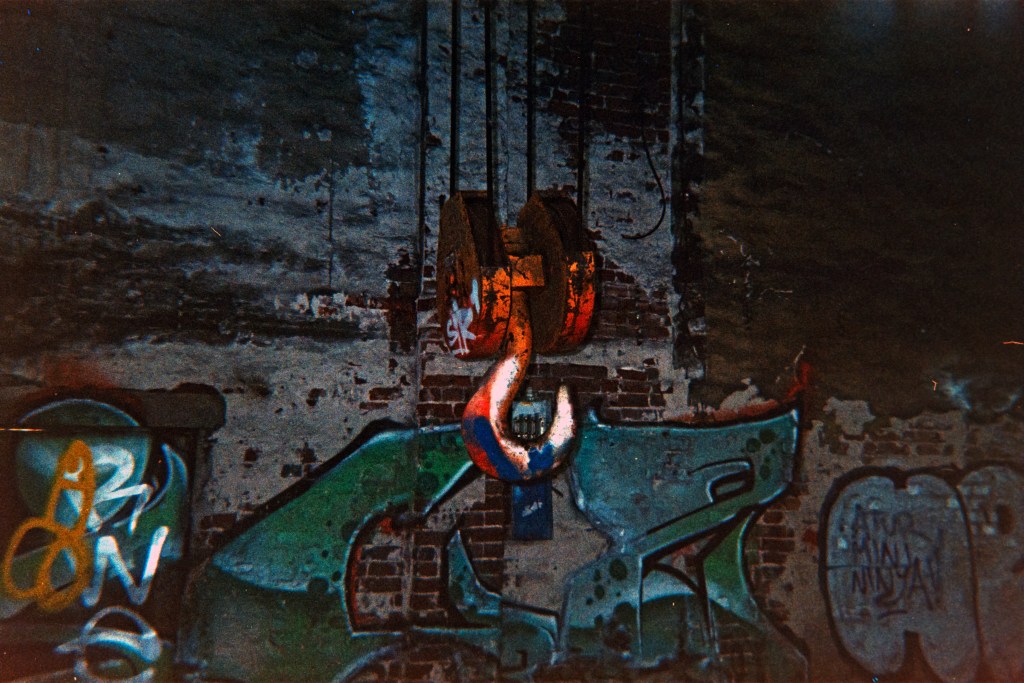
We look at the photos again. Another industrial wasteland that some people use for sleeping. He knows some of the people by now. Another photo in the empty hall. The next picture was taken at the Funke building and shows the view towards Berliner Platz. There, in the Weststadt towers, he had worked as a consultant for a British bank in the past. „I was reminded of it a little bit, because there is this absolute discrepancy.” I ask him how he, who describes himself as left-wing, actually got into the bank. In the 80s, he worked as a taxi driver during his journalism studies, which he never completed, Thorsten tells me. At some point he happened to see an ad: „English-speaking driver wanted for the Westfalenhalle“. These were the days of Boris Becker, who was playing a tournament there at the time. He and the other players are staying in a hotel in Wuppertal. While Thorsten was waiting in the hotel lobby, Boris Becker’s former manager, Ion Țiriac, came in, pointed at Thorsten and asked: „‚Do you have a passenger? No? Then you drive for me for the next two weeks from now on.‘ During these two weeks, I drove Ion Țiriac through the tennis world at the very highest level, if you will. Even to the point of driving his son to Monte Carlo, to his sister.“ When the two weeks were over, he asked Thorsten what he actually does in his life. He gave him the number of an acquaintance in Düsseldorf and told him to get in touch if he wanted a job in the investment sector. Thorsten called him. The acquaintance asked him if he was flexible, there were opportunities in London. Thorsten didn’t think twice and goes to London.
At the beginning of the 90s, a lot is happening on the market, the foreign exchange market, where he is active. In 1993 he decides to leave. „I didn’t study economics, it was rather autodidactic. And it was clear that at some point I would no longer be able to do that, concerning my abilities. I did get relatively far, so when the first Iraq war broke out, I earned 86,000 dollars in stock exchange fees within the first ten minutes after the stock exchange opened. That was intense, that was really intense. But that was also the point where I said to myself a few weeks later: ‚Something is not right here‘. I couldn’t understand it anymore. I turned on the TV because a colleague called me from Japan and I see missiles going up and I screamed, ‚Yes! Yes!’“ Thorsten describes how he increasingly loses touch with reality, with the reality behind the stock market events. „That was also a point in time when I knew that if I didn’t come back to Germany now, I might just lose myself in London.“ What the time in London also lead to, was a severe cocaine addiction. Thorsten was using for eleven years, not consistently, but he fell off the wagon again and again. „That changed me quite massively, that contributed to quite massive things.“ On a day in January twenty years ago – he remembers the date quite clearly – he used for the last time, „from one day to the next“. I ask him what the trigger was. „It was my mother’s birthday and I somehow thought to myself, I don’t want to go there at all, because I would much rather have stayed at home and used cocaine. And then I thought, ‚OK, so that’s the point now‘ and threw it all away and that was the end of it.“ On that day, he became very aware of why he had to stop: „You can’t do that anymore, you don’t want to do that anymore. These are not the things that are important to you. You change because you just can’t focus on things that used to be important to you and that made up your personality. You start to paint a picture of yourself that is not there. At some point it doesn’t work anymore.“ He pauses for a moment. „It definitely controlled a part of my life.“
The coffee is empty. Thorsten takes another sip from his water, sets the glass down carefully before he begins to speak again. „This whole period – and also my life in general – has been characterised by certain ups and downs, but also by a lot of experience. Now I’m at the point where I say, the things that didn’t do my life any good, I’ve recognised them, they’ll stay behind me. Actually, I’m now ready to do exactly what I’ll probably have to do now: make a new start. „
 Projekt "Perspektive(n) Mensch"
Hinterlasse einen Kommentar