Trigger warning: FGM, rape, death, suicide
Gideon and I meet in a park. Up to this point, I hardly know anything about him. I got his number from an employee of the Ehrenamtagentur Essen where he introduced himself because he would like to do voluntary work. I’ve sent him a message, told him about the project and asked if he was interested in participating. Twice I met him briefly at his home; once to give him the camera and once to pick it up. When I now arrive at the park, he is already sitting on one of the benches. He is wearing an ironed button up shirt and smiles reservedly when I sit down next to him.
I take the photos out of my bag and ask him what it was like for him taking the pictures. It was the first time he had ever used an analogue camera, he says with a laugh. Since he usually only takes photos with his mobile phone, taking photos with the camera – not being able to see directly how the picture turned out – was very unusual for him.

We look at the first photo: a picture out of the train window, in Essen West, on the way to Duisburg, as he now tells me. I ask him if he has friends in Duisburg or why he was there. „No, I was going somewhere, I was just trying to go out. To see what is there.“ How long has he been living here in Essen, I now ask. Seven years. „But you know, life here isn’t easy. Before, they didn’t allow us to go to school. That’s why my German is only okay. The difficult for me here is, they don’t allow me to work, they don’t allow me to go to school, they don’t allow me – always they give me stress.“ Gideon has a Duldung, so he doesn’t have a work permit. I ask him how he organises his day when he cannot work or go to school. „Normally I go out, if I don’t have appointment, I have to go out. Because I have depression, so my psychologist advised me to go out. To find something to do by myself. If the state doesn’t allow me to work, I have to find something to do by myself. So sometimes I just go out. Maybe Düsseldorf, Cologne. The 9-euro ticket is – when it came, I was able to go many places, have some time to see.“
We talk about his residence status, about why he is living in Duldung. „First of all, they reject my case because they say I’m from Ghana. Because they say there is no problem in Ghana. But me for instance, I had a case in Ghana, that’s why I left Ghana and I came here. Through the case, I got emotional trauma. So I have my doctor in Bochum. She wrote everything for the Ausländerbehörde that because of my case, they should allow me to stay here. But the foreigners authority says no, they don’t accept because I’m from Ghana. So Ghana people, they’re not allowed to stay in Germany. So they want to deport me. They are requesting for my passport and then to deport me.“ I ask him how he feels about the threat of deportation, if he is scared. „Yes, I’m scared. Sometimes I feel like to kill myself. But because of my psychologist – you know, every week I have to go to her. Most of the time every week. If I don’t go there maybe she is on holiday. But every week I visit her for therapy.“ – „Do you feel it helps to talk to her?“, I ask. „Yes yes yes yes!“ He speaks to the therapist in English. „I know English because I went to school in Ghana. So English isn’t too difficult. I didn’t go to the highest level but if I meet people, I can express myself to them. They understand me and I understand them.“ But are there things he can only express in his mother tongue, I ask. „Yes yes yes yes! You know, your language is your language. You can express yourself in every way.“ Nevertheless, Gideon’s therapist is a great support in his life. It is the therapist who puts him in touch with the Ehrenamtagentur where he introduced himself. „Because I told her that I’m always at home, I don’t have anything to do. She said that she would help me find some people who I can talk to. So she has tried her best. But she doesn’t know the reason why the immigration office doesn’t accept her report.“ The therapist also helped him to find a lawyer. Almost a year and a half ago, he filed an application for Gideon at the BAMF in Düsseldorf, but they are still waiting for an answer from the court. „But still, Ausländerbehörde wants to deport me. Next week Friday I have to go to Ausländerbehörde. But my fear is much.“
Gideon was 15, 16 years old when he left Ghana. He comes from the south of the country, his girlfriend from the north. In the north, he tells me, female genital mutilation is practised. When his girlfriend was to be circumcised, they fled together. „They wanted to cut her clitoris, so we had to run away. We came to Libya. Even though I’m young, my body was strong. We came through Libya. My girlfriend couldn’t survive, she died.“ Although it is visibly difficult for him, he tells me what happened. „When we came to Libya, the armed robbers met us. The women, they rape them, they beat them. Through that she died.“ After her death, he wanted to go back to Ghana. But his girlfriend’s family threatened to kill him. „You know, the family said I shouldn’t come back. If I come back, they will kill me.“ – „Because they think it’s your fault?“, I ask. „They think it’s my fault. Because of that I lost my mother, I lost my sister.“ – „How?“ – „My mother went to the farm. They found her. Some people had beaten her. By the time they found her, they sent her to hospital and she died.“ Did the family of his late girlfriend have anything to do with it? „We didn’t know, but if somebody threatens you and you die, definitely it’s them.“ Police investigation in Ghana is difficult, Gideon tells me. Time and again, the police demand money. In the end, the investigations are simply dropped. „The same happened to my sister. My sister died early in 2016.“ Three months after he arrived in Germany, she was killed. Like his mother, she had been assaulted. „So my family’s life there is dangerous. “ When he realised he couldn’t go back to Ghana, he decided to go to Europe and seek asylum. „I come as a refugee to seek asylum to protect my life. That’s why I came to Europe.“ But his asylum application was rejected. „I explained everything to the immigration authorities, my doctor wrote everything, but they don’t believe it. I don’t have any evidence.“ We talk about his situation, about how his life has changed. „Before that, life wasn’t too bad for me in Ghana. It was a little bit good. But because of this case, because of all those things, I had to come here.“ I ask Gideon about his late girlfriend. „Was she your first girlfriend?“ – „Yes! She was my first and last.“ I am very sorry for his loss and what happened, I say, and for a moment neither Gideon nor I speak. Then he says: „It’s part of life, you know? But really I hope to find a better life here.“
I ask if he often has to think about what happened. „Yes, I think about it. That gave me trauma. Before, it was very bad. So my doctor has put me in therapy. That’s why every week I have to go there. Because she understands my situation, that it was very terrible. I’ve been in Klinikum. I stayed there for three days. I’ve been with different types of psychologists, and they all told the Ausländerbehörde to allow me to stay here. But they say no, they don’t allow me.“ At ProAsyl he receives legal advice. But the staff member who took up his case fears that his chances are bad. „He told me that the foreigners authority would not accept my case. He told me the truth. No matter what, because I’m from Ghana, they will never accept my case. They have stated that we don’t have problems in Ghana. So no matter how your case is.“
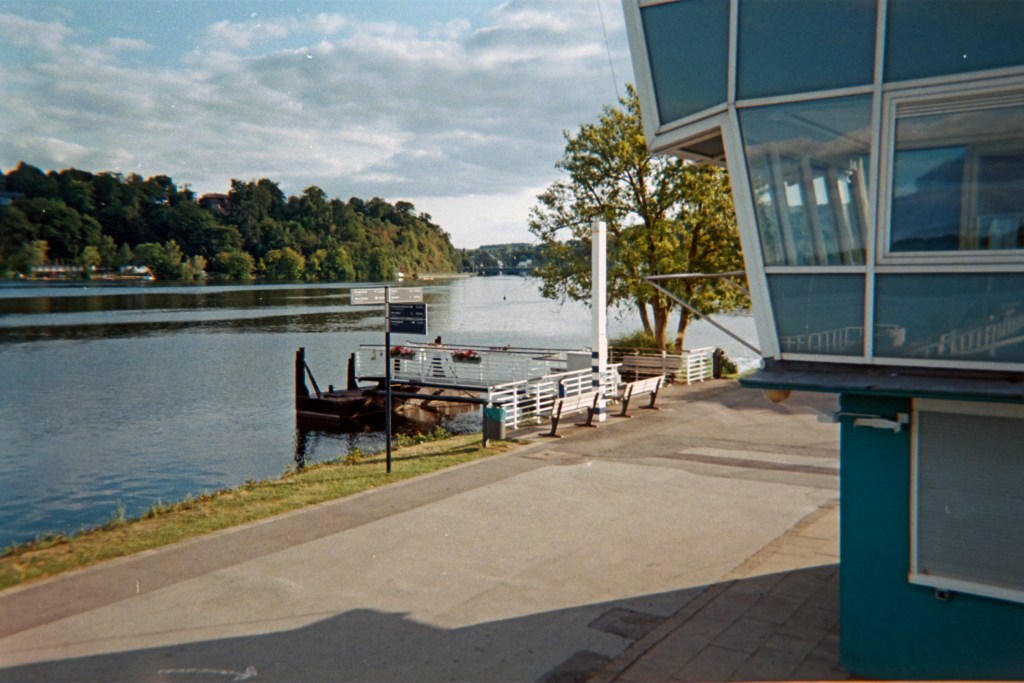

We turn back to the photos and look at the next picture. It shows the regatta course. „I went there and saw the environment is very nice.” The refugee accommodation where he last lived before moving into his own flat is nearby. Because he finds the surrounding so beautiful, he wanted to come back to take a photo there. Since the 9-Euro-Ticket has been available, Gideon makes many trips. „With the 9-Euro-Ticket I’ve been to Düsseldorf, Duisburg, Bochum, Dortmund. In Cologne I have not yet been but I’m trying my best to go there this week. You know, when you’re there, you see many things, different types of people. Summer has come, people do different kind of activities, a lot of things. You feel like, okay, now it’s okay. So when I go out, I feel very comfortable. I forget my stress.“ I ask him if it’s easy for him to talk to strangers. „It’s very difficult. You know, you have some people, when you talk to them, they don’t even listen to you and they will pass by. If I go out and I decide to talk to people, I meet the first one and the person rejects me, it will be very difficult for me to go to another after. If I meet a person and the person didn’t get close to me, it will be very difficult for me to talk to the person.“ Does he have friends here in Essen with whom he can do things? „Sometimes on the weekends I have my friends from Africa. We meet and we talk. But you know, everybody has their problems. So not always you get to talk to them. But most of my friends are in Berlin or other places, we only speak on the telephone. In Essen I don’t have much friends.“
The next photo we look at shows houses on the shore of Lake Baldeney. He finds these houses directly at the water front particularly beautiful. In his home country Ghana, rivers and lakes are used differently than Lake Baldeney, he tells me. I ask him where in Ghana he grew up. In a village, he tells me, smaller than a village, actually. „Five, ten people, they have their houses. Typical village. You know, my father was a farmer, so they went there to do cacao. You know, it’s bush, you have to stay there. So you are from the bush and you come back to the nearby big town to go to school and all those things. All my lifetime I stayed in that village. So I like village more than cities,“ he laughs. „It was nice. But if you were there, you thought it’s boring. But when I came here, I realised that the bush was very nice. A lot of things you see in the bush, in the city you don’t see it. And you know in the village the food is okay for you, you eat everything natural. In the city it’s very difficult to find this healthy food to eat. And you can go to somebody’s house, to go and eat there. A lot of places you can go and do things. In the city, you cannot do it. But in the village – let’s say if somebody is sick, you see all the villagers, they will gather there, they will try to find a solution for the person, maybe if they have to contribute money to give the person. But here: nothing.“ I ask him if his African friends here in Essen are also from Ghana or other countries. „Yes, they are from Ghana, but because they have come here, they have learned the system here. So we don’t go to somebody’s house because it’s not the system here. When you came from Ghana, the mentality has changed here.“
„Do you miss home?“ I ask Gideon. „Never. I just miss my family, but not the country. The country is no good.“ – „Because of what happened?“ – „Yes, because of what happened. And our politicians, they don’t care about the citizens. They only care about themselves. So when they are killing people, they just ignore it. If Ghanian people don’t have money, your case will not go anywhere. You know, here in Germany, the government gives you a lawyer to fight for your case. Ghana is not like that. So if you don’t have a lawyer and they kill your family member, they will not do anything about it. They will tell you: ‚Bring money, bring this, bring that‘. So if you don’t have money, they stop filing your case. So that made me not miss my country, no. But I miss my family. Especially my late mother. She died last year. I miss her very much.“ I ask Gideon if he had a lot of contact with her. „Yes. The day she went to the farm and died, we talked. So her death was a shock, I was shocked because she was okay, we talked, before she went to the farm. And later I didn’t hear from her. So, I was …“ he stops. „Sometimes I don’t – I try not to think about her. Because the more I think about her, my situation gets worse. So I try to forget everything about her.“ After a short pause I ask him if his father is still alive. „Yes, my father is alive. He is alive.“ Are they in contact? „Yes, sometimes, but you know, he’s old so he’s not into mobile phones,“ he laughs. „So maybe once or twice in a month we talk. Not like my mother. With my mother – everyday we spoke on the phone.“
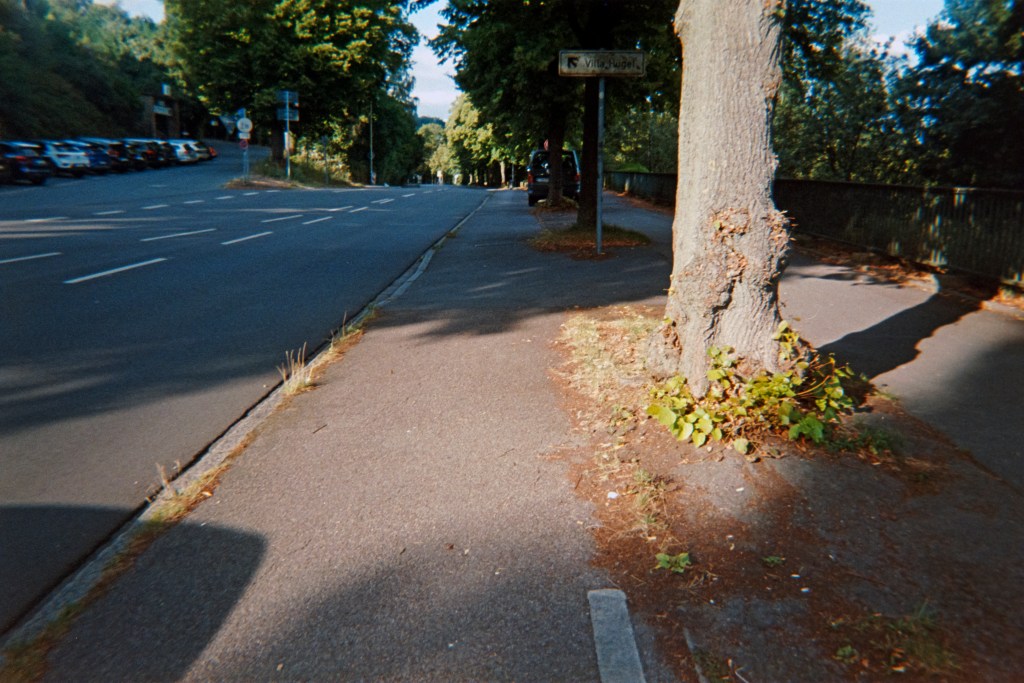
The next picture shows the road Gideon walked to get to his accommodation. At that time, he spent a lot of time at Lake Baldeney. He lived in this shelter for two and a half years, six years in shelters in Essen in total. „All my time in Essen I lived in Heim.“ I ask him why he came to Essen. It was not his own decision, he tells me. When he arrived in Germany, he was taken to Munich, then to Dortmund, to Düsseldorf, to Solingen, until he finally arrived in Essen, where he was registered and made his asylum application. „It’s them who choose for us.“ I ask him if he would rather live somewhere else. If he could, he would not live in Essen, yes. The pressure and stress he experiences through the Immigration Office are too much for him.
When Gideon arrived in Essen, he was initially in a camp for a year and was then moved to another shelter. There he started a German course. After four months, he was again assigned to a new accommodation. This time far in the south, in Schuir, near the airport, from where he can no longer attend his German course. He has been living in this accommodation for three years. „It’s a long time. But it’s part of life, you have to go through all these things.“ During this time he is rarely in the city centre; really only to buy groceries. The accommodation is poorly connected, far away. „I didn’t come out frequently, only just once or twice in a week.“ I ask him how he liked it there. „I liked the environment, but most of the workers I didn’t like there.“ Why, I ask. „Because some of them were racist. Most of them were Arabic people, they value their people more than the Blacks.“ There is always unfair and unequal treatment. Gideon tries to get into another accommodation, repeatedly turns to the social welfare office. Finally, he gets transferred. He feels very comfortable in the new accommodation; the staff are friendly and supportive and eventually help him find his own flat. „I love them, they were very good! Everybody there was good. They treat us like equal. They don’t say: ‚You are black, you are this or that‘. But in Schuir the people were no good. I would say their boss was friendly, but the rest of them wasn’t good.“ I add that it was probably not a good boss if he did not stop the racist behaviour of the employees. „Maybe it’s because we didn’t complain. If you don’t complain about something, how can the person know? You know in our situation we could not go there and complain. Because if you go there and complain, maybe you become the person’s enemy. So you have to live with it.“ – „And you stayed there for three years?“ – „Three years.“
We talk about how he is doing now in his own flat, how he feels after living in collective accommodation for so long. Sometimes he wishes he didn’t live alone, but together with a partner. Besides that he is happy to finally not have to live according to other guidelines or people. „You have lived in camp with two people, three or more. But now that I have my own flat, I have my freedom. The life is okay. Nobody will tell you: ‚Don’t cook at this time‘, ‚Don’t do this‘, ‚Don’t do that‘. Here I can play music, I can do everything I want. So I feel comfortable here. „
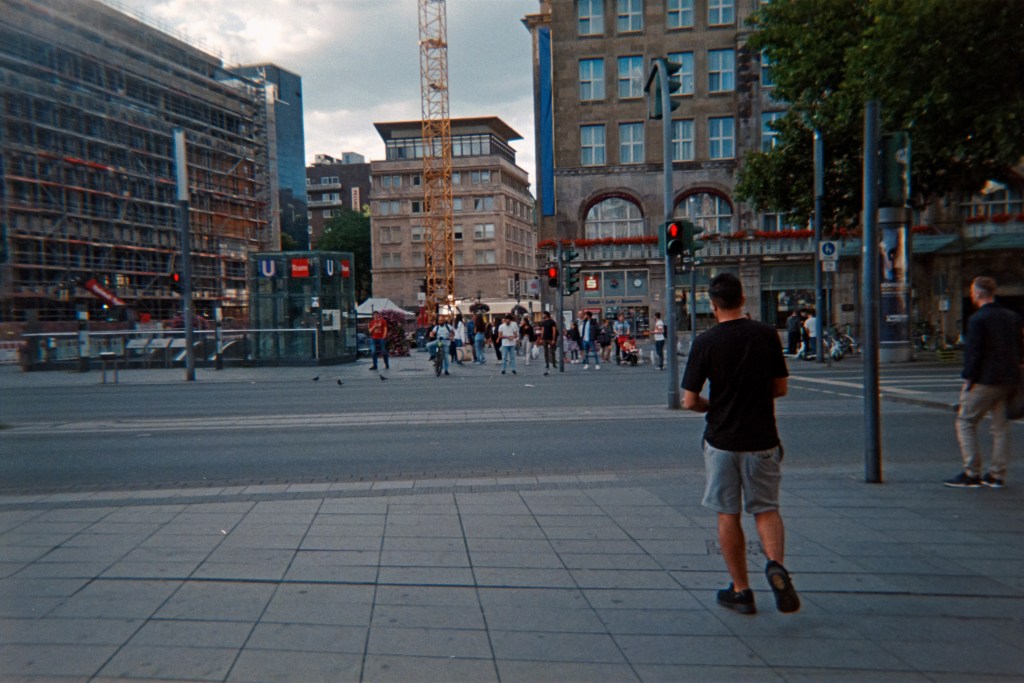
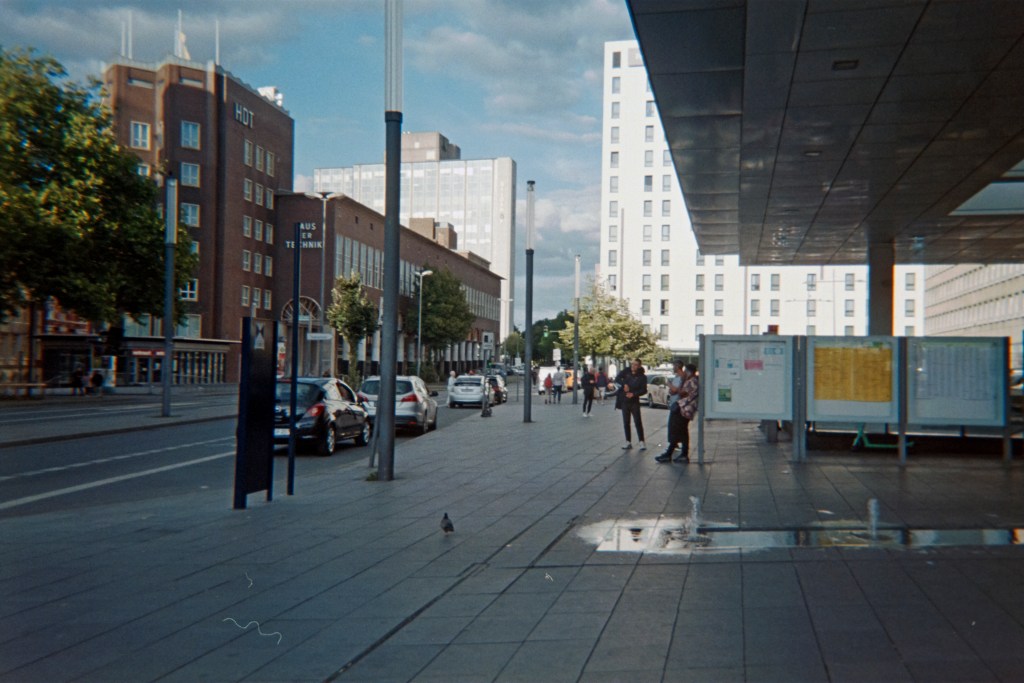
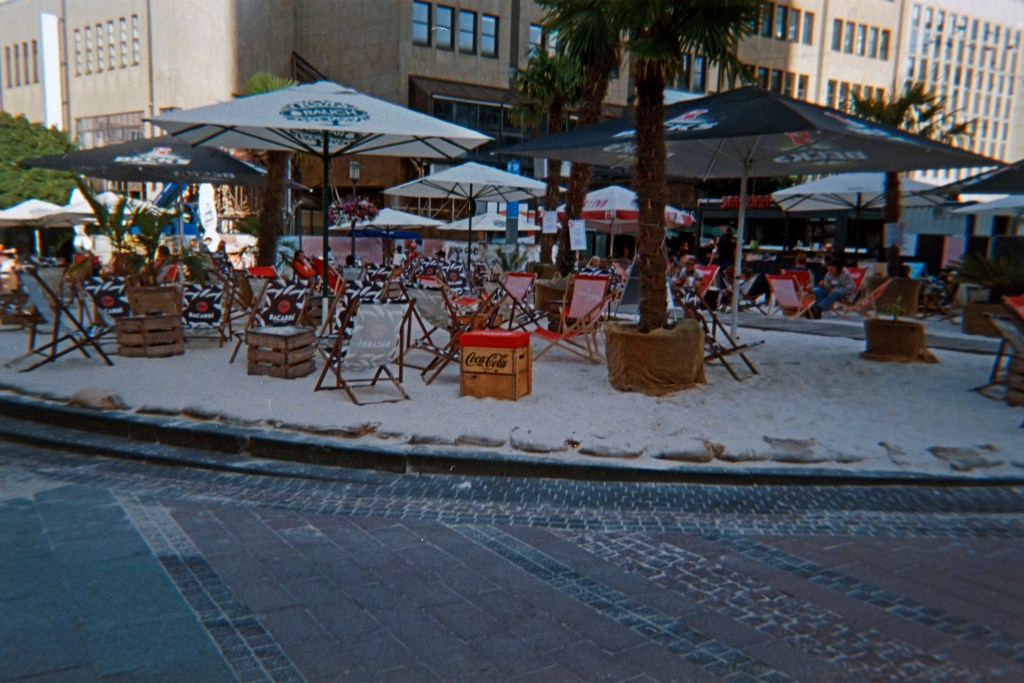
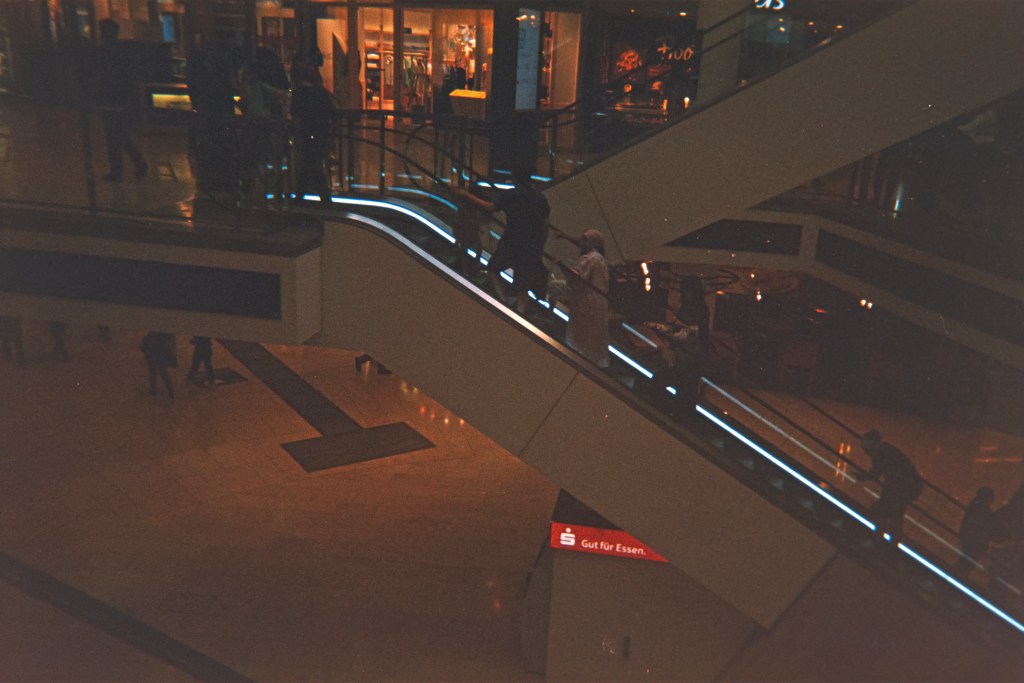
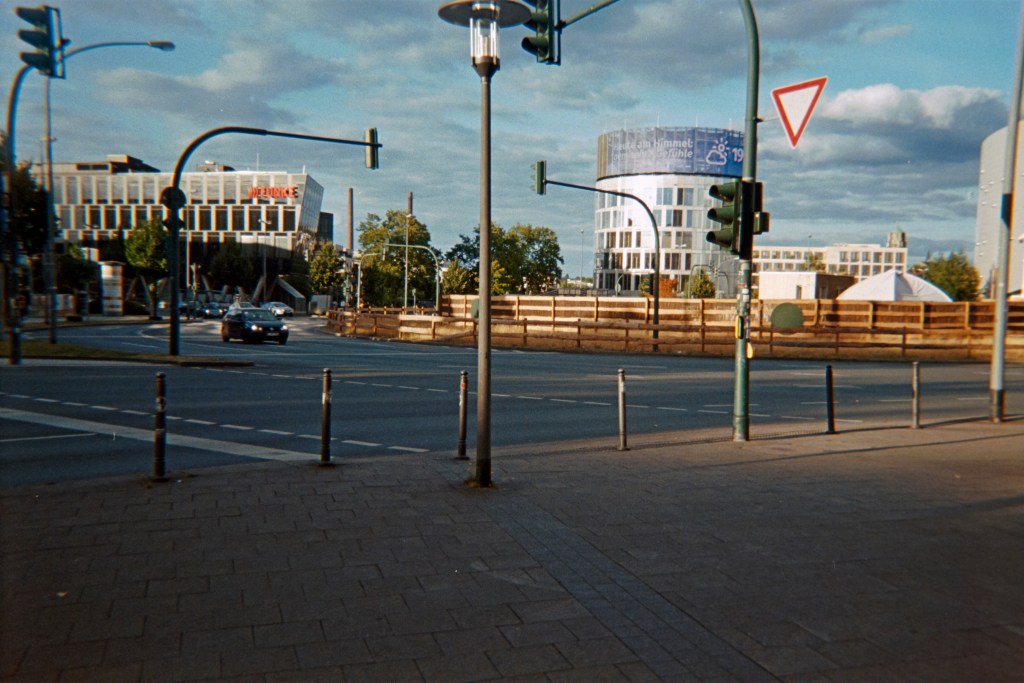
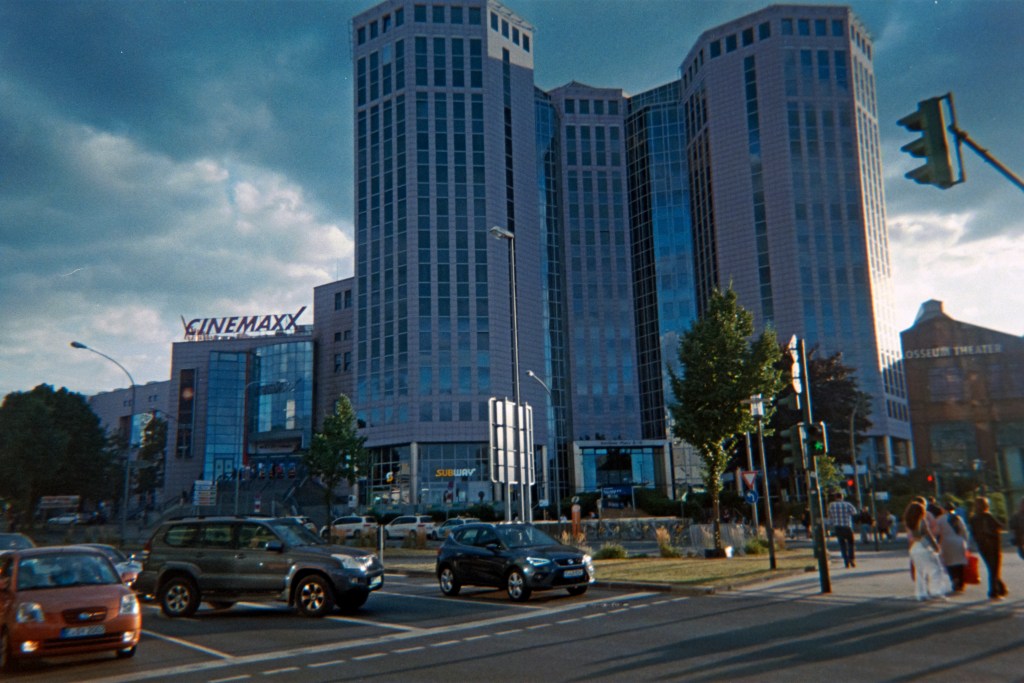
The next pictures trace his path, from Essen’s main railway station, through the city centre, via Kennedyplatz, Limbecker Platz. He often goes here, looks if there might be something on sale that he could buy. He likes to go for walks in the neighbourhood, likes to be outside. When he moved here, he started playing soccer. However, due to his mental illness, he stopped playing. He finds it difficult to commit to regular practise because he often doesn’t know how he will feel that day. When his symptoms are strong and he is feeling bad, he cannot train; the calls from his teammates to come to training put him under pressure. Actually, he would like to enrol in a gym, decide for himself when and how long he trains. However, he does not know whether his papers will be accepted at the registration. „I don’t know, but I will try it and see.“
I ask him if he would like to take another German course. „I decided to take it, but because of the stress I have been through, I cannot learn anything. Maybe one day it’s okay, I can focus, but then they send you a letter that will stress the whole of you, everything, you cannot do anything.“ He tells me about a letter he received from his lawyer on the weekend. Some time ago, Gideon continues, he had to see a doctor to whom the immigration authorities had sent him. This doctor has now decided that Gideon can be deported, his lawyer informs him by letter. During the conversation the doctor doesn’t ask Gideon any questions about his traumatisation or the symptoms he has due to his mental illness. Nevertheless, he was found fit to travel. The reports from his therapist as well as those by the other psychiatrists from the clinic where he was before he started his therapy were not considered. When he talks about the Immigration Office and his legal situation, Gideon seems tense and desperate. Nevertheless, he tries to speak calmly.
I ask him what he would want for his current situation and for his life. „You know, in this life everybody needs a good life. If they’ll allow me to stay here, then I’ll have the energy to go to school to learn German. I will find something, maybe I’ll do an education to do something to help the country to develop. So I depend on the German government to maybe help me to get documents to stay here, so I can live a better life. So I can come out from my depression and all those things. That’s what I need. If not that, it’s very difficult. Because I always think about my situation, so my depression and my trauma go up. So I will not get the mind to go to school, to learn something. And always I think about committing suicide. Sometimes I feel like I’ve been neglected by everybody. They say the German people are good – how come they know my situation and still they say they will deport me? So I see they’re not ready to help me. They want me to go Africa. Sometimes this comes to my mind. My therapist always advises me not to kill myself because I have a better life in the future. That’s the only hope I have.“
 Projekt "Perspektive(n) Mensch"
Hinterlasse einen Kommentar