
Trigger warning: Ritual violence
The first time I met Nina was at an organisation for women here in town. Here, the visitors can have breakfast and lunch in the café, they can wash their clothes, take a shower, talk to each other or with the social workers. When I sit down in the café, it is still quite early and not much is happening yet. Two or three women are sitting alone at different tables. One of the social workers asks me if I would like a coffee and calls me by my first name. Nina looks up, looks over at me and asks, „Is your name Nina?“ I answer in the affirmative. She laughs, „Mine too!“ and sits down at the table with me. „Do you come here often?“ she asks me. I explain to her that I have been here before, but I don’t come here regularly. Then I tell her about the project I’m working on. She is immediately enthusiastic – „I’m definitely going to take part in that!“ I notice immediately that Nina has a lot to say. She speaks quickly, keeps inserting new strands of thought. And she laughs a lot, looks me in the eye when she talks and examines me attentively when I ask or tell her something.
We talk a lot during our first meeting. One of the first things she tells me is that she sees demons. I ask her if they are there now, „Yes, they are always there, but I ignore them. You know, it’s like when you’re standing at the bus stop and there are other people there. You notice them too, but more in passing.“ I can well imagine her example and nod. „But I’m not crazy or something like that!“ Her doctors see it that way too. She sees a psychiatrist regularly; she has also seen various psychologists in the course of her life. Nina is many things, but certainly not crazy. She is an exorcist and a theologian. She has lived abroad and has been in Essen for several years. She is gifted in crafts and creativity, gruff and caring at the same time, very direct and impulsive. And she has experienced severe ritual violence in her life and is rebuilding a lot of things that were taken away from her by „them“. She tells me about this at our meetings. But also about her everyday life: her elderly neighbour, for whom she regularly goes grocery shopping and with whom she spends a lot of time, about her further education classes, the foster cats she has taken in and the renovation work in her flat.
By now we are meeting for the fourth time, I have the developed photos with me and we want to talk about the pictures. „I took my photos linked to when I left the Order. This Satanic order,“ she explains. Then she points to the recording device lying between us and asks, „Are you recording this already?“ – „Yes.“ – „Will you pause for a moment?“ I stop the recording and she explains again what I need to be aware of when writing, what I should leave out and not mention. No names, no exact places, that’s important to her. But she wants to mention her own name. She seems more tense than usual, more strained and less cheerful. I notice that today she wants to get straight to the point in everything she says, not to say anything wrong, not to forget anything. When she starts talking about the Order again, I ask her, „Shall we start by you explaining what the Order is?“ She nods. „Well, I was – for a very long period of time – I was persecuted by a satanic blood order. I got out of it – that is, I was supposed to be dragged into it with a satanic method of forced education and I escaped from it. And that’s what the pictures are about, that’s the short explanation.“
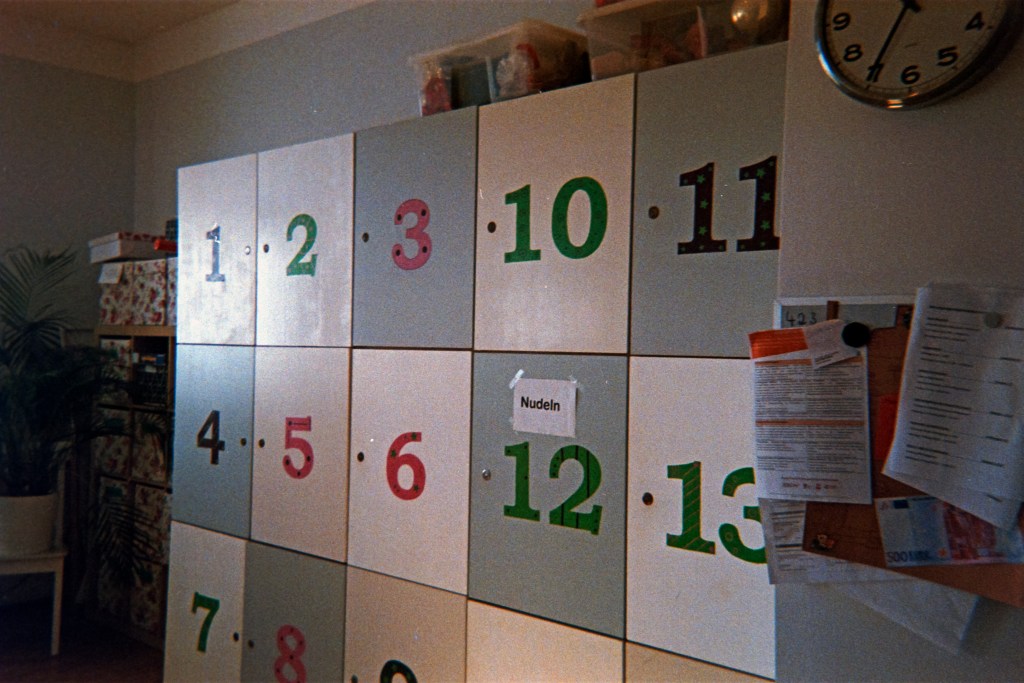
I put the first picture between us. It shows the room where we are sitting right now, the organisation where we first met. I ask her since when she has been coming here. „I came back to Germany from England in 2016, then I spent six weeks in Lichtstraße, in the homeless shelter. And after I found my flat, I heard about the organisation here and that’s when I came here, that’s how it came about.“ Since then she has been here regularly. „I know everyone here,“ she says with a laugh. „Is this kind of like a second living room for you?“ I ask. „No, not that. But I do come here quite regularly and I like it. Well, I don’t come here all the time – yes, I do come here regularly, because my washing machine is broken and I can do my washing here. Yes, but my living room is at home.“
She goes on to say that during the time when she returned to Germany, she suffered from massive memory loss. This, she explains, was deliberately caused by the order, „so that you cannot go to the police, so that they can control you more easily. Sometimes a split or multiple personality is created, which didn’t work in my case either, I don’t have that. I also recovered my own memory. And when I came here for a while, a social worker here noticed that I always say the same things. And that there must be something to it. And then she helped me, because she noticed that I was struggling to find a psychiatrist who specialises in the subject. “ They also find an exit counsellor together. „And they help me now to pass the things I know again – names and so on – on to the police. So that legal steps can be taken. That’s also important.“
I ask her if she can describe the process by which she was able to recover memories. „I wrote myself a trigger script, I also did the appropriate training for it. “ In England, Nina studied theology and psychological counselling. She also went to exorcist school and did additional training as a profiler to advise the police on profiling offenders. „So in the beginning it’s been like, I could remember next to nothing, nothing at all in the beginning!“ – „How big is the time period? ALL or a specific period of your life that was gone?“ – „Well, when I was 37 and noticed that something was wrong in my head – that started on its own – I had noticed that about 33 to 35 years were gone. I could only remember fragments of my name and when I was born. So it was really almost all gone.“ – „But your short-term memory?“ – „That’s fine. Concentration disorder, all the consequential damage, of course, I’ve got this“ – „And then that was the point where you realised: ‘Okay, something’s wrong’?“ – „I knew what it was, sort of. But I also had two friends in England who helped me in the end. I couldn’t take a picture of them now, unfortunately, because they’re in England,“ she laughs. However, the time she spent in England was not the first time she has become aware that she is suffering from memory loss. „They’ve given me several times – that went on for several decades. When I recovered my memory, it was pulled away again, it was a real brute force. They do things like that on purpose, it’s called ritual violence.“ She takes her mobile phone out of her pocket and shows me a photo of herself and one of the friends who helped her in England. „You can tell by the look on my face that I’m soft in the head. See what I mean?“ – „Hmm, you look a bit tired,“ I describe what I see. „Nah,“ she replies curtly. „I’ll show you another picture from the time I was prosecuted. I took this one during that time. That was just before the end. This one was taken on that day. You can see in the facial expression – nobody looks like that. Here, that’s the other friend I told you about. You can see it in the facial expression, you can tell. I look like I’m mentally impaired.“ – „That sounds harsh,“ I say. „Yeah why? It’s like this! When you’ve had electric shocks sent through your head for several decades and at the end you’ve been hit as well, then that’s how you look. There’s nothing wrong with that. You can see it though – you see what I mean, no?“ She finds another picture on her mobile phone, shows it to me and explains what exactly happened to her. Again she wants to make sure that I also see what she sees in the picture. „You see what I mean, no?“ – „Yes, I see what you mean.“ – „Good.“
„And your exit, did it start with the time in England?“, I ask. „I didn’t – I never got into it! They tried to manipulate me into it and I dropped out right from the start because I didn’t want to do it! I never have, I never have and I never will, it’s as simple as that.“ She continues: „As a rule, they let people commit crimes in order to blackmail them into staying. That doesn’t apply to me. I can go to the police without any problems. I’ve managed not to kill anyone despite these extreme manipulations, even though they want to educate or manipulate you into it, let’s put it that way.“ At the beginning she was asked what she wants: to oppress or to be oppressed. She wants neither, wants to get away from „them“; several times she goes to the police. She talks about how „they“ tried to kill her, that they killed her son when he was still a baby. She does not get any help at this point though. „They did everything they could to either make me look like a crazy person or, alternatively, they blew my brains out, that is, burned out my memory.“ Again I notice that it is important to Nina that I believe her, that I don’t think she is „crazy“. „Did I send you the writing?“ she asks suddenly. „No,“ I reply. „I’ll do it in a minute. I went to a psychiatrist with a social worker and also to a sect commissioner and that confirms that what I say is correct. So I’ll send you this right away.“ – “I believe you,“ I reply, „No, but if…“ she falters, „security is good.“ Then she continues, holding up the first photo again: „And that’s why I photographed the organisation here first, because the lady helped me so much. And also, I like coming here and it’s also a bit of support, isn’t it? From the social workers, if I’ve got something, especially as far as that is concerned, the subject.“ She tells me that she was told one sentence over and over again while she was experiencing violence: „Nobody will believe you.“ The fact that this is not the case, that there are people who believe her and listen to her, she also sees as a triumph over the perpetrators. She keeps talking, talking fast, talking herself into a rage. She takes the pile of photos in front of me. „Wait a minute, can I take the photos?“ As she speaks, she keeps slurring her words and flicking through the pictures.

She holds out a photo to me and tells me about another project that is also taking place here in the building and in which she worked. Back then, when she was still suffering from memory loss. „I made raised beds with them back then, but they are no longer there, so I photographed this instead. That’s on the third floor, I worked there for two years.“
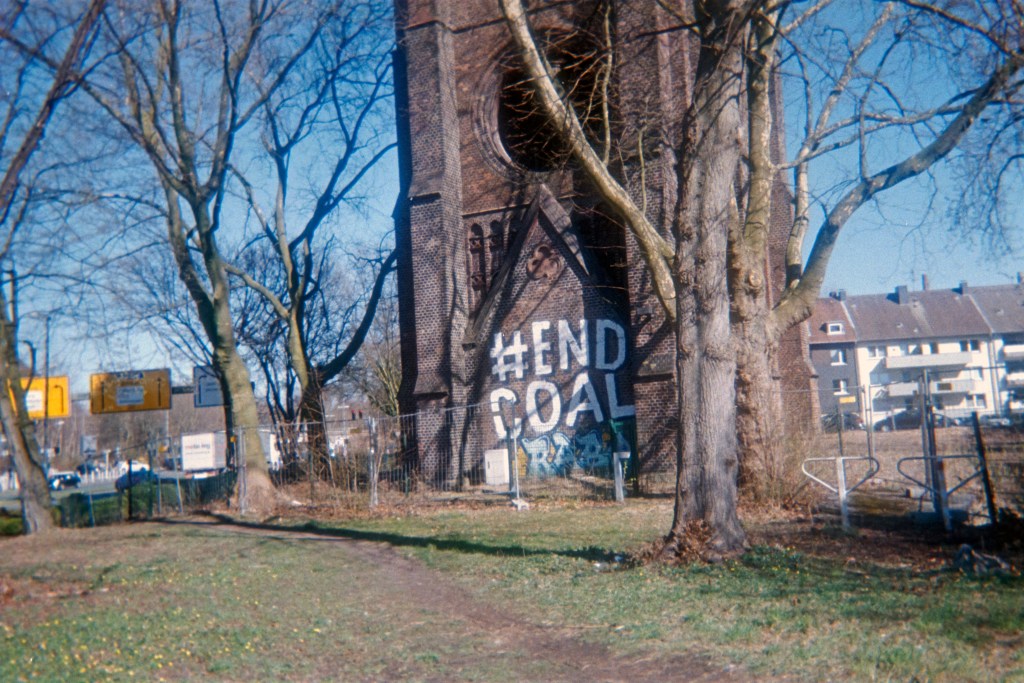
She turns the page – next picture. It shows a church; large graffiti can be seen on the façade. „And this for example, I’ll explain it to you now, this is a church. And when you see these abbreviations on these churches, these are their traffickers’ abbreviations. It’s THEM.“ – „What do you mean by traffickers’ abbreviations?“ – „Traffickers, those are their traffickers.“ – „What are they trafficking?“ – „What do you think they’re trafficking?“ she asks, slightly annoyed, looking at me. „Humans, you mean?“, I ask. „Yes. They’re those diabolical traffickers. They use such abbreviations. That’s why I took a picture of one.“ Next picture: a playground, a swing and a climbing frame. „That’s one of the things – those are sports exercises I’ve used to restore my memory. I’ve been going to playgrounds, doing workouts and so on and so forth.“
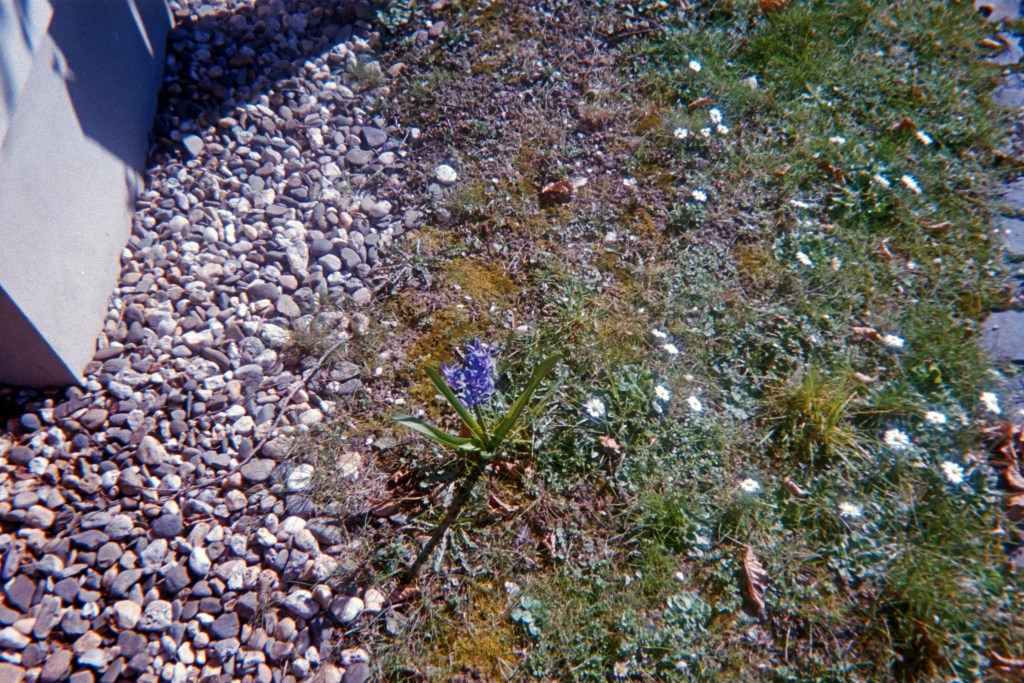
She quickly turns the page. The next picture shows a flower in bloom on a lawn. „Among other things, I took photos like this or this, simply to set positive aspects, positive triggers.“ I try to go a step back, to talk about one of the previous pictures. „Can you tell me a bit about the raised bed project?“ – „What do you want to know?“ she asks sceptically. „Well, what you did there.“ – „It’s a creative workshop. So that’s what my job counsellor – he said to me, ‚You don’t have to work at the moment, because who knows what your amnesia will bring up.‘ So he knows what happened. And I just said to him: ‚Well, if I sit at home all day and my head explodes, that won’t help either. Then he send me to the creative workshop for the time being. And the woman who runs it – she knows too – always gave me tasks that are not necessarily standard, because I’m good at sanding and assembling furniture and so on. I sanded chairs, I built boxes for an aid organisation where they can put their stuff in and stuff like that. I painted and decorated them myself. I got a lot of praise for that.“ Again she quickly turns the page. A picture of the tram stop from which she travels when she is not walking.
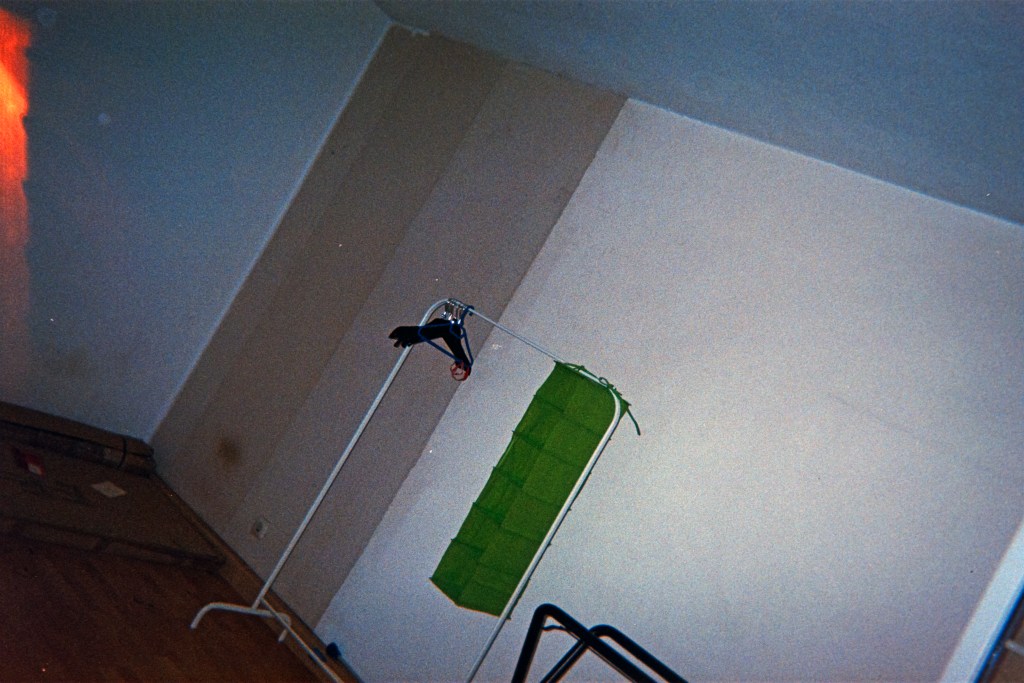
Then: a picture of her flat.
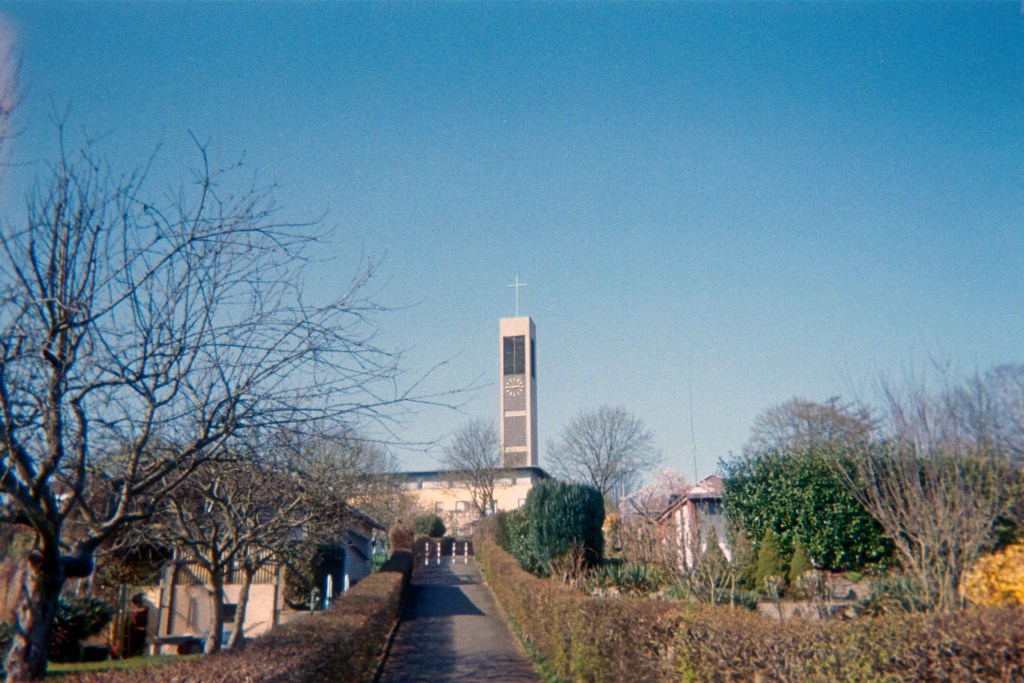
Next picture. „This is a photo of a church, representing my theology studies.” – “And what was it like at university?“ – „What do you mean?“ she asks, looking at me sceptically again. „So what were your fellow students like? Did you enjoy it? What was the university like? How was the time back then?“ – „I just did it out of stubbornness, to block out victimhood. That’s why I went to exorcist school afterwards.“ I ask her more questions about her time at university, how long she was in England, how she lived. She answers curtly and continues flicking through the photos, holding the next one between us.
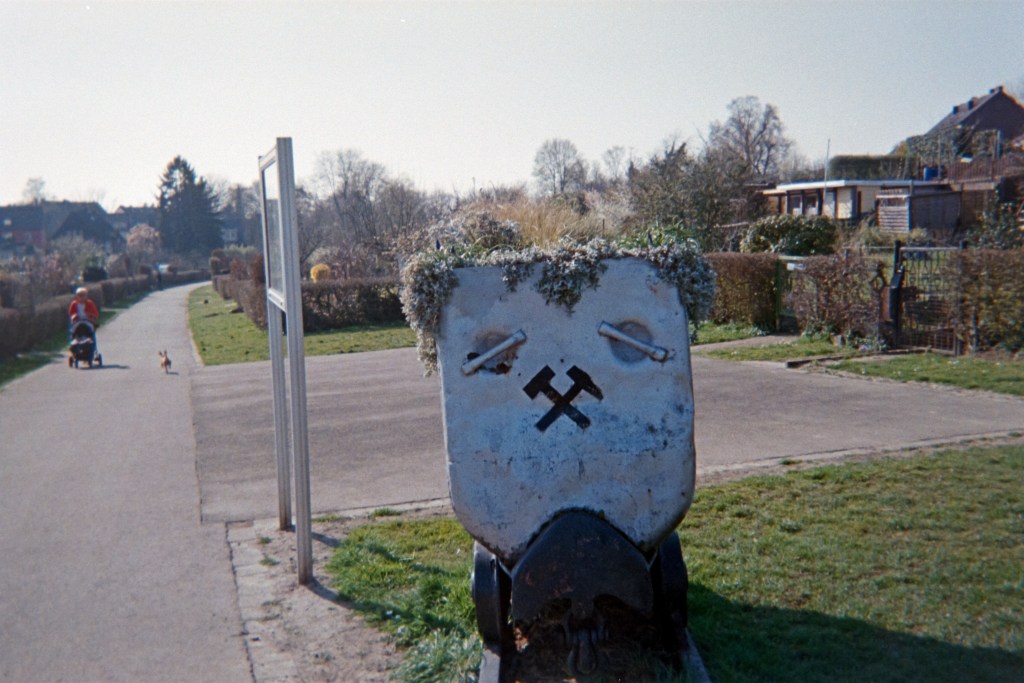
It shows a lorry as it was used underground, but instead of coal, plants are peeping out. „This is representative of my new home, North Rhine-Westphalia. That is also typical for Essen,“ she says quickly, as if she had to get a lecture over with rapidly.

Next picture. „This is a little dog that I look after from time to time. This is another church here. That’s the part of town, that’s where I live.“
She went through the photos so quickly that I still have many questions, many points I want to follow up on. „There were a lot of things, let me rewind a bit. Do you want to talk a bit about your studies or not so much?“ – „Why – what do you want to know?“ she asks irritably. „What it was like, that time.“ – „Just normal theology studies. Do you want to talk about the exorcism or what? I wouldn’t like that so much.“ – „No, about the studies, so just a bit of an insight into your university time. Because that’s also a big period in your life, isn’t it?“ Again I notice that she is more tense than at our previous meetings. She seems more controlled, suspicious and focused. I know she wants to tell her story and that it is important to her to tell it right, not to be misunderstood, not to leave out anything that is important to her story, not to add anything that is irrelevant.
Nina talks a little about her student days, during which she was still under persecution. She wanted to learn – gain knowledge about theology, exorcism – and thus oppose her perpetrators. „That’s what it was all about. I didn’t have much to do with my fellow students. And I didn’t want to. It has nothing to do with me being suspicious or anything like that.“ – „So it was just a means to an end?“ – „It was a means to an end, right. Just like the subject of exorcism.“ And she continues to use her knowledge: once a week she works as a freelance exit counsellor for people persecuted by cults. The fact that she is familiar with the subject not only theoretically, but also from the perspective of a former victim, is enormously helpful for her work.
The demand for her exit counselling, she tells me, exceeds her capacities. But even if she can’t work with the victims herself, she tries to refer them. „There is another sect counselling service here in Essen, I take them there. Or I take them to organisations that offer counsellors who can go somewhere with them. There is a psychiatrist in Essen who knows a lot about this. Then there is the exit counselling in Münster, so the offer of help is much better now than it was 20 years or so ago. There are many people who are all really good.“ – „You just have to know them, right?“ I comment. „That’s right. And if they approach me, even if I can’t do it myself, I can always say, then go there.“ – „What would you say your motivation is in all this, the theology degree, the profiling, the counselling?“, I ask her. „I just said that, to block the victim role and simply, that was the only way out. No criminal activity and as much knowledge as possible.“ I ask if part of her motivation is also not to let what happened to her happen to other people. She ponders. „Well that sounds … I’m,“ she keeps restarting. „I said to them, ‚Look, I’m going to find some legal way to piss you off regularly for the rest of my life.‘ And that’s actually more of a revenge move.“ By helping other people to get away from „them“, she resists, opposes – and takes revenge.
She continues and tells me that she is writing a book. She has already written one and is translating it from English into German: „How satanic cults and domestic violence intersect”. She is not sure yet whether she wants to publish it. „Because it also contains parts of my exit and I’m not sure now whether I necessarily want to make it public.“ I ask her how people in her everyday life react when she tells them about her story. „I don’t pay attention to it anymore. I don’t care about that. Well, at the time I just came back from England, I had been out for two years. And then – the devil was sitting in my bed, I got memory gaps, I was just talking shit – ‚I’m an exorcist and the devil is sitting in my bed‘ – what kind of statement is that? It’s no wonder they all thought I was crazy,“ she laughs. „But that’s a consequence of their treatment, people are supposed to believe that I’m crazy. But I always stuck to it and I always annoyed everyone with it,“ she laughs again. There were people who believed her, who stuck with her. „When I came to Germany, I only knew my name and that some Satanists were after me. I didn’t even know who it was anymore, I didn’t know anything. So pretty much nothing anymore.“
She now tells me a bit more about the time in England, the time just before she came back to Germany. She starts at the point where she had just given notice that she will leave her flat. „I got so fed up at some point, I had such a headache from these e-shock treatments and these manipulation treatments. Then I gave up my house, gave away my things and moved to the forest, for four months or so.“ Her two friends, whom she had already told me about, visit her there regularly. When she lives in the forest, once a week she goes to a therapist in town, who she was referred to through a women’s aid organisation. I ask her what that was like for her? „I told her all the time about demons and the devil. She kept looking at me funnily. I said: ‚Do you think I’m crazy?‘ – ‚Why, do you have that feeling?‘ I said: ‚Do you think I need to go to a psychiatric ward or not?‘ Then she looked at me again like that: ‚Do you have that feeling?‘ I was like, ‚No! But you look at me all the time as if you have the feeling that I have to go to the psychiatric ward.‘ And then she said, ‚Well, I’m not sure.‘ I said: ‚Well, let’s just do it like this, you observe me for a while and then you tell me afterwards whether you have stuck to your opinion.’ You could just see by the way she looked at me. She had just finished her studies, poor thing, and then she hears the whole load from me,“ she laughs. „I didn’t even know then that it was called ritual violence, imagine that!“ I ask her if her friends knew what happened to her. „In the end, yes. They went to the police, the whole thing.“
But again there is a cut, for a while Nina lives on the street in a larger city in Great Britain. „I had also registered a business, I sold pictures on the street. I stayed on the street. I had money in the end, but I didn’t feel like living anywhere.“ She sleeps under a canopy behind a church. The gardener at the church knew about it, but let her stay. „It hasn’t been bad for me to be on the street. In the mornings, the gardener woke me up between six and seven, because by nine at the latest I had to have cleared everything away, which I did. He gave me a little compartment in the back where I could put my sleeping bag and stuff. And then I went to a homeless centre in the morning and took a shower. I could also wash clothes and so on. I got on well with them. I also had my social worker there. I still have contact with him from time to time. Every now and then I write: ‚How are you?‘ or something like that.“ She doesn’t just stay in this city, she moves on. „I’ve travelled all over England.“ She draws pictures herself or buys some to sell on the street. „I didn’t feel bad or anything. I just stayed on the streets because I couldn’t be bothered anymore. I didn’t feel like living anywhere, I didn’t really talk to anyone because I was just stuttering and babbling anyway, with this head disability.“ But at some point, she tells me, she was being followed. Less than a year after she left, she is sure that someone has been set on her. „This guy got on my heels, they put him on me.“ One night the man attacks her in her tent. She goes to the police, files a complaint. The police help her get back to the city where her social worker is based. „They really helped me a lot, I can’t say otherwise. I think the English are cool.“ Even after she has been back in Germany, her British social worker still helps her. Together with the German social worker who has supported her from the beginning, she contacts him. „Because I wanted to ask him if he could help me get the police records and get my university records and so on. “ He helps her with all the documents.
By now, we are sitting in the courtyard in front of the building, Nina is smoking a hand-rolled cigarette. Again, she raves about Great Britain, tells me how comfortable she feels there. „Do you ever miss England?“ I ask. „Yes, absolutely! But I still have a lot of contact, especially with the two friends I told you about.“ – „Have you ever thought about going back?“ – „Yes, but I’d rather stay here. I’ll go there again to work for six months or so, I’ve already agreed with my friends. But then I have to make sure that I keep my flat here. Starting all over again… I also did all my training here again. I remotely studied Psychotherapeut-Heilpraktiker, then the großen Heilpraktikerschein, the hypnosis licence, NLP-licence and now I’m doing the first and last semester of theology again to refresh my memory.“ – „Impressive!“ – „Yeah, amnesia is amnesia, there’s nothing you can do. I studied the Bible with the Jehovah’s Witnesses, now I’m going to study the Koran in the mosque and then it’s time for theology, right? But I saved theology for last, because it’s always been my favourite.” We laugh. She continues: „What I am is called resilient. I have a pretty high resilience level. They could do whatever they wanted. They could throw me out on the street and things like this. In the end, I was happily living on the street myself,“ she laughs out loud again.
She also gets structural support to further her education and to build something up again. „I was first in case management, which means more intensive support, and I had a job counsellor who was great. Now I have a job counsellor who is also great. And they do what they can. At the beginning, of course, they also thought – to be fair, my job counsellor said to me: ‚I don’t know exactly what to make of what you just told me, but let’s wait and see‘.“ After the creative workshop, she looks for further training she wants to do, and her counsellor supports her. „Now that he sees that what I say is substantial, he no longer has a problem with it. But he first had to make sure – which is all right – that I wouldn’t tell him lies. He had never heard anything like that before. I didn’t hold that against him. At least he was honest. As long as people don’t pretend they believe me and then go behind my back and say: ‚That woman is crazy‘ – which has also happened, but not with official people – no, I prefer that.“ – „Has that happened often?“ She nods. „Okay. But so the people in your close circle, your friends and so?“, I ask. „No!“ Nina’s friendships have already lasted several decades in some cases. „They’ve got your back?“ – „Yeah, sure!“
I ask her about her everyday life and the people in her life. „I go to the courses, then I come here once a week to wash clothes. Then I go to my neighbour’s, visit friends. I also do some cleaning on the side, once a week. And I also clean balconies seasonally. And now I want to become an Alltagshelfer, that’s what I’m working on, to become self-employed, because you can also work with health insurance companies then. And my employment counsellor will also support me. Whether it works or not we’ll see later. I also always collect bottles to get the deposit, which is how I paid for my remote studies and my Heilpraktikerausbildung. And now also the first and last semester of theology, for memory refreshment, that’s also remote learning. I’m not going back to university now, I can’t be bothered.“ She also continues to see her psychiatrist regularly. However, she does not see a psychotherapist. She rejects the behavioural therapy suggested to her by the employment office as part of her course, also after consulting her psychiatrist. She doesn’t want to open up everything again, believes that it triggers too much in her. „If I have to start all over again, you can leave it right away. I don’t have to deliberately take any steps backwards now. My life is going quite normally now and that’s why I actually chose the photos rather positively with flowers and so on, because simply – I’m the living example that it can be done differently. That is also important.“ – Are you proud of that?“ I ask her. „Well, not too much. I’m glad I left, yes. I’m glad I didn’t turn out the way they would have liked.“
Suddenly the window behind us opens and the social workers announce that the food distribution is about to start. Nina puts out her cigarette and says she’s going in now. If I have any questions, I should just call in.
 Projekt "Perspektive(n) Mensch"
Hinterlasse einen Kommentar