I walk across Ehrenzeller Platz and already from a distance I see someone sitting on a bench at the other end. We had agreed to meet at the climbing wall next to which she is waiting, and as I approach, the young woman looks at me searchingly. I smile at her and when I raise my hand she stands up and smiles back. „I wasn’t sure, ‚Is that her?“ she says with a laugh. Narmin and I meet in person for the first time today. A few weeks earlier, at the Mädchentreff Perle, just a few minutes away from where we are sitting now, I talk to the staff there about the project. One of the women tells Narmin about it and asks her if she would like to participate. „I thought it was really nice because I also like to take photos in my free time, and this was kind of perfect because I take more photos during the holidays,“ Narmin tells me now. „I also want to buy my own camera one day. This was kind of such a perfect start.“ I ask her if she has ever taken analogue photos before. „Yes, but not in a project like this. I only ever take photos for myself. That’s why this was completely new. And I also wanted to do it perfectly,“ she laughs, „and then I thought: ‚What do I do, what do I do?‘ I really had a lot of ideas, I mainly wanted to capture moments in my everyday life. I also wrote down things I wanted to photograph – things like books or the park, where I often go for a walk.“
She has been going to Mädchentreff Perle since she was nine or ten. She is 18 now and I ask her how she came across the social centre. „I wasn’t born here. When we came here, I was eight years old and then I went to primary school here, and that’s when I met a girl and she knew the Perle. And then at some point I asked her what she was doing in the afternoon and she said she was coming here. Then I went along.“ She now lives in Frintrop, but still comes to the Perle. „Only to the club. Before, I was always here during the week, but now I have school, even late. And I have to study. That’s why I only go there on Fridays.“ Before they moved, the family lived in Altendorf, but the flat was too small; Narmin shared her room with her brother, who is three years younger. Her brother goes to the same school as her. Sometimes he is annoying, she says, but otherwise the relationship is quite good. Narmin is now in grade 12 and will graduate next year. She goes to Gymnasium in Rüttenscheid. It takes her almost an hour to get to school. I ask her why she goes to this school. „My father thought it was so great. I really didn’t think it was that great and I wanted to go to the school my friends went to. But then I was enrolled there and now I think it’s actually perfect, I like being at school there.“ She doesn’t know yet what she wants to do after graduation, but she definitely wants to go to university. She can already rule out a few things, she says. „Medicine. That’s not really my thing. Languages – well, I’m not too bad at that, but that’s not really my thing either. Science is not my thing either. I like topics related to society. I find that area quite interesting.”
I take the photos out of my bag and show her the first picture. „That’s Stadtgarten, that’s where my friend lives. And I also like to go for a walk there.“ They are usually here during the free period before P.E. lessons. Almost all of her friends live in the South of Essen, in Rüttenscheid. I ask if that makes it difficult to meet up. „It works. Well, we don’t meet that often anyway, because everyone is studying for school or has their hobbies and work. But when we do, we always meet at the main train station or go somewhere together.“ Narmin is now also working alongside school. „I think I’ve been looking for a part-time job for a year because I wanted to do something for myself and finally earn my own money. But then it didn’t really work out.“ She tries her hand in the gastronomy sector, but the hours are often late and her parents don’t want her to take the tram home alone at night. Next, she tries an ice cream parlour, but unfortunately that doesn’t work out either. Finally, she finds the job at the bakery where she has been working for a month now. I ask her what she does with the money she earns there. „I save it, actually. Because I thought that after graduating from high school I might want to travel, but then I thought now like, ‚No, maybe move out first.‘ So I just save it for myself and see what I do with it.“ Where would she like to travel to if she could? „I find Hawaii quite interesting, I’d love to see it. And America, because I’ve never been there.“ Moving out is more important to her than travelling right now, though, she explains. I ask her if she has received her first salary yet. „Yeah, I had worked the whole month in July, so I really earned a lot, which was also rad, because then I was checking my account and then I was like, ‚Oh! A lot of money already!‘ But it was also very exhausting,“ she laughs. She has already spent a little of it, on books, she went out to eat and to an exhibition. „And then you also notice how quickly money goes away,“ she says with a laugh. She no longer gets pocket money now.
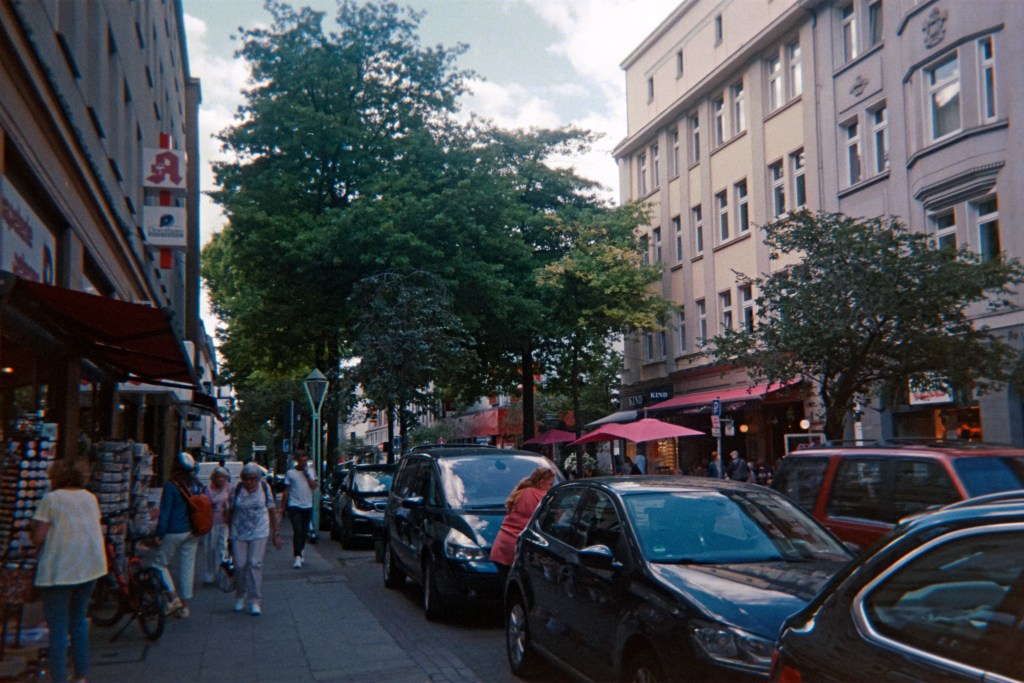
The next photo shows a café on the Rü. „I sometimes go there with my friends when we get our report cards or on the last day of school. It’s become a tradition for us to go there for lunch.”
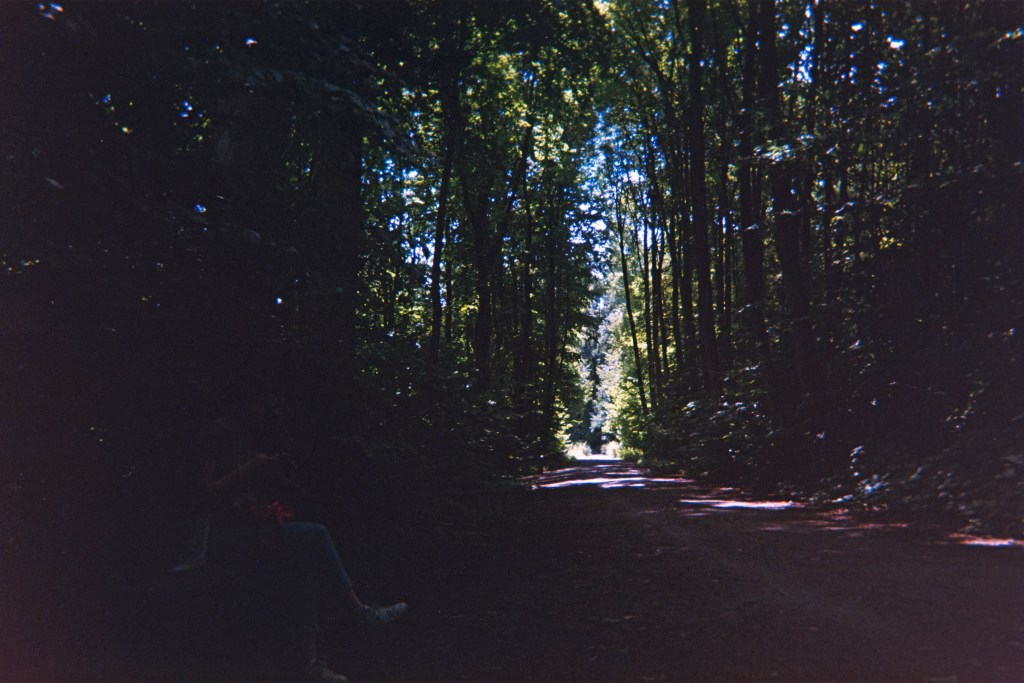
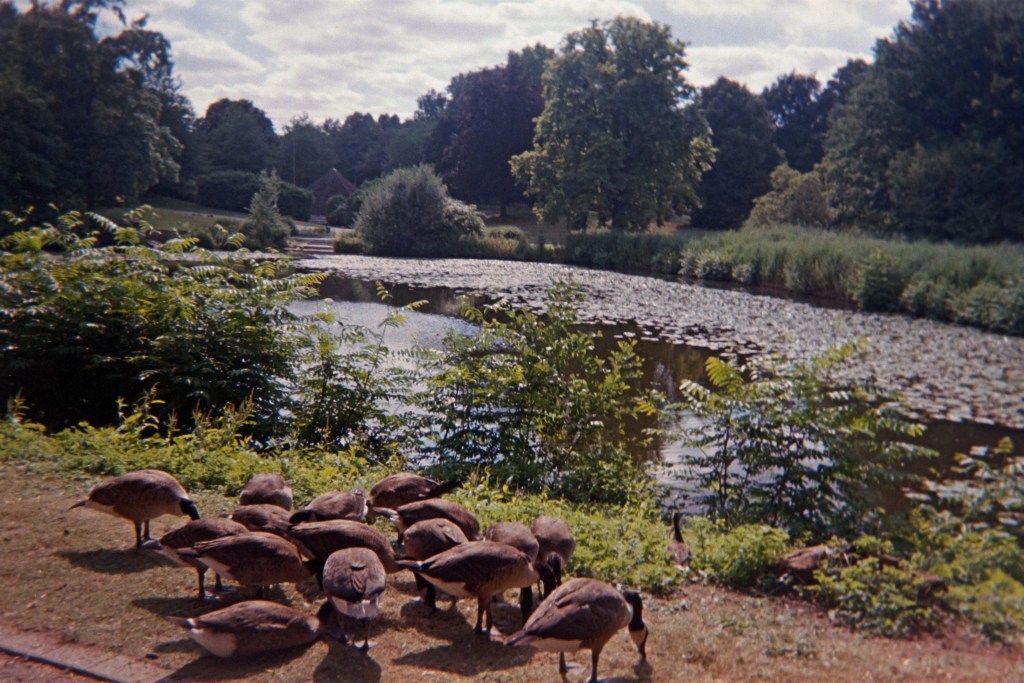

The next picture was taken in the forest when Narmin was hiking with her friend. „I like nature very much. I find it so totally liberating. When you live in the city, it’s stressful, but taking time out like this, walking in the forest, is beautiful.“ She is happy the the Schlosspark is very close to her home so she doesn’t have to take the tram somewhere to go for a walk. „I always go for a walk there, every Sunday actually, unless I have to study. And I listen to music then. Because I don’t think I can do it without music,“ she says with a laugh. „And then I always take a walk, actually always the same one, and then I come back home.“ She takes a few photos of the park; one shows blooming yellow flowers with a bee sitting on them. Yellow is her favourite colour, so the flowers should not be missing, she explains.
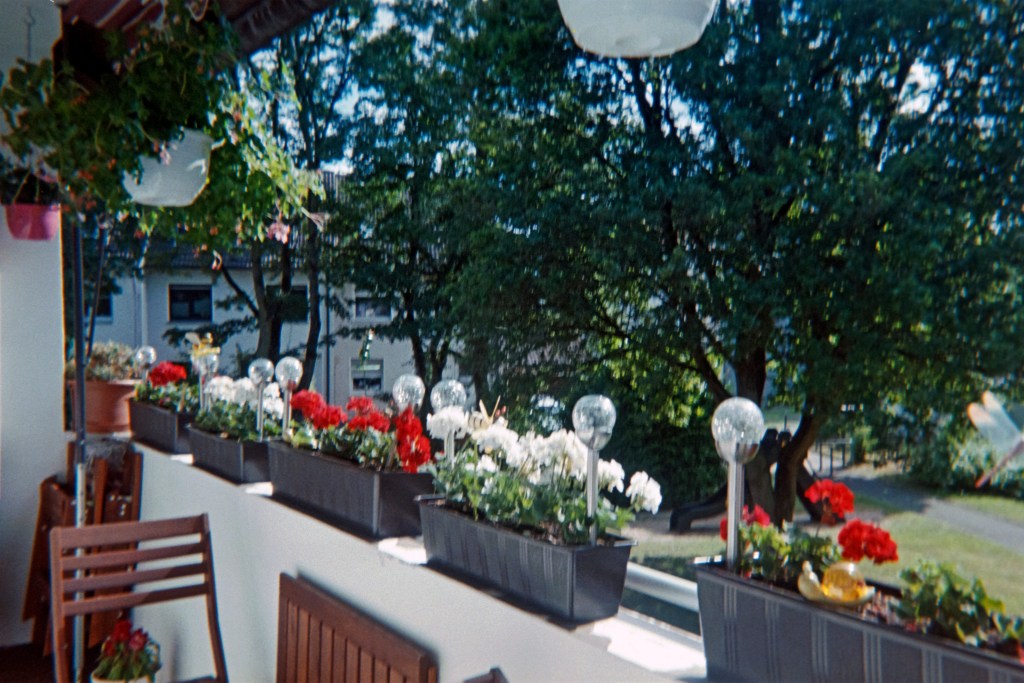
The next picture was taken in front of the flat where she lives with her parents. „That’s in front of my front door. And I think the flowers are beautiful there. My father planted some flowers, I helped him with that too.“ – “Did you get that from your parents, the connection to nature?“ I ask her. „Yes. Well, I was born in Syria. And my grandmother – well, most older people lived in the countryside. I’m so used to it, I’m also a bit of a village child. I really only know being in nature and doing a lot there.” She lived in the city with her parents and brother, but they always visited her family in the countryside during the holidays. The next picture shows the balcony of the flat; it too is full of flowers planted by her father. I ask Narmin what her parents do for a living. „My mum works at Kodi, she used to be a teacher. My dad used to be some kind of designer. So these children’s clothes – sometimes there’s Spongebob on them or Tom and Jerry – my father drew them and they were then printed. But then, when we moved to Germany, he couldn’t do that anymore because he was too old for an apprenticeship, and here a lot is done with machines and it takes a long time to learn that. Now he works – I don’t know what it’s called exactly, but he counts the goods in the warehouse and then it’s just passed on and then they travel to towns and see how many goods are in the supermarkets.”

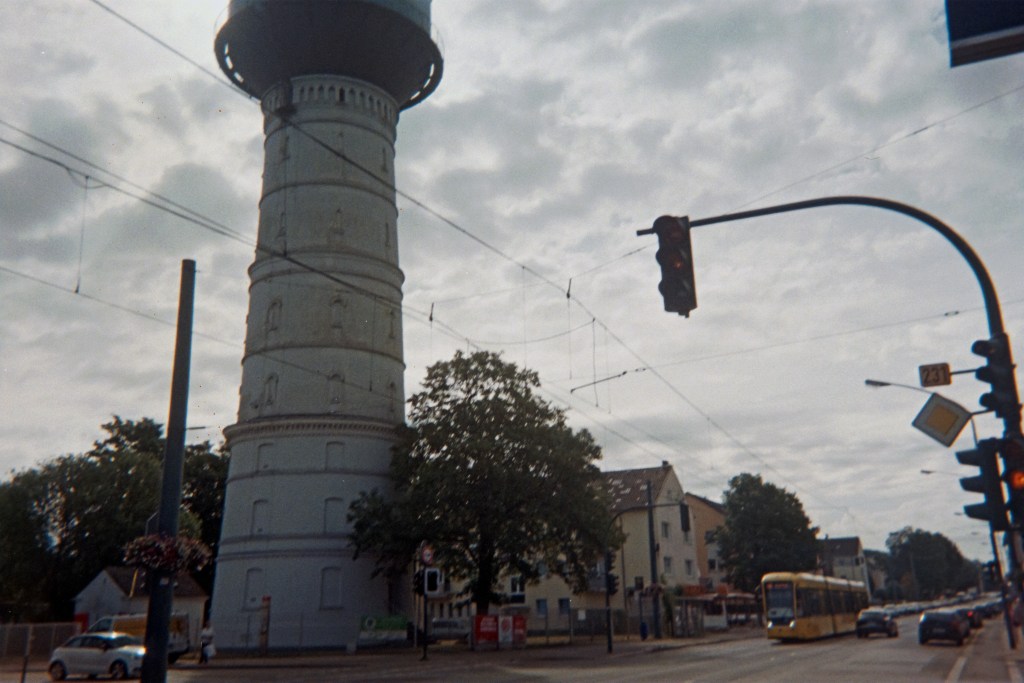
The next photos show the surroundings close to her flat: the water tower where she waits for the tram every day, a garage door painted with characters from „The Lion King“, apartment buildings with balconies and front yards full of flowers. Does she like it in Frintrop? „Yes, really! I am very happy. At the beginning I thought: ‚Oh no, I have to drive a long way,‘ but now I’m totally happy. I think moving does something to you.“ – „What has changed?“ I ask. „The vibe. And I’m – I don’t know, I think change is good somehow. Because it got boring here at some point. It’s always the same ways you walk. Now too, but because we’ve only moved here two years ago, it’s still so new.“ I ask her if she wants to stay in Essen to go to university. „I don’t think so. So if I study, it will be in another city, and also move out, because I want to go a bit further away.“ – „Just a bit away from your parents?“ – „Hm, also in general. New vibe.“ I ask how the relationship with her parents is. „Quite okay. Well, I argue a lot too. But I think that’s normal. Because I also asked my friends from school and I think it’s normal to fight.“ The issues at hand are how long she’s staying out, or that she should focus more on studying. „I think everyone has that,“ she says with a laugh.
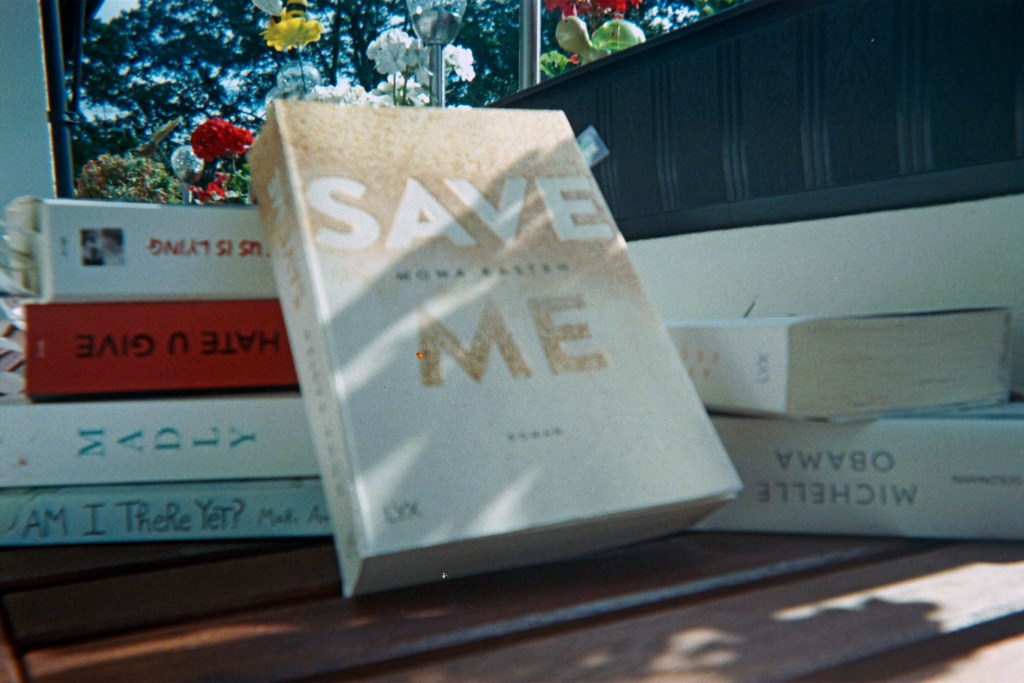
The next photo shows a stack of books. „These are books that I have read. I wanted to arrange them in a certain way. And I wanted to have this at the front, because it was the first book I bought for myself. And that’s how I started reading, because before that I didn’t read that much, except for school books.“ During a free period, she went downtown with a friend and went to the bookstore. The friend recommended this book to her. „I started it and I’ve loved reading ever since!“ She was fifteen, sixteen at the time. Now she has a library card too. „I actually either borrow most of the books from the Perle or buy them.“

I put the next picture between us. It shows a window above a row of seats. „This was on the train, because I had the feeling that I travelled a lot by train during the summer holidays, which is good. I also find travelling by train much more pleasant than being in a car, because in the car I can’t read, I get warm, dizzy, but in the train it’s ten times more pleasant.“ During the holidays, she spent a week in Denmark and a week in Berlin with her family. Besides that she took small day trips with her friends to Düsseldorf, Cologne, Duisburg. I ask her if she sometimes visits other cities outside the holidays. „Only during the holidays. Or if so, at the weekend. But during the week it doesn’t work out because of school. Which is a shame.“ We talk about what her weekends usually look like. „One day on the weekend I usually work, on Saturday. And Sunday I go out with friends. But in the evenings I’m not out that much, which is a bit of a shame, but maybe that will come later,“ she laughs. How about her friends? „It’s similar actually. Well, I also have friends who are out late often and stay up all night. But I also have friends who don’t go out that often. Both, actually.“
The next pictures were taken in Düsseldorf. One of the photos shows a sculpture that Narmin finds interesting. The other shows a restaurant where she went to eat with her friends. „Düsseldorf is also a city of its own. It has a completely different vibe, I think.“ The group of school friends has existed in this constellation for a long time. „I also have a best friend with whom I do most things. And when we meet, it’s always with the same people from school. We actually get along well, but some get along better than others, which always happens, but we don’t really fight. Not since the eighth grade,“ she laughs. „It used to be that we argued a lot. It’s not like that anymore. Everyone is busy with school, there’s no room for fighting.“ We talk about how school and studying for Abitur are taking up more and more space. „I also notice in class that we are quieter, because it used to be much louder, we were more hyper. And I notice that everyone is somehow busy with themselves, a little bit. And you notice, okay, it’s getting closer to the Abitur. Sometimes I feel stressed because others study a lot and I compare myself to them, but I had imagined it would be worse.”
She has chosen geography and English as her advanced courses. She is particularly interested in geography. „It has something to do with travelling. I find it really exciting to get to know new countries, how people live in other countries, it’s completely different. Even in Berlin I had the feeling that people live differently. That’s why I find geography really exciting.“ We talk about other countries and places and I ask her if she would like to go to Syria again. „Yes, but I don’t think I could live there anymore. Even if everything was fine again, I couldn’t live there anymore. Because I just have a completely different attitude than before, I think. And I was still a child then, I didn’t understand so much as a child, I think. But now I have a completely different attitude and a perspective that doesn’t fit in with that.“ – “What do you mean?“ I ask. „I don’t know, I think that Germany and Syria are different worlds. And there are completely different views than here. And before that – I was eight! All that was important was playing, watching TV and so on. And now I’m more concerned with my life and I have completely different views than I did there. For example about education or relationships or love. So I think I just couldn’t live there any more, I couldn’t condone it anymore.“ I ask Narmin if she also talks to her parents about it. „Not that often. Well, we haven’t talked about it for a long time. Somehow not. It’s a pity. I don’t know why.“ – „But do you think they could understand?“, I ask further. „I do. But I think they’d still want to live there. I mean, because of the fact that they grew up there and lived there for years, they probably want to go back, but – I think they can understand, but not completely.“ I ask her if she knows what it’s like for her parents to live here in Germany now. „Well, I know that it was quite difficult at the beginning, because they still had to settle in and look for a flat, work – it’s not what they were used to either, the work and the environment and the country in general. But it was easier for me and for my brother too, because we were only children and we didn’t have to deal with it so much. I think it was difficult for them at the beginning, but now they have settled in.“ – “Do your parents also have a social network here now?” – „Yes, also at work. Not like before, not like in Syria, but they have already made friends.“
I put the next picture between us. It shows the apartment building where the family lives. Actually, her parents wanted to move to a small town near Stuttgart, Narmin tells me now. But they couldn’t find a flat there. „And then they found this flat; of course I thought it was much better that we could stay here.“ I ask why her parents wanted to move there. „I think because they just wanted this peace and quietness. Just to live in a village like that. They can do that later, but I was like, ‚Now I’m still going to school, and now we have to stay here for now until that’s done.’“ I ask Narmin if she thinks her parents will stay in Essen once she and her brother have moved out. „I don’t think so. I think my mum really wants to live in the village, my dad too. Because they just find it more pleasant. But I think they probably stayed here because of us.“ Even if her parents move away and Narmin also goes to another city, if the family will no longer live in the same place, she is sure that they will always try to keep in touch. „I also want to visit them and stuff like that. But I think it’s good to have that distance, especially at the beginning after graduating from high school, because you have to live your life and do your thing and become independent. Because I have the feeling that I’m very often dependent on my parents and don’t do my own things. That’s why I’ll be happy when I’ll have moved out.” – „And how do you notice this dependence?“ I ask. „I don’t know, when I receive letters and paperwork, or now that I’m working, I don’t understand some things and my dad does. Then I always have to ask him, I still have to learn it all.“ As an example, she tells how she didn’t know how to find out her national insurance number. „But now I know that, which is good. These kind of things. They don’t teach you that in school.“ Of course, she is also afraid of the next steps. „It’s completely new, you’re on your own, you have to get along, find a place to live. It’s all totally difficult. It scares me a bit, but I think you can manage. I mean, others have managed before me.“ We talk about how she would like to live. „At the beginning, I think I want to live in a shared flat, because I need people around me first, because I don’t think I could do it on my own. But at some point I think I want to have a smaller flat with some decorative things. I like our flat, but I think my mum is too perfectionist. It’s too perfect, I’m afraid of breaking things. That’s not really my style. I think I want it to be more cosy and familiar, I can’t describe it. But I’d like it to have more plants and more colours.”
I come back to the fact that she had briefly brought up the subject of love before and ask her if that is already relevant. She laughs and covers her face with her hands. „Not yet. But yes. More than before. And I think you’re more open now at that age and you try more. But I don’t have a boyfriend yet,“ she laughs again, „but I think that will come. I think I’m at an age where you’re insecure about yourself and your life anyway – I think you have to find yourself first and love yourself somehow before you love others. But I think that will come.“ What’s it like in her group of friends, I ask. „Yes, quite a few. And then they always tell me, I find it quite exciting,“ she laughs again. „Well, yes, I always find it interesting somehow. And I’m always like: ‚Okay, what will I be like? What will it be like with me?‘ But that’s all to come.“

By now, all the photos are in a pile between us. I ask Narmin if she recognises herself in the pictures. Yes, she does, she thinks, „These are really moments in my life that happen again and again, that make me the happiest. Because I think at my age it’s always like you want to achieve something big, do more and see more and always have such a perfect life. But I have the feeling that smaller moments somehow make you the happiest, and you don’t forget them. That’s why I thought it was kind of a perfect fit.“ I ask her where she notices this urge for perfectionism. „At school, I don’t know, when people kind of – well I don’t know, through clothes or through other people’s behaviour. That you always try to be perfect and not make any mistakes. And always this standing up straight, always saying the right thing, even at school. And that sometimes stresses me out, because I notice that in others, I also notice the stress in others, that they always want to maintain this perfection. But then I’m always like, ‚Well, it doesn’t matter!‘ I rather like this naturalness, this genuineness. And I don’t like this trying so hard. I can’t describe it, but in terms of appearance or goals, you always say: ‚I want to achieve this, I want to be rich, I want to have money‘, whatever. But that doesn’t make you happy. So this phrase ‚money makes you happy‘ – I’m against it, I don’t think so, because I think you can’t buy love and stuff. You can’t buy moments either. That’s why I prefer the real thing.” – „Do you have an environment where you feel you can really be who you are?“ I ask her. „Among friends. I also notice the during class – in some courses I’m totally insecure and it makes me insecure, the way everyone looks at me. You compare yourself and also concerning participating in class – if you don’t raise your hand so often, but others do it more often, then this instinct to compare yourself is somehow there. But when I’m with friends, I feel safer and I’m myself and I say what I think. In class I have the feeling that I don’t often say what I think. Which is a pity. But that’s how I feel safest: among friends. „
Besides her friends from school, she also has a group of friends from the Perle girls‘ club. „And there is also a completely different vibe. I think it’s nice to have different groups of friends, because then you have completely different vibes and completely different people. And I mean, with them I can also be different than with friends from school or at home – you are somehow different where ever you are. And I think that’s so nice.“ She has lost contact with her friends from primary school for some time now. Sometimes she worries that contact with her current school friends won’t last after graduation either. „It’s a bit like when you leave primary school, that everyone goes their own way. And I’m just afraid that after graduation everyone will leave and you won’t have any contact and you won’t be texting anymore. But I don’t think so, because now we’re at an age where we can actually keep in touch and always visit each other, we’re old enough. And then it will work out. But I’m already afraid.“ We talk about the time after high school and I ask her how she imagines her future and what she wishes for for herself. „Well, what I definitely want is a profession that I like to do. Because I think that’s what you do for thirty years or so, and if I then have a job that doesn’t make me happy, then that would be a total shame. That’s one of my goals. To live contentedly. It sounds so abstract now, but I want to live happily somehow, I want to be content. I don’t know, you only have one life, you only have these years, and so I want to make use of them and not just sit around sadly in my flat. Those are my goals. Yes, and then I want to have friends and family and everything, but first I want to be content, I think“.
 Projekt "Perspektive(n) Mensch"
Hinterlasse einen Kommentar