The first time I see X is at an event where she is invited as a speaker. After the presentations and an open discussion, we start talking to each other. I introduce the project to X and ask if she would like to participate. Slightly nostalgic, she looks at the analogue camera and we exchange numbers.
Now we meet again in the same building; instead of the open café, this time we sit in a group room. The tables are arranged in a square; apart from the construction site noise outside the window, we are undisturbed. After X pours herself a glass of water, I ask how the photography worked out and how she went about it. „My approach was basically to photograph the things I have in my life,“ she explains, „whether it’s astronomy or painting. Or I like Africa, so I tried to have something with Africa. That’s how I went about it.“
The first picture I put between us shows a table with books and a sign saying „Welcome“. At this table, X explains to me, she meets twice a month with her reading group. X loves to read – actually, she always has – and she loves to share experiences with others. Within the reading group, she and the other participants discuss books they have read recently, or they give themselves changing topics on which they are looking for books. The next topic for the reading group: Secrets. One and a half years ago – during the pandemic – the reading group came into being; nowadays, they meet in presence. Sometimes the group does other things together, too: they go out to eat or watch a film at the cinema. X is actually always out and about a lot, she tells me now. „Was it always like that?“ I ask her, „Yes, even when I was still working. Now I’m already on full disability pension. But when I was working, I was also busy a lot. I don’t have children either, so it was quite possible, even in the evenings and so on.“ She used to work in a dental practice. „I was – or am – a dental assistant. I used to be a dental assistant,“ she says with a laugh. Then in 2010 she retired. „I had cancer, with depression, which I unfortunately got from it. Thank God everything is fine now, both cancer and depression. And that’s how I got my pension.“ She was diagnosed with cancer in 2007, followed by hospitalisation, chemotherapy and rehabilitation.

I ask her what helped her during the difficult time of her illness. „I went to rehab twice, a medical rehab, and that’s when I got back to painting. Which I had kind of lost in my life. I loved to paint when I was a child and a teenager. And that’s how it came about again. They had an art therapy there, and I also do a lot of painting.“ Since she rediscovered painting, it has played an important role in her life. „When I feel… somehow like this, no? Not the way it should be. Then I grab my things and just start painting. I always have something with me. Then I have a little book, and then I just do things like this,“ she shows me her drawings: geometric patterns, mandalas, interwoven drawings with fine, black lines. „It’s nice to come down,“ she says with a smile. She draws every day, „even if I’m just scribbling on a napkin somewhere.”
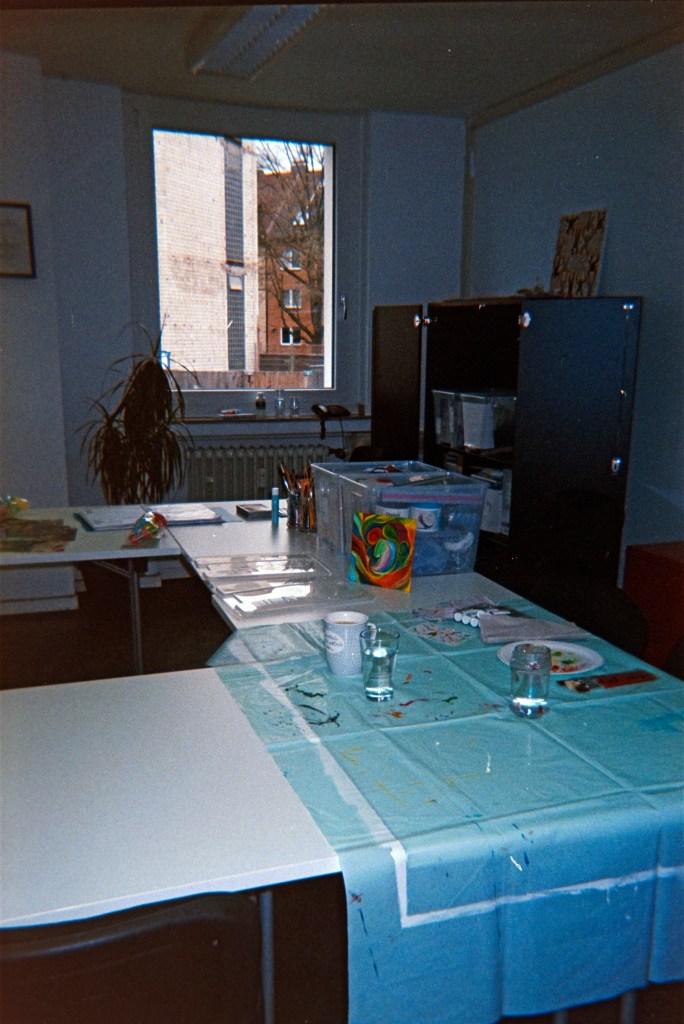
The next picture was taken here in the group room where we are sitting. „In the cupboard is our creative material,“ she points to the corner of the room, „and I do the creative group for the people who are looked after here. We paint there, but we also do handicrafts. I look for things you can do with the people, low-threshold things that are not so difficult.” I ask her about the target group: who are the people who come to the creative activities? „The Aidshilfe is also a guardianship association,“ she explains. „There are HIV-positive people there or not. And that’s who the people are.”
Since the end of 2014, she has been working as a volunteer at the Aidshilfe, where I also got to know her. „First there was the women’s group, then there’s a breakfast group here, and I took part in that. And then I said: ‚Hey, guys, let’s have a creative group!’ Then I developed a flyer, which also has a picture I made on it. There’s also Cook For Fun, where we cook once a month with HIV-positive people, but I’m a participant there only. And then there’s Fit For Fun, which is the newer baby, to go out with people for a walk. Maybe to take a trip with the 9-euro-ticket or just to the Gruga or something.
„Can you tell me a little bit about how you came to the Aidshilfe,“ I ask. „Yes, I am HIV-positive myself and because I am a self-help person anyway, it was quite clear for me to go here.” I ask her how long she has been HIV-positive. „I got my diagnosis in August 2014. But I must have been positive since about 2000. I went untreated for 14 years and was initially asymptomatic, but it wasn’t until 2010 or 2011 that I started showing various symptoms that pointed to AIDS. But I had to go from doctor to doctor and did all kinds of things. I even went to a specialist in Essen, who is no longer there – he also retired – who also treated HIV-positive people, he’s a haematologist. And even he didn’t come across the thought that I might have AIDS; he thought I had an autoimmune disease.“ – „Can you explain why?“, I ask her. „I don’t belong to the …“, she pauses. „What you would imagine?“, I carefully complete the sentence. „What you would imagine,“ she affirms. „Woman, heterosexual, married. Neither a drug addict, nor that I’m a prostitute or whatnot. But I do think, from the symptoms – from what I know about HIV today – at least this doctor should have known. Or should have said, ‚Shouldn’t we do a test?’“ She tells me about the symptoms that started it all. „I had massive diarrhoea at the beginning. That made me lose 25 kilos or so, and I ate like a champion. At the beginning it was still fun to lose weight, because I was about the same weight as I am now. But then at some point it just stopped.“ All kinds of examinations were done: gastroscopy, colonoscopy – without results. Then came bruises, all over her extremities. „Because I had no more thrombocytes, almost none. And that’s when I was referred to this haematologist who also treated HIV patients, and he said autoimmune disease, maybe remove the spleen.“ She was told to stop taking the antidepressant she was still taking at the time, and then she was given cortisone. „Thank God nothing was taken out of me, I didn’t want to do that so easily.“ Her doctor, who had treated her for bladder cancer, is wondering: Are her symptoms related to the chemotherapy? The neurologist who prescribed the antidepressant is also looking for an explanation in connection with the drug. „Yes, and at some point, that also went away. Strangely enough. And then came a typical pneumonia, which you only have when your immune system is absolutely down, only then do you get it, a healthy person doesn’t get sick with it, even if they come in contact with the pathogens. „At that time, she is already in hospital, has a high fever and is given various antibiotics. Finally, under anaesthesia, a sample is taken from her lungs and it is found that she has Pneumocystis pneumonia – the typical pneumonia that almost only occurs in HIV-positive people. „And that’s when they asked me if I wanted to do an HIV test. I say, ‚Please do it, I would like to know what I have!’“ That was in August 2014. „They then immediately transferred me to the university hospital and directly to the respective ward and of course they immediately gave me medication and then I actually felt much better after three days thanks to the medication.“ At that point, her immune system had hardly enough helper cells left. „I wasn’t actually that devastated or anything, I was just happy to know what I had. And to be able to be treated.“
„Did you ask yourself how this could happen?“, I ask. „Of course! I was still together with my husband at the time; I suspected him because I myself had lived monogamously and we had been together since 2000 – that’s why the date 2000. After that, I only really had sexual relations with him. And of course, he had himself tested immediately, but it was negative. I didn’t infect him! Although we really didn’t only hold hands. So that’s why I know it must have been before 2000, the man before that. But I don’t know where he is, I don’t have any contact anymore. But it’s also pointless. I’m glad I didn’t infect my husband!“ I ask how the diagnosis affected their relationship. „Well, our relationship was actually already not functioning anymore, but not because of the diagnosis. So we are still in contact now, but we don’t live together anymore and we are divorced by now, but we are still seeing each other. But it had nothing to do with the HIV. It had already happened before and he accompanied me through the whole cancer process, even with the HIV, and always supported me. When I need help, he’s there!“ The two met while dancing. „At Café Cuba back then. A reggae disco like that,“ she smiles and is silent for a moment. „Nowadays I like to go to Langendreer Bahnhof, there’s an oldies disco, they play music from the seventies, which was my time, and I like to listen to rock music, the Stones, Deep Purple and so on. They play that kind of stuff and then I dance all the frustration or whatever away out of my body. The first time I went dancing after my cancer diagnosis, I said to my friends: ‚Now I’m going to dance my cancer away‘,“ she laughs. We talk about what happened next, back then, after the HIV diagnosis. „I was in the university hospital for three weeks. Then I had to go there once a month at the beginning, to check how my blood results were. Now I’m on a three-month cycle, I only take one pill a day for the infection. And in 2014, right after I was discharged from hospital, I came straight here and spread out,“ she says with a laugh. „Then I knew what it was like here, discovered the café downstairs, where you can have a nice lunch and things like that, so of course I enjoyed that and got to know people. „
For X, it is important to talk to people who are in similar situations, who understand what she is going through. „I believe that no matter what you have, whether it’s a physical or mental illness or other things that may not go so well in your social life, it’s very important because I know that only someone who also has cancer can really understand me,“ she says. But she also feels understood by those who are not affected, such as her ex-husband and close friends, even if they themselves cannot understand what it is like to be diagnosed with cancer or HIV. Still in hospital, she thinks about how she wants to deal with the diagnosis and quickly decides to tell her close friends. This decision was the right one for her, because she could decide for herself when and how to tell the people who are important to her and not be outed by others. In her environment there are no negative reactions, no nasty surprises. However, it is different in the health sector, for example. At the dentist’s she is supposed to come in the evening, when there are no other patients, because of the false assumption that she could infect someone. However, she doesn’t simply accept those things, she puts things right, does not accept this kind of treatment. She supports other HIV-positive people at the Aidshilfe during such visits to the doctor, goes with them and provides information when needed.
I ask her what it does to her when people react to the disease like that. „Angry, it makes me angry. But many others then just go somewhere else, to another doctor or don’t go at all, which is even worse. I don’t blame myself for being HIV-positive, but some HIV-positive people do. They say: ‚Oh, I wish I hadn’t‘ – self-stigmatisation! I don’t do that, that’s why I can deal with it the way I do. But if I were to sit there and stigmatise myself, and then a dentist tells me some crap about it, or writes ‘HIV-positive’ on the health insurance card and things like that, that wouldn’t work at all! Then of course I would become even smaller, then I would shrink more and more. Self-stigmatisation and then on top of that stigmatisation from the outside. Maybe already a low self-confidence. And then the person is becoming even smaller. And I try to work against that.“ She does this through educational work, which she does in various areas within the structures of the Aidshilfe. For example, she speaks to school classes or health workers. There, too, the prejudices and gaps in knowledge are sometimes frighteningly large. That HIV-positive people are no longer infectious when they are in therapy and take their medication regularly; that they can conceive and give birth to children naturally without the child becoming HIV-positive – these are also things, X tells me, that many health workers do not know. She tells me about some of the experiences she has had in her educational work, both positive and negative. She tells me about young students, about curious, open questions – „Can you actually see if someone has HIV?“ and her disarming counter-question: „Can you see anything when you look at me?” But also about the moments that make her sad or speechless. „After we told everything – including me, my joy of life and how well one can live despite HIV – a young man in the geriatric nursing school said: ‚If I got the diagnosis, I would kill myself.‘ Unfortunately, I didn’t reach him. Sometimes that’s the way it is.“
We continue talking about stigma and how to deal with blame from others or oneself for the disease. I ask her if she ever got into thought spirals and wondered how her infection came about and if there was anything she could have done differently. „No. Well, I think I went through – well, the cancer diagnosis was before that. I got depressed because I had lost a friend to cancer shortly before and my sister and then I thought, now it’s over. And then I developed depressions – depressions that needed treatment. And I learned so much! I had therapy there, I was in the day clinic. And there I discovered so many resources and possible things for myself. And then painting. I learned so much there that the HIV diagnosis didn’t knock me out.“ We talk about her resources, about the many things she does that are good for her. In between all her activities, she also enjoys time alone. „I also consciously take my me-time, where I then really just read at home or paint or cook or enjoy myself, listen to music.“ But also the exchange in the self-help group, which she co-founded in 2010 after her cancer diagnosis, gives her a lot of support. The other two co-founders have already died of cancer. I ask her how she deals with losses. „I had to deal with death quite early on, because I lost my father when I was only 19. He died in my arms. And I dealt with death a lot – even back then. I read Kübler-Ross and other things, tried to read everything, dealt with it a lot. I also watch films when there’s something on TV, a documentary and so on. I was in the hospice with a friend, I had contact there. And yes, by now it’s like this – I mean, you never know what’s going to happen – but … I’m not scared of death. I’m more afraid of the suffering before death, perhaps, if I were in pain. But not of death itself. I find it more curious, when it comes – I hope I’ll be 100 by then.“ She laughs. „I want to grow old, I don’t want to die yet.“ She tells me more about her father’s death. „My father was quite calm – he took another gasp and then fell asleep. That wasn’t frightening. „
When her father died, he was already 87. They had a very close relationship. „I wouldn’t have wanted to have had anyone else, even though I only had him for such a short time.“ A sister and a brother have also already passed away, as has her mother. She has almost no contact with the sister who is still alive. X is a native of Essen and still lives – now again – in the flat into which the family moved when she was one year old. When her mother got cancer, she decided to move back into the flat to take care of her. „She could still go shopping on her own and stuff – she wasn’t bad at all yet. And then, because she had a weak heart, she just fell asleep one night. Then we found her with a women’s magazine in her hand, lying on her side, glasses on, right? The meatball recipe was the last thing she saw,“ we both laugh. „I thought: ‚Well, she just fell asleep with the magazine in her hand‘. It doesn’t get any better than that! That’s why I tell myself I’ll do the same. I’ll just fall asleep somehow like that.“
After the sudden death of her mother, she stays in the flat. One of the neighbours is a woman X went to school with as a child; she as well has returned to the house. „I feel at home there too,“ she says with a smile. Her home is in Katernberg. We talk about the north of Essen and about the prejudices she sometimes faces because of where she lives. „I mean, I get hear these things, but because I’m a child of the north of Essen, I feel comfortable there, I wouldn’t want to live anywhere else.“ She cannot understand the stigmatisation. „Some things are exaggerated. I mean, what happened in Altendorf, for example, is certainly not nice, but that doesn’t make it a no-go area or anything like that. So these terms – also Altenessen station, where I change trains. No-go-area…“ she shakes her head. „Well, of course there are bad guys, they’re everywhere.“ She continues, „What I’ve noticed more is when I’ve been out with my ex-husband, that’s when you get picked on.“ Her ex-husband came to Germany from Nigeria in the eighties and is Black. Unfortunately, they have often experienced racist attacks. „But if something happens, I speak up for other people, if anyone is attacked, no matter who. On buses and trains. Maybe I’m too brave sometimes, I don’t know, so far – knock on wood – nothing has happened to me. But I will speak up if I witness something.“ I ask how these attacks on her husband have made her feel. „It always makes me angry. Because something like shouldn’t happen – no!“ She finds it difficult to understand racist behaviour.
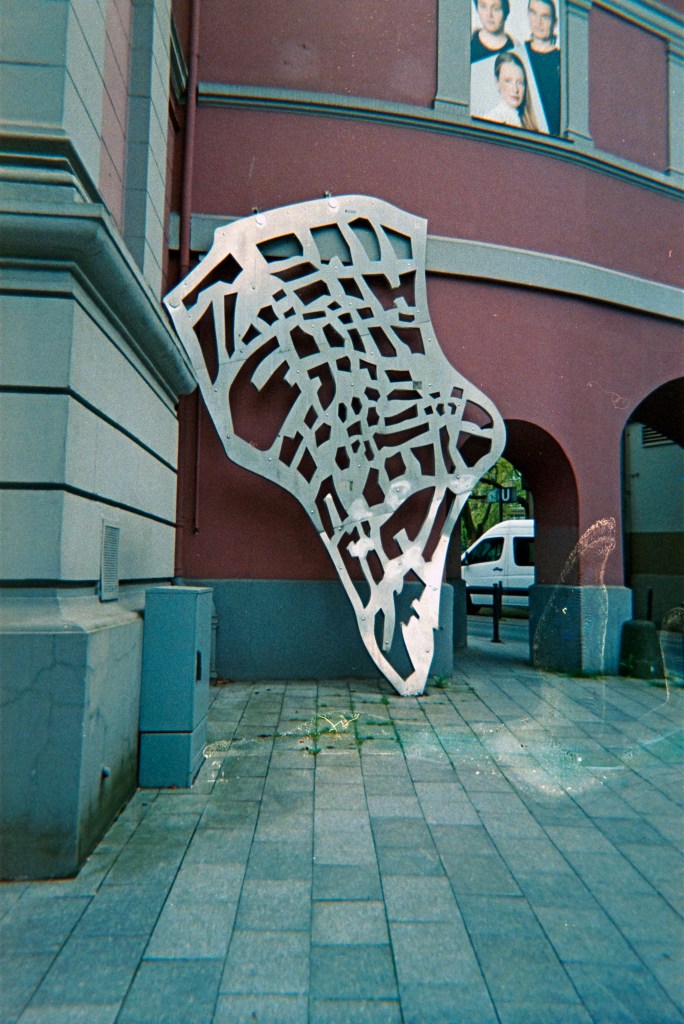
She tells me that as a child she has always felt a great openness towards all people, could not understand why some people were treated differently. She tells me about films about the African continent that she saw early on and dreamt about the places they took her to. „Or I had an atlas and then I always travelled there inside the atlas. I’ve always had a penchant for Africa.“ She has already been to Nigeria twice. She would like to travel there again, maybe live in the country for a while. What still prevents her from doing so is her medication situation. There is great concern that her HIV medication will not be compatible with medications and vaccinations she would have to take for the trip, or that her immune system, which is severely shut down, will not be able to keep pathogens out properly. „Hepatitis B, for example, needs to be re-vaccinated more often in my case because it simply doesn’t build up properly.“ Nevertheless, she believes she will be able to travel to Africa again someday.

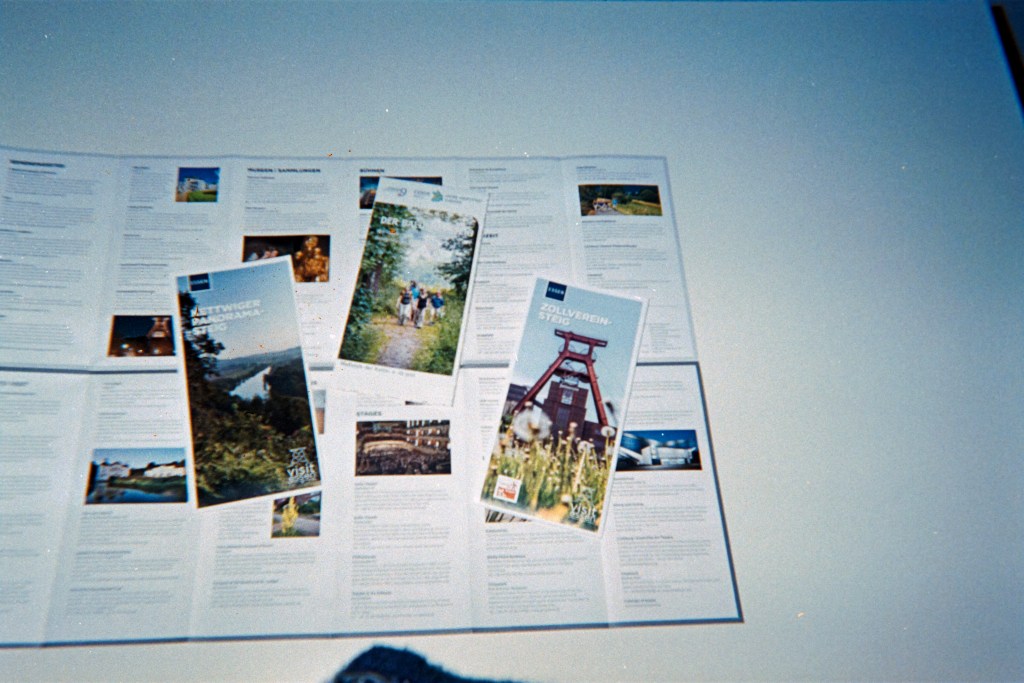

I continue to browse through the photos. The next picture shows a table with board games. „We always play games down here in the café on Sundays.“ Coffee and cake are served at reasonable prices. X has always found board games great, playing a lot with her parents and siblings already as a child. „Of course, I also have friends who’ve had nothing to do with AIDS and Aidshilfe, so I said, ‚Hey, why don’t you come and play?‘ And that’s how the group expands.“ The next photo shows maps of the Essen hiking trails. „I like to go hiking!“ She has already started walking the new Essen hiking trail – the Zollvereinsteig. She has also taken photos of the cooking group „Cook for fun“. Every week, they think about what to cook together in the kitchen of the Aidshilfe. The volunteer who runs the programme is a trained chef and gives the visitors lots of tips while they cook. „Next time, for example, we’ll make mackerel, but fresh mackerel, in the oven. With rosemary potatoes and salad.“ About eight to ten people attend regularly – „People like to eat,“ says X with a laugh.

The next picture I put between us was taken at the ATT, X explains to me, an astronomy and technology fair, the largest astronomy fair in Europe. X is a member of the Walter Hohmann Observatory here in Essen. „I’m not a total freak and crack that I’d get involved in who knows what, but I find the subject fascinating. At the moment, I’m also following this – our new telescope, which is buzzing around up there, I’ve already had a look at the images. Fascinating!“ I ask her if she knows where her fascination with space comes from. Yes, she answers directly and tells me about a situation when she was in Nigeria. About a pitch-black night. „I was lying there on a bench and I almost fell in! Of course, I haven’t seen anything like that here, but when you look up at the sky, this vastness! It opens my heart!“
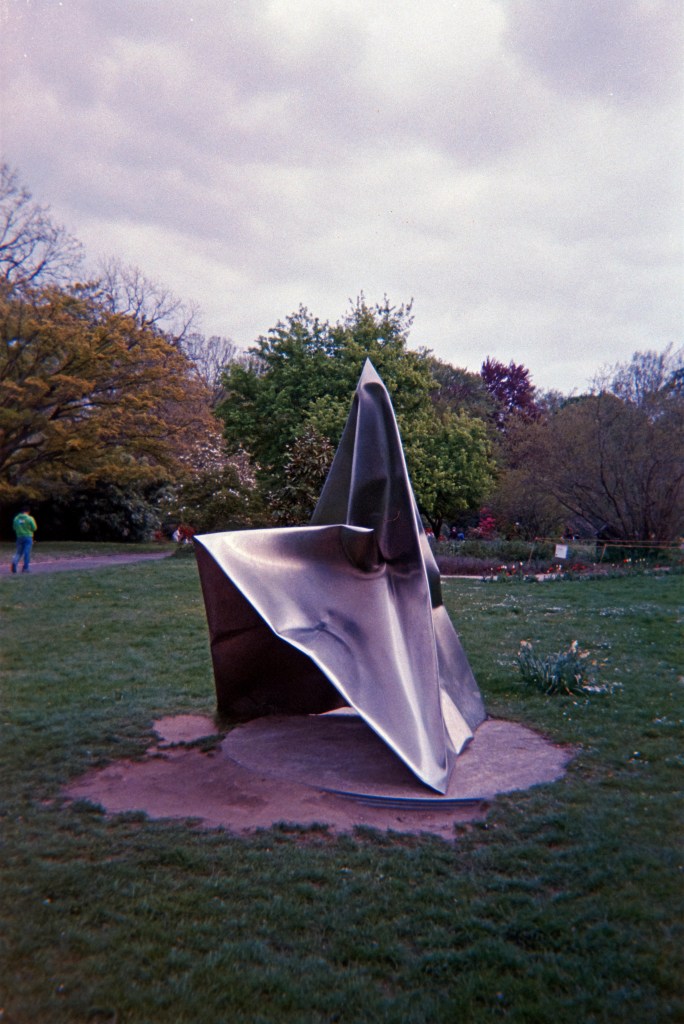
The next photo was taken in the Grugapark. She has a ticket for the Gruga and likes to go there regularly. The photo she took shows a sculpture. We talk about art and I ask X if she knows when she lost touch with art as a young person. „Yes. I went to secondary school. You could finish at 14 back then, after ninth grade. Although I had the qualification for the tenth grade, I wanted to start working because my school friends also went to work. And then I went to the employment office with my mother – at 14 I wasn’t like I am today, that’s clear. But I still had my portfolio with my paintings under my arm. But nobody wanted to see it. I wanted to do something that had to do with art, whether it was painting, designing or creating or I don’t know. I wasn’t strong enough – or self-confident enough – to say ‚But I want to‘, so I became a dental assistant. They looked to see where I didn’t have to commute so far. You had to be 16 to be a doctor’s assistant, because people take their clothes off there. But at the dentist it was possible. And there was a dentist near us, I only needed a few stops on the 170. And bang – I started an apprenticeship at the dentist’s office.“
I ask her if she sometimes regrets the way things turned out. „Well, let’s put it this way, the profession is actually a nice profession, you can’t say otherwise. You just don’t earn much money. And when you get a full disability pension in 2010 … I’m dependent on social benefits. That’s why I would take up another profession. One where you earn a bit more money. Other than that I think it’s a nice profession. It’s a pity that dentists, who actually earn enough money, are so stingy. But well, it is what it is. Now I can’t change it anyway, so I’ve accepted it as it is, I don’t suffer from it now.” We talk about her disability pension and how she got there. „I wasn’t meant to retire yet. I was discharged from both rehabs unable to work, then the sickness benefit ran out. But I was still entitled to unemployment benefit, because I had been working until then. And then the employment office asked me to apply for a pension.“ It merely takes two weeks after sending in the application until she receives notification that she is on a full disability pension. „I had actually thought I would get further training and learn something new again. But then…“ – “How did you feel about it,“ I ask. „Great, you’ve got time.“ Nevertheless, the decision comes suddenly and surprisingly. „I didn’t expect it at all, because I knew from the self-help group – I’ve had women there who were so seriously ill, metastasised, they didn’t live to see their pension! Because they were rejected again and again. They died before they even got it, right? That’s why I thought: ‚Oh, it’ll take years! I’m a lucky child, if you like, as far as that’s concerned. Today I know that time is so valuable. So valuable.“
„That’s how I’ve lived ever since,“ she continues. When her husband and she separated and his income fell away, she had to apply for basic income support. I ask her if she is coping financially. „So far, yes. I don’t know what’s going to happen now. So the 200 euros extra that came in now, I really put that aside to possibly pay for electricity or something – I also have gas heating, my landlord has already increased the rent. So I put it aside. I’d like to spend it now, when you can travel with the 9-euro-ticket. But I’ll put it aside. I have a bit of a security mindset. I don’t overdraw my account either. I’m allowed to overdraw up to 100 euros interest-free. But it’s never more than a euro or two at the most. Because I don’t want that at all.”
We come back to her education and to painting, which she stopped when she started working. „Yes, somehow, then you went to work, got to know other people, vocational school. And then it kind of got lost a bit afterwards. I always scribbled a bit somewhere, in all the exercise books and so on.“ She finished her apprenticeship at 17 and continued to work in the dentist’s office. “Then I somehow had the feeling that I actually wanted to go back to school. Not at all to acquire more knowledge, but I felt the need to go back to school. And then I asked around, and then there was the Ruhrkolleg here in Essen, a full-time school where you can go all the way to the Abitur. It lasted three years. But since I only had a secondary school diploma, I had to go to the Volkshochschule for a year beforehand: Maths, German, English and Latin or French. I chose Latin because I thought it would be easier. And I did that every evening after work for a year, and then in 1982 I started at the Ruhrkolleg. That’s when I stopped working, got Bafög and half-orphan-pension. I was almost rich then!“ she laughs. „500 Marks Bafög and then another 800 Marks half-orphan-pension from my father, because he was no longer alive.” In 1985 she passed her Abitur and wanted to study dentistry next. „You had to take a test and I was number 700 in the waiting list, so it wasn’t too bad. But then there was a break-up and I couldn’t afford all that any more, because by then I wouldn’t have gotten any more Bafög. Then I went to the Heilpraktikerschule for a while, but I couldn’t afford that either, because you had to pay for everything yourself. And then I did a bit of casual work. And at some point, I was a dental assistant again,“ she laughs. „But still, the time when I did my A-levels was great. Great time!“
I ask her if it sometimes bothers her that her further education failed because of money. „Yes, that was a pity, of course. But I can’t change it now. The nice thing is that I can say: ‚Guys, it is the way it is. I can’t change it now, not in retrospect. I can only look forward and do something in the present, here and now. And I mean, it’s not as if I’m not educating myself now. For example, I have the advantage – and I take full advantage of it – that I get an 80% reduction at the Volkshochschule because I get basic income support. I’ve done painting courses, theatre, I’ve done languages.“
X looks back on her life happily. „I’m glad that I did all the things I did. For example, I never wanted children, that was already clear to me when I was 16 or 17. I immediately started taking the pill because I thought: ‚Now you could have sex‘. Three months before I had sex for the first time, I took the pill to be on the safe side,“ she laughs. We talk about children, about being parents. „I didn’t want to take on the responsibility. Because I think that’s the biggest responsibility a person can have in their life: for children. Maybe I didn’t think I could do it and I also have too much of a desire for freedom and I didn’t know if I could live up to it.“
From her first salary as a apprentice in the seventies, she books a holiday in Spain, four weeks on the Costa Brava. She travels alone, meets many people, gets to know a young Spaniard who works in the hotel where she is staying for the summer. They spend a lot of time together, he shows her things beyond the touristy places, they dance in discos in the evenings. She smiles a lot when she talks about this first holiday. „I like going away on my own! Nowadays I no longer go on a four-week holiday, but I go on a day trip to Scheveningen by bus, for example, all by myself, without anyone going with me, deliberately so.“ Travelling has always been a big topic for her. „Especially with the camper van I liked to be on the road. But well, car, camper van, that’s not possible anymore. But I’m glad that I did all these things. And that I didn’t say: ‚Oh, you can do that when you’re retired‘. That’s why I also tell young people – when they say: ‚Wow, you’ve done some nice things‘ – I always say: ‚Do it now! You never know when it’s over. You can get sick, you can have who knows what. You can lose your job and not find anything again. Or something can happen that makes it all go away. Do it now!“
 Projekt "Perspektive(n) Mensch"
Hinterlasse einen Kommentar