The first time I meet X, she is in a group of women; I sit down with them at a long table. The room we are sitting in is bright; the door is open, it is warm and besides fresh air, sounds of the city centre enter the room. Many of the women have brought something with them: pastries, sweets. The coffee pot is passed to me, a woman pushes a cup towards me. Conversations criss-cross the table, most of the women speak Arabic. X sits opposite me, next to her daughter, who beams when the women who join the group later greet her with kisses. X speaks to me in German, smiling her open, warm smile, and we talk over the other voices and the sounds of the coffee cups. X is here every week, always accompanied by her daughter.
A few weeks later, I take the bus to her home. It is the last day before the summer holidays, through the window I see children and teenagers streaming out of a school. When it suddenly starts to rain, they try to protect their report cards from the rain under their jackets or jumpers.
X greets me at the front door. We kiss each other on the cheek, she leads me into the living room and points to the sofa. Her husband is sitting on the couch opposite and is helping the two daughters, who came into the flat shortly before me, to dry their report cards with a cloth. There is a lively atmosphere, report cards are passed back and forth, people talk crosswise. I ask one of the girls which subjects she likes best at school. „Nothing really,“ the teenager replies. Nevertheless, she has straight As. „But last year the report card was better,“ X says to me with a smile. The parents rejoice with their daughters before the two walk out of the living room and into their room. Sitting opposite of us, the father reads the newspaper and X and I start talking about her photos.
I ask X if she has ever taken analogue photographs. „In the past a lot. We used to only use film in Syria. And I took a lot of photos, and very early, maybe from the age of fifteen. I have many photos, but they are old now,“ she says with a smile. She still has her photos with her, only the cameras are long gone. I ask when she left the country. It was in 2015, when she came to Germany with her three daughters. Her husband, however, has only been here for three years. It took years until they could apply for family reunification. „And what was it like to be together again after such a long time? Was it unfamiliar?“ She laughs. „No, normal!“ During the three years they communicate a lot via Whatsapp, try to talk regularly on the phone despite internet problems. Was she sometimes afraid for him? „Yes, of course! Because the situation was not good at all. But again, you can’t do anything, only wait!“ She tells me about moments when she was worried. When she heard that another bomb had hit and she didn’t hear from her husband all day because he was at work and not at home. Not knowing if the bomb hit him or not; if he was okay. „That’s why you’re scared!“
For the first two months in Germany, X lives in a gym in a small town near Cologne with her children. „That was really okay. Because the people were so nice there! Sometimes when you say the camp is not so good, maybe it’s because of the people, problems and stuff.“ Then they come to Essen, are in a tent in Kray at first. She stays there for four days with her daughters. „Such a big tent. That was really bad! Lots of people, you can’t sleep at all. And because of my daughter’s situation, I could immediately go to this other camp. I told the social welfare office, it’s not possible at all, my daughter can’t sleep.“ The other camp is here in the district where they now live. In the new accommodation, the situation is fine. After three months she finds the flat where we are sitting now.
From the beginning, the older daughters go to school, learn German quickly. „Very quickly and very easily, for children it’s always like that. Not so much for us,“ X laughs. I ask her about her B1 exam, which she had told me about at our last meeting and which was still ahead of her at the time. Smiling, she tells me that she passed. I congratulate her and ask if she will now continue with the next language course. „Yes, of course I will. Or further training, I don’t know exactly, I have to phone the job centre and ask.“ I ask what she did for work in Syria. „I’m a lawyer.“ Although X studied and worked in Syria, her degree is only recognised as a Bachelor’s. To be able to work in Germany, she would have to get a Master’s, study again, at least three years. I ask if she wants to do that. „Too difficult, I’m not that young, in my mid-forties. And the language is not so easy for me. And my daughter is also so small, she needs a lot of time, I have a lot to do at home. That’s why I don’t have time to study all day, it’s not so easy. Maybe it works for some people, but a woman who has three daughters and a family and all that. Not so easy. Studying is not so easy anyway.“ She would also have to do an apprenticeship to become a paralegal, also three years, full time. This is hardly compatible with her daughter’s situation. She gets out of school at 3 p.m. and is home from then on. „She can’t do anything on her own. I have to feed her, change her nappies, and all the things. I have to be there all the time. Mentally is good, but physically is bad.“ She has the highest level of care. Maybe at a later stage the family will use a care service, but currently X is doing the care herself. S, the daughter, goes to a special school. She likes it there, likes the children and teachers, and also does physiotherapy and occupational therapy, which helps her with her illness.
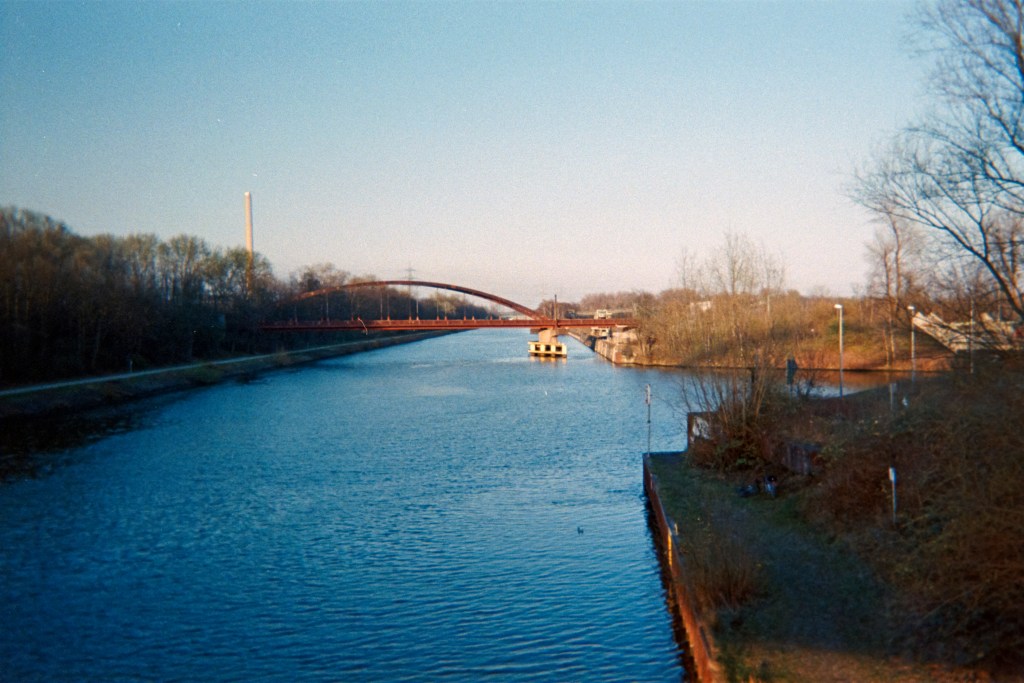
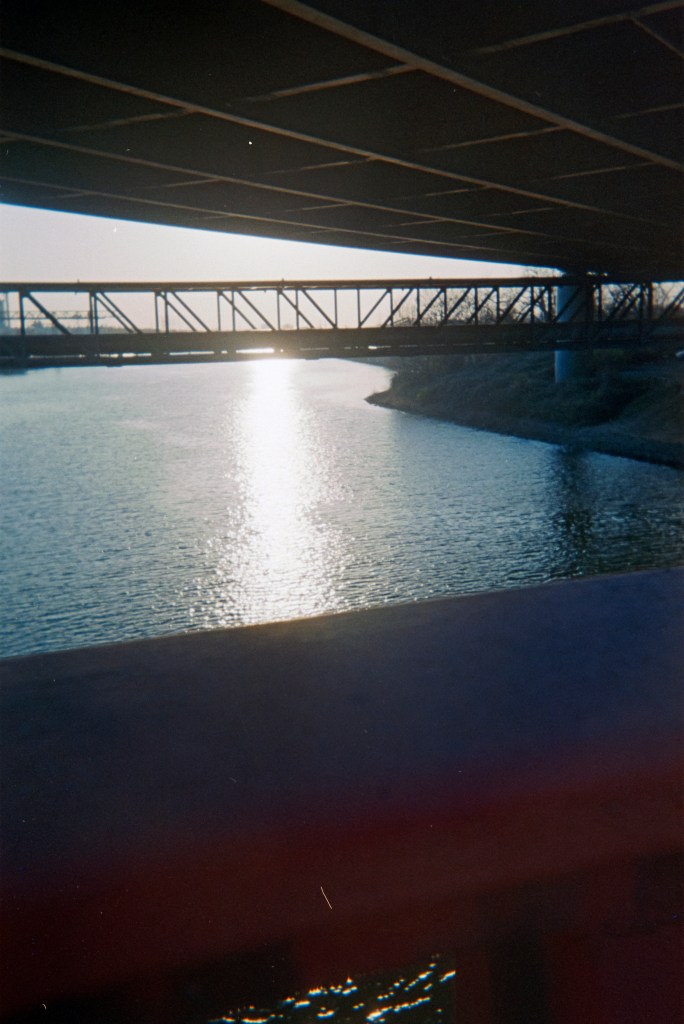
We look at the first picture. It shows the canal. „I always walk here.“ When she took the photo, spring was just beginning. „I like this view.“ The next picture was also taken by the canal and shows the sunset. She laughs softly when she sees it. „When I walk, I always take my camera – or with my mobile phone I also take pictures. Because I like this corner a lot, it’s quiet, people walk here. And I always run here.“ She likes to go jogging, in the winter in the afternoon, in the summer also in the evening. When she is out, her husband takes care of their daughter. „We can’t go for a walk together, someone has to stay home with our daughter. One goes, the other stays at home. But sometimes – like yesterday – she was already asleep, it was about ten thirty. It’s late, but we were able to go for a little walk together. But otherwise, walking together is not so easy.“
For some time, S can also occupy herself alone, X tells me. She likes to paint, for example. Nevertheless, she needs support with many things. „She can’t eat on her own, she can’t use her hands that well, that’s the problem. She moves uncontrollably.“ Therapies have made her spasticity better. She communicates with a talker, a device that reads aloud what she writes. The talker gives her a lot of freedom to communicate with others. „I understand everything! But sometimes other people or at school it’s not like that. She sometimes talks with her hands, with her eyes, she tries to talk with her mouth too. She can say the name of the big daughter, mum, dad. But other words are too difficult. The doctor said she might be able to speak better later. But there’s no way to know if she’ll be able to move.“ She has just been given a computer with a special mouse that looks like a gear stick in a car, which she can use despite her lack of fine motor skills. „She can now write homework in German very easily. Before, I had to hold her hand so hard for her to write. Now she can write so easily.“
When S is about four months old, X slowly notices that something is different. „I said, ‚My daughter can’t hold anything. ‚ And the doctor said that’s normal.“ They go to see a specialist. „After that we went to the neurologist and stuff, with MRI.“ The doctor makes the diagnosis. „But he didn’t say she can’t walk or hold anything. He said at seven or eight years old she can do a lot of things. But unfortunately, she can’t.“ Seeing a doctor in Syria has been very difficult; the neurologist is based in the capital Damascus, many hundreds of kilometres from the family’s home. „You can’t do anything by bus, there are many terrorist groups, you can’t just take a bus.“ Getting plane tickets is also difficult, but the family manages. They make the journey three or four times. Now, S is receiving treatment in Germany.
We come to speak about X’s old home and talk about what it was like for her to leave Syria. „At first I said I can’t do it at all – you can’t just leave your home like that. But there were many problems, many bombs, my children were very scared. Especially the big one, she cried all the time. And the situation got worse and worse. Lots of bombs, lots of fear. And me too, I got scared a lot. I got scared of the sea. To go from Turkey to Greece in such small boats. That wasn’t easy at all. With the smugglers, because you can’t get to Germany so easily. You can’t know what these smugglers will do on the way. Maybe they’ll take my children. Everything was so difficult. People can’t get to Germany so easily. Some people came by plane, but you need a lot of money. We were four people, we couldn’t come by plane, you have to be a millionaire. And just like that: the millionaires have left Syria, but the poor people stay in Syria. But all wars are like that, in Ukraine too. If someone has money, you can leave, but the poor people always stay. Unfortunately.“
The way to the Syrian-Turkish border was difficult. In a small village they meet a man they have to pay to cross the border. „Just such a small path – and we were in Turkey.“ By car they are taken to a larger town. From there they travel on to Istanbul and finally to Izmir. They stay in Turkey for two months before they cross over, at a cost of 2,000 euros per person. The boat they travel on is very old. „The smugglers only buy this yacht for one time. Because when people go to Greece, the police take this yacht and they destroy it. That’s why they buy such old boats, it doesn’t cost so much money. But they earn a lot of money. That’s why a lot of people died, because the yachts were so bad and old.“ During the crossing, she is very scared. „Of course, we were scared. On the water, and look, everything just blue. It wasn’t easy at all.“ But they make it, and eventually reach Germany. I ask X why the family didn’t go together with the father. „My husband’s mother was too ill. So he couldn’t come because the mother lived alone in Syria. The other children were in Germany and Switzerland. He was alone with his mother, he couldn’t leave her alone like that. She has cerebral palsy, she can’t move at all or eat alone, nothing. She was in bed all day.“ His mother passes away, two months after X and the children arrive in Germany. But he is not allowed to just join them. „He had to do all the papers, but all the offices were always full, full, full.“ So it would be another three years before the family can be together again. He was also a lawyer, they had a law firm together, studied together. They have known each other since second grade. She laughs a lot when she talks about it. „That’s nice, yes,“ she says with a smile. He is still reading the newspaper, radiating a deep calm, and smiles over at X from time to time.
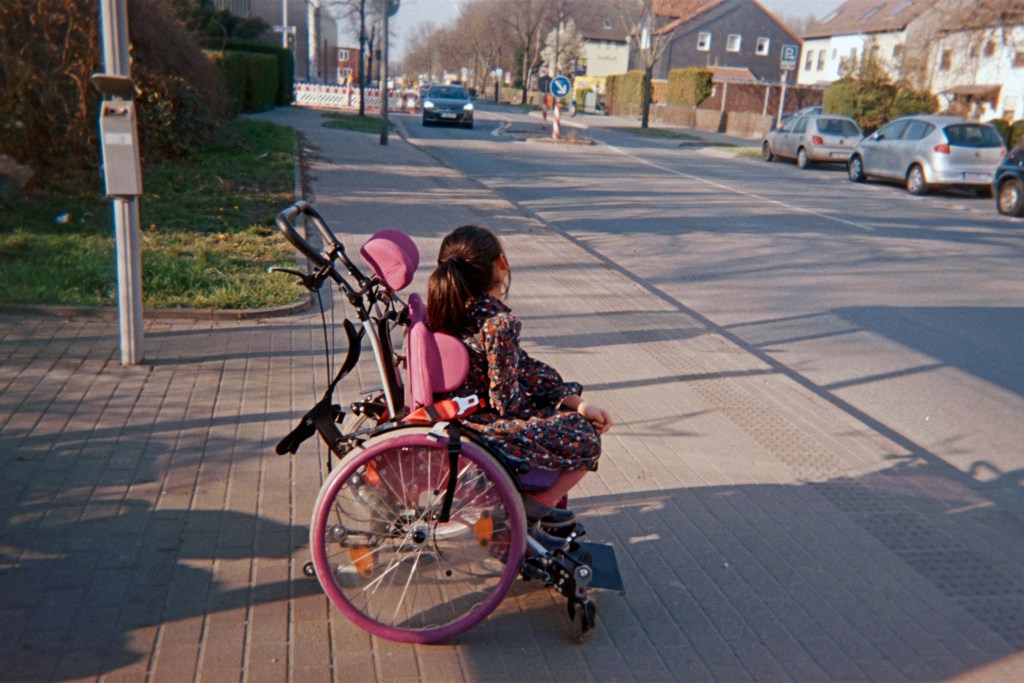
I put the next photo between us. It shows her daughter S; the two are on their way to the bus stop from where they go to the weekly meeting with the women’s group where I first met her. She has been at the meetings from the beginning. The organiser of the group is her husband’s cousin; through her she learns about the meetings. „This group is very interesting and the women are very nice. You get a lot of information: What is there, what is new, what rules are coming. Sometimes I don’t have time to look at the internet all day or listen to the news or something, but you always hear something from the group, you always learn. You need that: learning. And you need that too, talking to a lot of different people. “ I ask her if she is now friends with the women. „Yes yes, we are friends now! We are really friends. The whole group was with me last week, in my garden, it was a really nice day!“ she says and smiles.
The doorbell rings. The driver brings S home from school. Her father picks her up at the door. When they come into the living room together, the two of them are beaming just like X. The father walks behind S, holds her hands and supports her so that she can walk herself. S has also got her report card today. Her father helps her to sit down next to him on the couch, brushes her hair out of her face, and carefully makes her a new ponytail. S is beaming from ear to ear, just as happy as I’ve seen her the last few times we’ve seen each other. I ask what grade she is in now. In the third grade, says X. S draws attention to herself. „No, four!“ her father shouts. The parents laugh, S nods proudly. The father and S look at her report card together while X and I look at the next photo.

It shows flowers, but we are not sure what they are called in German. X translates with her mobile phone and then says: „Narcissus“. The photo was taken here in the neighbourhood when she was out for a walk. Every day she is outside with her daughter. „We always go for a walk together, when she also wants to go outside and walk a bit. In these photos, I was always with S. I enjoy walking. You have to move, no?“ she asks laughing.
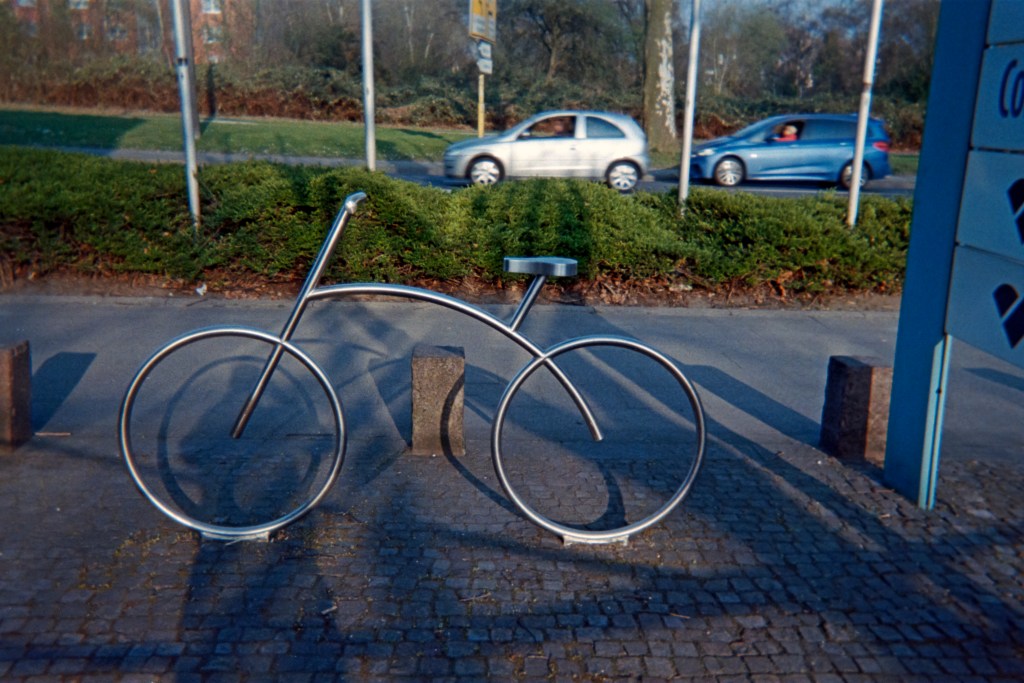
The next picture shows a sculpture in the shape of a bicycle. „When my children were little, when we came to Essen, they used to try to ride it,“ she says with a laugh. „We still have photos with this bicycle.“
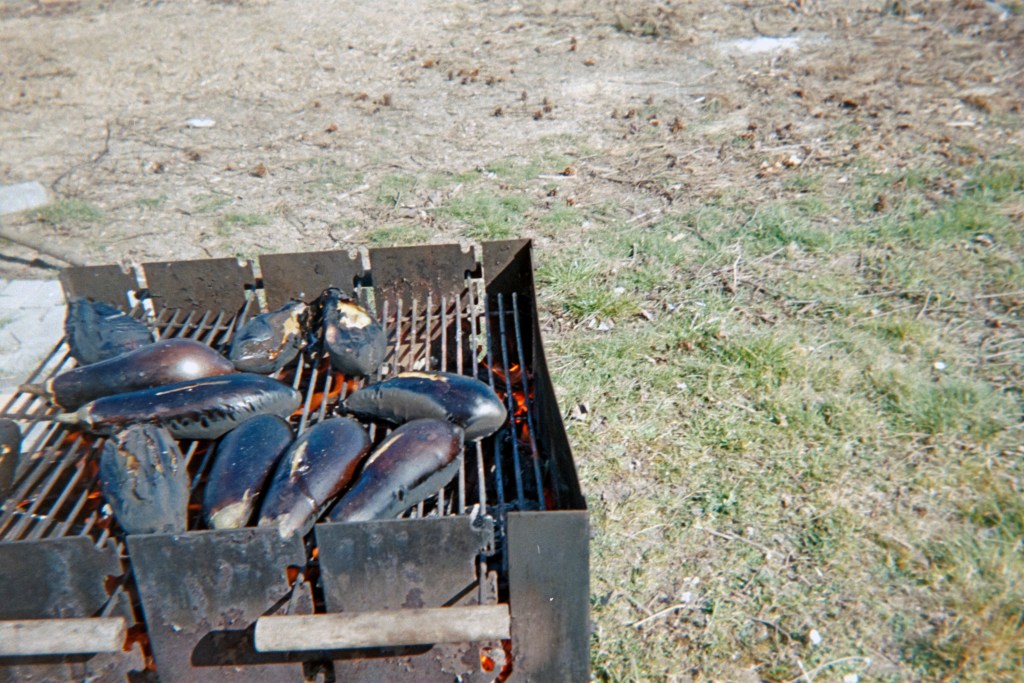
I turn to the next picture. The photo shows aubergines from the grill, in the garden behind the house. The next picture was also taken in the garden and shows the sunset. „My daughter took this photo. She told me, ‚Mum, this is very nice view‘ and she took this.“ – „The older one?“ – „The middle one.“ I ask her if she likes living here. „Yes. A bit noisy because it’s main street. But it’s good.“ She has lived here for six years. However, the part of the flat where we are sitting together now has only been added four months ago when the landlord merged the two ground floor flats. Before that, they only lived in one of the two flats, five of them in 55 square metres. „I’ve searched a lot for two years, on the internet, with the estate agent, with companies. There is nothing at all, no large flats. The problem is, we always need a ground floor because my daughter is in a wheelchair. But really, the building companies need to build more flats for disabled people.“ Even this flat is not completely barrier-free, there are a few steps to the front door. „Now my daughter is small, I can carry her, but later I can’t.“ The wheelchair alone weighs 20, 30 kilos.
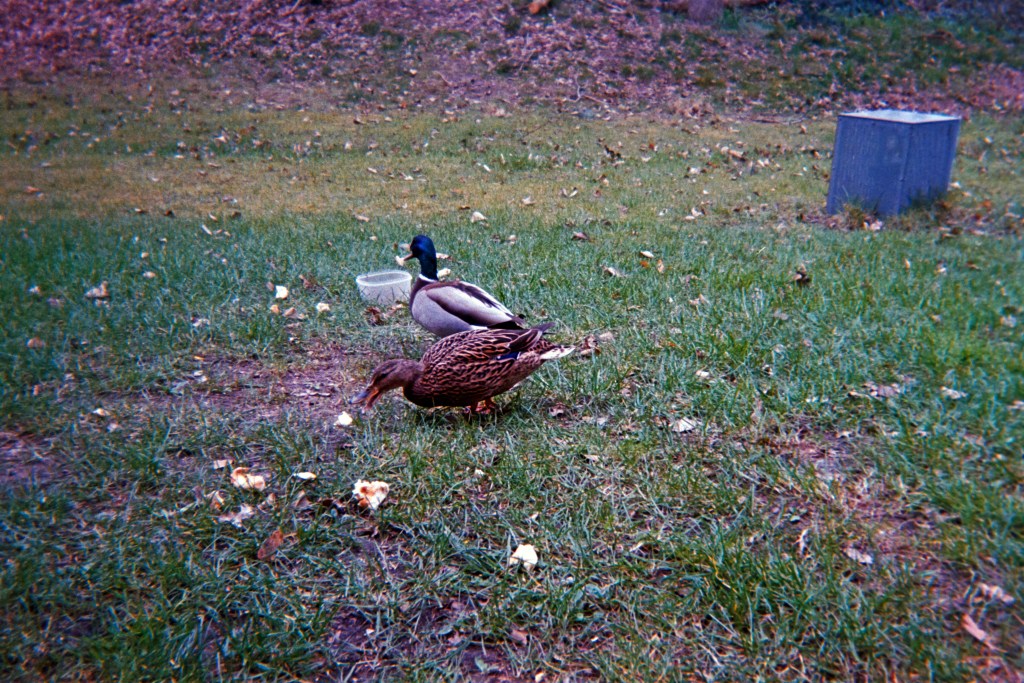
The next picture we look at together shows a duck. „But that’s not here, that’s in Lingen. My brother lives there. And this duck comes to my brother every day and he feeds it. It comes every day, it visits my brother every day,“ she laughs. The brother is a little older than her. The two have a lot of contact, see each other regularly. Another brother lives in Göttingen. „Very small, clean. But Essen is nicer,“ she says with a laugh. „Do you like Essen better?“ – „Yes, because it’s so small there, after 4pm there are no people in the streets, really boring,“ she laughs. I ask how they lived in Syria. „My family is from a small town, like village. But when I got married, I lived in a big city with my husband.“ She asks her husband how many inhabitants the town had. He ponders. „Four hundred thousand?“ he guesses. „So you’re used to living in the city?“, I ask. „Yes. But not like this. Essen is so widespread. You need a lot of time when you have appointments. In our city it’s not so difficult. Capital Damascus: yes, like here. Like Berlin, maybe. Two million inhabitants, approximately. But now… no. It’s like this,“ she pauses for a moment. „But I always find big city better.“
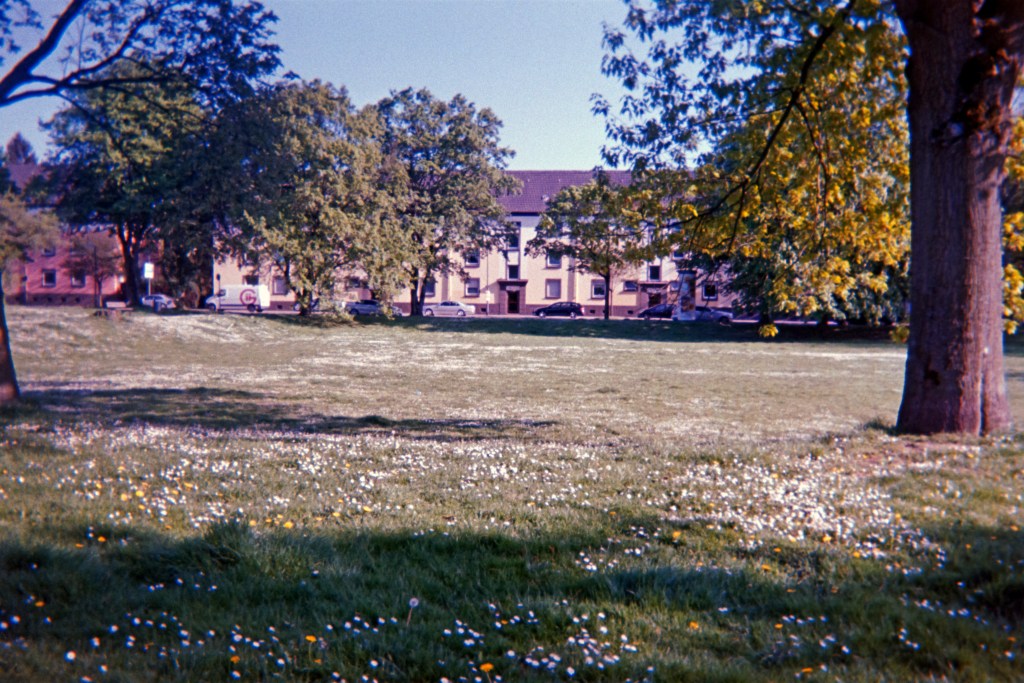
After turning the last picture over, I say with a smile, „It’s easy to tell you’re outdoors a lot.“ – „Yes! I said to myself, ‚Why be in here? You have to see the environment.‘ It was spring too, the weather was so nice.“ I ask what their plans are for the summer holidays. X tells me that unfortunately this holiday they have no papers, no passports. The earliest appointment she could get at the Immigration Office is not until the beginning of August. „By then the summer holidays are over. We have papers, but we can’t leave Germany. We can maybe make trips here in Germany. Düsseldorf or Essen Werden, or with my brother maybe.“ We talk about the Immigration Office and the difficulties there. „It takes a year to get an appointment. Strange, isn’t it? “ She tells me about an appointment she had that she had to wait over half a year for, when the teacher in her German class tells her that the exam will possibly be on that day. „I told the school that if our exam is on that day, I can’t take the exam. Because I can’t wait another six months. I can’t go another year without papers, it’s a disaster.“ Fortunately, the exam date was postponed.
We come back to X’s family, and I ask her if she feels that her daughters are comfortable in Germany or if they miss Syria. „They were really small when we came. But they also miss Syria. Because the whole family – many uncles in Syria. But they always talk by video, via Whatsapp. My mother lives in Syria, and my sisters. I have three sisters in Syria, and a brother too.“ The situation is very difficult. „There is no electricity, no water. Even when there are no bombs, the situation is too bad. There is no school anymore, everything is expensive: gas, oil. And food is expensive, you can’t just buy anything. People are poor, everyone in the family has to work. The situation is too bad. „She speaks calmly, collectedly. I ask her what she feels when she thinks of her home. „I always miss it, always! I miss my mother. But thank God there are phones, there is Whatsapp and new technology. You can get information every day. But … you can’t do anything! I hope this war will end, but I don’t believe it will.“ – „And do you think you’ll be able to go back to your home someday?“ She pauses for a moment. „I don’t think so anymore. Because the situation is getting worse and worse. There is nothing positive at all, EVERYTHING is negative. Besides, my children go to school here now. Maybe they will go to university here too. Later you can’t go back to the homeland so easily. Only if – maybe later, when studies are all finished and done. My children wouldn’t be able to study in Syria now, they don’t know Arabic. They can understand it, but it’s not so easy to speak it. My older daughter only attended school for two years and the other only for one year.“ The family speaks Kurdish amongst each other, „Arabic is not their mother tongue. „
I ask where she sees herself when she thinks about the future, in Germany or Syria. „You can’t say. All situations can change. You can’t know. Maybe a war will come here in Germany, too. In the past, twenty years ago, when there was war in Iraq, many refugees came to Syria. I have NEVER thought that later we would be the refugees. It is like this now. About one million Iraqi refugees were in Syria. Many Lebanese, from Palestine too. Much earlier, during the First World War also, many refugees in Syria. Now we are refugees. “ I look at X and tell her that she radiates a great strength and I find it remarkable how much she is looking forward. „You have to, no? When someone has children, you have to be strong and fit. Especially when you have a sick child. It’s not so easy, that’s why you always have to fight.“
 Projekt "Perspektive(n) Mensch"
Hinterlasse einen Kommentar