I meet M on a Thursday evening at a community centre in the city. On Thursdays, people always meet here to „Play & Talk“ – people whose mother tongue is German as well as people who have another mother tongue. Five of us are sitting at a table and playing memory. I tell them about the project and M wants to join in.
After a few weeks have passed, we are now sitting outside a pub, it is still warm, and while we wait for our drinks, we start talking. I ask him what it was like for him to take the photos. He tells me that at first he wasn’t sure what to take pictures of, but then he started to document his activities in the photos. „Some things you do every day, like working or playing an instrument.“ Other things and moments are special, rare. He tries to capture these too.

The first picture shows a desk with laptop, keyboard and screen: his workplace at home. „Normally I am in my home office, only one or two days a week I am on site, in the office“. He works at a university here in the Ruhr area, he is a system engineer in the security department. He explains to me that although there are many jobs in IT, there are not so many that fit his interests and skills and in which the working conditions are right for him at the same time. While he tells me more about his field of work, we get our drinks; a non-alcoholic beer for him. After taking a big gulp, he looks at the bottle. „Does it taste good?“, I ask him. „It reminds me of my childhood, of the first time I drank a beer in Iran.“ I laugh and ask, „How old were you?“ – „I don’t remember, maybe ten or younger.“ He continues, „So in Iran, beers are non-alcoholic. We were on the road and there was a stop on the way and we had bought a sandwich, but there were no Cokes or other drinks, only beer. And I really wanted a drink. My father said, ‚This is bitter‘. But I said, ‚I’ll have this.‘ But that really was bitter! „, we both laugh. „Yeah, I think it tastes really disgusting when you’re a kid, doesn’t it?“, I say. „Yeah,“ he replies, „and it gets stuck in your head.“ Twenty-seven years later, we are now sitting together and when he tells me that today is his birthday, we toast. We come back to IT and he tells me that the subject has always interested him. He does his A-levels in this field and then studies computer software. „After that I was involved with different things. You know, at university you learn more theoretical than practical things or what exactly you can do in the workplace. Then I did – I think for a couple of years – stuff, but not in IT, but other areas. For example, cabling, network infrastructure…“ – „But always something technic related?“ – „Yes.“
M moved to Germany in 2019. „How did that come about?“, I ask him. He thinks about it. „Well… the living situation in Iran has gradually gotten worse since the last few years. Inflation and less income and everything is getting more expensive. And that’s why it occurred to me about nine years ago that I need to go to another country. And I think about nine years ago I heard about the ‚Blue Card Germany‘. And then I gradually started.“ – „And then it was just a coincidence that you chose Germany? Because you thought the circumstances were quite good there or were there other concrete reasons for this country?“ I ask. „First of all, the requirements that are necessary for this Blue Card – well, I fulfilled everything. You have to have a bachelor’s degree, you have to have a few years of experience and –“ he thinks about it, but he can’t think of the other requirements. Since he first heard about the visa programme, he has been going from one piece of information to the next, researching: Where can you live well as a migrant? I ask him whether his primary concern when looking for a country to live in was to find a place where he could work in his profession and make a good living, and whether other aspects took a back seat. „The job is important and you always make a comparison, no? So for example, that today I work 40 hours and in the end I can’t even rent a house or rent a flat in Iran. But in other countries, with exactly these skills, I can have an easy life, I can rent a flat, buy a car, things like that. So what made me do it was: at that time I saved my salary of three months and bought a mobile phone and after one month it was stolen. And I had nothing. I think everybody thinks like that: This is not right. If you invest that much and someone just steals it, and then there’s nothing left for me – that’s not right.“ I agree with him and ask if there were doubts too; things he found hard to leave behind. Or was it an easy decision to leave? „My family wasn’t like – so for me, it was no fear or something that I absolutely had to uh… so it wasn’t like, ‚Okay, I don’t need a family‘ or anything like that. My father already told me a few years ago: ‚It’s not worth living here anymore and that’s why it’s good if you can go to another country‘. I was also in Germany in 2015, for about six months. At that time, we – that is, my sister and I – flew to Germany with a study visa and we first did a German course and then she started studying at university and continued, but I found out that studying wasn’t good for me, I wanted to work at that time. And when I wanted to study, I had to pay money, and yes, that was a lot of money. And I was only allowed to work 20 hours a week. And that was not very good for me. That’s why I flew back to Iran after six months and tried again to gain experience, to learn techniques. But this experience was very good for me, because I found out what I need, what the country is like, how the people live here. I got a first impression.“ And what was this impression like? „So living conditions – it was all good. Well at that time I had other ideas. For example, here in Iran people are always on the street even in the evening until midnight, the shops are open, but here after 8 pm everything is closed, nobody on the street.“ He laughs. „Maybe a festival once or New Year’s Eve, no? But besides that not. At the time I didn’t like it. But now I can accept it too.“ I ask him what it’s like for him here in general, living in Germany. He answers that he finds the people „very nice, sympathetic and helpful“; only once did he have a bad experience. He doesn’t want to talk about it specifically, he just says: „I don’t like that. If I don’t know someone and I say something about or to them, that’s not very nice or very good, I think.“ When he doesn’t want to elaborate further on the incident, I go back to the photo of his home office that still lies between us. M started his current job in April 2021 – in the middle of the pandemic. It is difficult at the beginning because he hardly sees his colleagues, doesn’t really know them. „It was very different from my first job. In my first job, I was on the spot, everyone was there in the office. My supervisor introduced me, I shook hands with everyone. But this time I was just alone with my supervisor in an office, I got my laptop and after that I was always at home with VPN.“ I ask him if he knows all his colleagues by now. He thinks for a moment. „All of them…? Approximately – yes.“ When he’s in the office, he talks to his colleagues, has lunch with them. But there are hardly more than ten people at a time. And which does he like better, I ask M: working at home or in the office? „I don’t know, some days I don’t want to work at all,“ we both laugh out loud. „I know that,“ I counter. In general, however, he is happy to be able to go to the office.
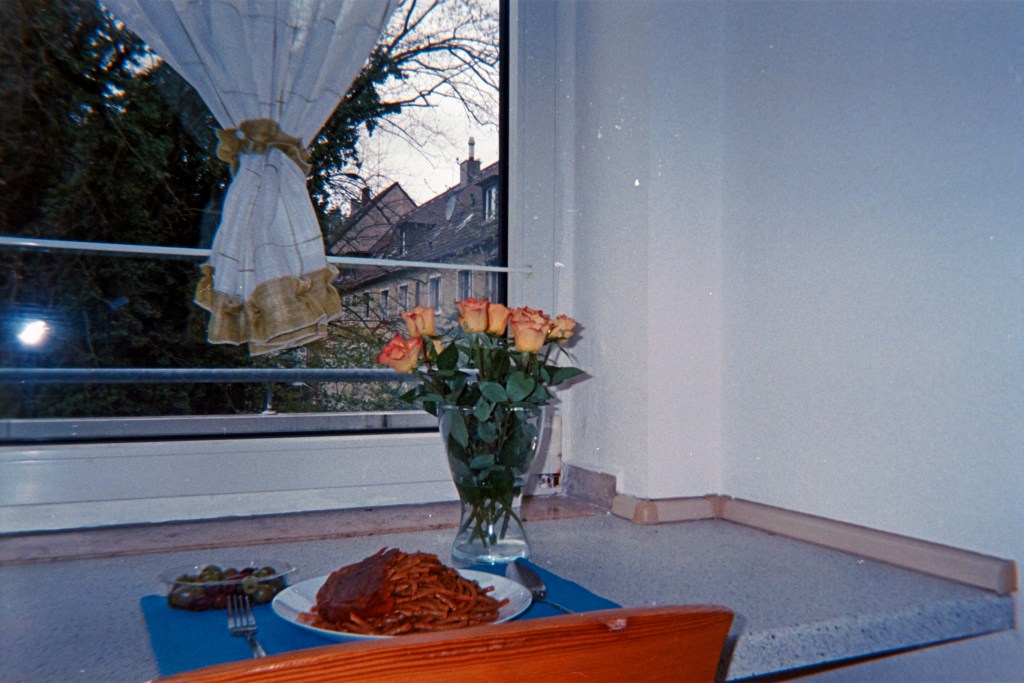
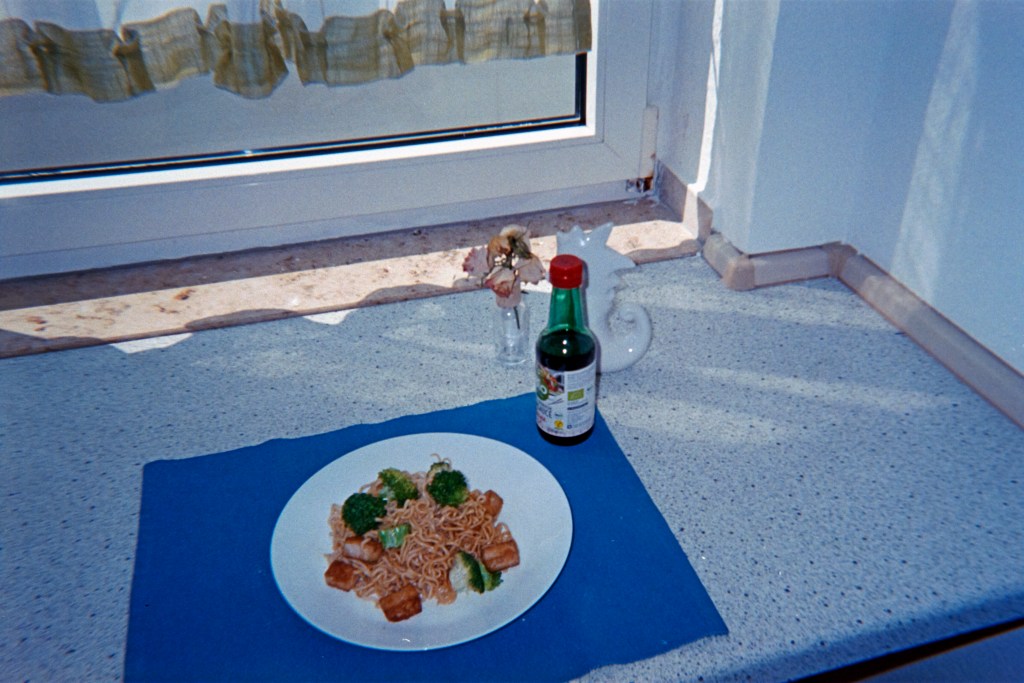
The next picture I put between us shows his dinner in his kitchen. It is a Persian dish – macaroni tahdig – and he explains to me how to make it. The place in the photo is where he often eats. „While I eat, I listen to the radio. And always WDR 5. At 12 o’clock there is a discussion about daily topics, every time it is different. For example: 9-euro ticket or vaccines or that kind of thing. And that’s interesting, that people call in and give their opinion. And there is a specialist.“ I ask if it’s okay for him to eat alone. „Mh, when I’m alone, I have to eat alone,“ he laughs. „But does it help then to have the radio on?“, I ask. „Radio I always use because it helps to improve my language. And I might learn new words. And I stay a bit up-to-date,“ he laughs. He tells me what is playing on which station and when. At the weekend there are two hours of jazz on Saturdays and classical music on Sundays, he likes that.

The next picture shows his living room. There are a few books on the coffee table; only one is in Persian, all the others are in German. Many of the books deal with psychology, philosophy. He tells me that he finds it increasingly difficult to spend time reading. „Why is that?“ I ask. „Maybe because I have to do everything on my own: Work, household chores and things like that. I used to live with my parents in Iran. My mother did the chores,“ he laughs slightly ashamed, „so I didn’t have to do anything at home, only maybe grocery shopping and things like that. I started with books at that time. I think what helped me a lot was books, yes. Because I learned to maybe learn and think a little bit right or better.“ He tells me about a psychologist who writes about success and being successful, whose books he read in the time after he went back to Iran after his first stay in Germany in 2015. „I used to read a lot of books,“ he says. – „But now here in Germany, where you have less time, you don’t read as much now?“ – „I don’t have less time, but I…“ he laughs. „Maybe other things are easier now than reading books.“
He tells me about a book that is also on the coffee table in the photo: ‚Finding meaning in the second half of life‘. The book is very complex, „maybe that’s why I can’t quite get on with it.“ Borrowing from the book’s title, I ask him if he knows what meaning in life is for him. He’s thinking. „I think about it all the time.“ He tells me about a concept he has heard about. You answer questions in four areas: what you do for a living, what you wanted to do, what you are good at and what helps others. The answers to these questions taken together tell you what you want most or should do in life to live better and in peace, he explains to me. I ask him if this concept works for him too, if it helps him think about his life. „Well, I couldn’t find an answer with it. You know, I used to think why can so many people be successful but I can’t or I don’t know the way and that’s why I started reading. For example, the first thing I read was ‚Compound Effect‘ by Darren Hardy, the book is very good, I recommend that too. I read the book for the first time, I didn’t understand anything. But on the first pages there are commendations, that many famous people have said about this book that it’s recommendable, it’s worthwhile and you definitely have to read this. You know, if more than 30, 50 people – famous people – say, ‚Okay, this book has got something‘ and you don’t understand it, then you are the problem. Then I’ve read the book twice or three times, I’ve seen seminars on it, I’ve heard a lot of audio books and things like that about it. And yeah, I was just able to get on a bit.“ He says the book showed him how to focus, that you have to have a goal in life. „But I think I do that less these days.“
M could find individual answers to the four questions he told me about, but what they have in common and how he can bring them together, he doesn’t know. „Or I just have the wrong answers.“ – „So you don’t really know what’s important to you in life or where you want your life to go?“, I ask. He’s thinking. „Nobody knows that. You imagine things. So if I think now, ‚In three years I’ll be in Germany, and I’ll manage that‘ – that’s my imagination. If I imagine other things, that’s what I get. That’s why I think nobody knows. But I always try to have something as a goal and work or live or invest time specifically.“ – „And your goals change during the process?“, I ask. Again he thinks for a moment. „I can say no. But they’re getting more specific.“ – „So there’s not that one big goal you’re working towards?“ – „Yes there is!“ – „Yes?“ – „Yes.“ – „What’s that?“ – „I want to buy a flat or have a property. “ – „Okay, that’s your goal?“ – „Yes. That’s ONE of the goals.“ – „And you want that here in Germany?“ – „Yes.“ – „And why?“ – „Because I hate paying rent.“ We laugh. „Okay. What other goals do you have?“ – „Like buy a car – a better car – that I like better. An SUV, maybe. Not maybe, I know: a Jaguar F Pace.“ At home he has a notebook in which he writes down all his wishes and goals. Sometimes he also describes in it exactly what the house he wants should look like. He doesn’t know yet where exactly in Germany it should be, but he would like to be more in nature. I ask him if these ideas of his house also include how or with whom he lives there. „Yes, I would also like to be closer to my family than, for example, me here and them in Iran. So the closer the better. And maybe …“ he thinks for a long time. „I don’t know.“ Again he pauses. „But not alone! I know that alone doesn’t work very well.“ I ask him if by family he means his parents, or if he is also talking about a family of his own. „Both!“
I put the next picture between us: the kitchenette at his work. There you can also see sweets that M brought back from Iran for his colleagues. He was there for three weeks, for Nowruz in March. „There were many people on the street, the atmosphere was very good, for me it’s like old times.“ His sister was also there to visit. Together they visited many acquaintances and family, looked at various sights, went out into nature.
M was born in Arak, a city with over half a million inhabitants, barely five hours away from Tehran. When he was nine, the family moved to the capital because of his father’s job. His mother is a housewife, his father is self-employed, produces suitcases and backpacks, and has ten or fifteen employees. He is about to retire; however, due to the economic situation in the country, many people have to continue working after retirement, including the father. Currently, there is enough for his parents, but in the past, M had to support them financially once when his father needed help to pay back a loan for work. I ask him if that’s okay with him or if it felt weird. „Nah, it’s totally fine with me. But I want to get my money back too,“ he says laughing. „And do you think it was hard for him to ask you?“ – „Of course, yes, because it’s traditional in our country that fathers have to support their children and not the other way round.“
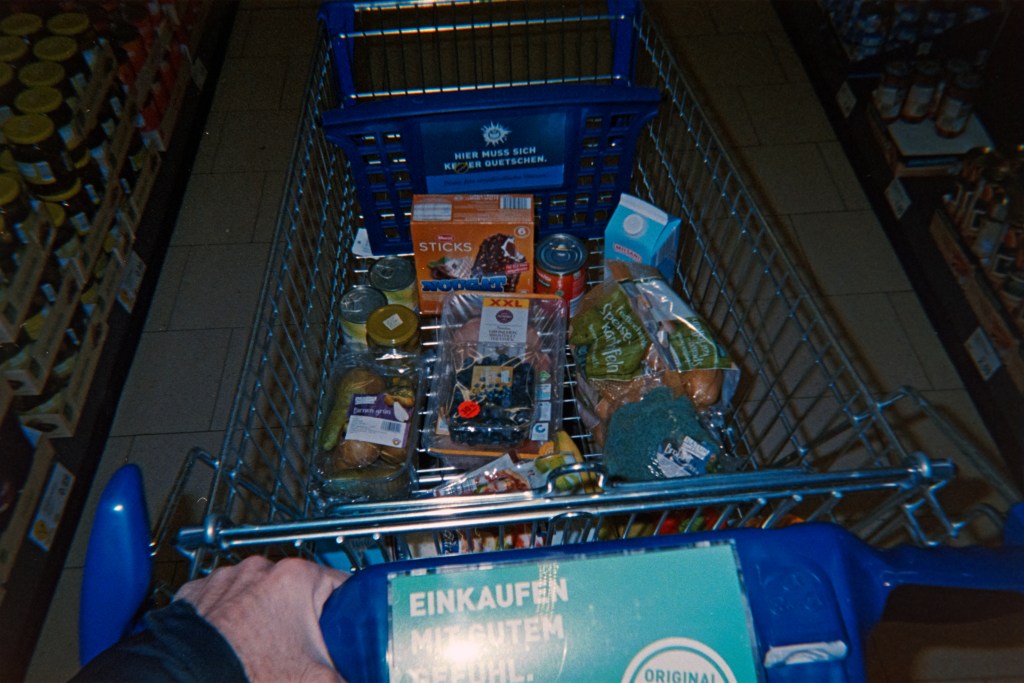
The next picture shows his shopping in the trolley in front of him. „I know that these things – everyday life or household – are part of our lives. We always repeat things. Actually, in a day there are only a few things that are new. Otherwise, it’s all old things that we repeat.“ I ask him how he feels about it; if he wishes it were different. He reflects upon it. „It’s actually okay, but yes, I do wish for new things sometimes. But sometimes when something new happens or I have to do something new, I think, ‚Okay, why is that? I’m not up for it,’“ he laughs. „I might make things worse for myself, I don’t just accept, ‚Okay, this is how it is, you have to do this‘ or ‚You wished for this yourself. You have to do this.’“ Sometimes he finds it hard to accept these changes. He laughs and says, „I think I’m a bit lazy“. Most of the time, however, he overcomes these thoughts and does the things because he knows „I feel better afterwards“.
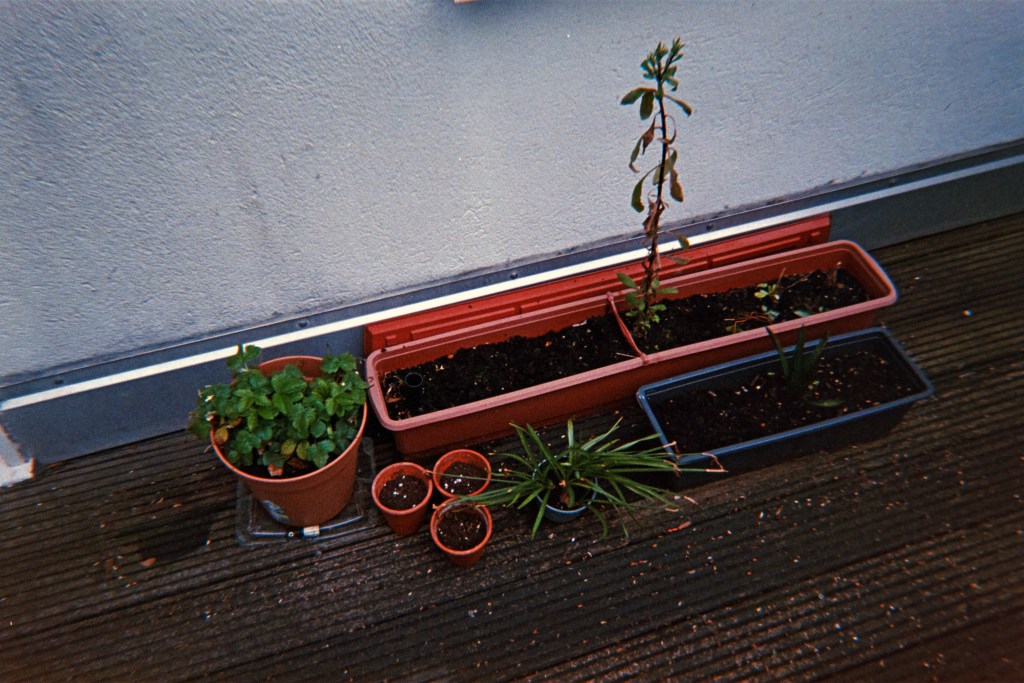
He pauses, pulls his mobile phone out of his pocket and answers it. He talks briefly in Farsi, laughs a lot and hangs up again. „Sorry, that was my sister,“ he explains. „Did she wish you a happy birthday?“ – „Yes, again, she already congratulated me once in the morning, now again.“ Because today is his birthday, he brought a birthday cake to work, he tells me now. He likes to bake – „When you’re alone, you have to,“ he adds. I ask him if he cooks more Iranian or German dishes. „It’s a mixture. I try to combine everything.“ Are there things he misses about cooking here in Germany? „Some things I always bring when I’m in Iran, but for example here,“ he points to the small Iranian shop diagonally across from where we are sitting, „There are always Iranian supermarkets.“ – „And what do you bring?“ – „Herbs, for example. Sometimes we use some herbs that are not available here.“ – „And is there something that is not available in Germany that you miss to eat?“ – „Yes. I don’t know if I’m saying it right, but there is a kind of mulberry, they are very big, dark black and delicious, they are a specialty in Iran. But I saw on the internet that you can buy the plant. But you need a piece of ground. Back when I was a child, my grandfather – well, they lived in the village. And around his house there were quite a lot of trees and there he also had two of these mulberries, they were very tasty.“ The grandfather is dead now.
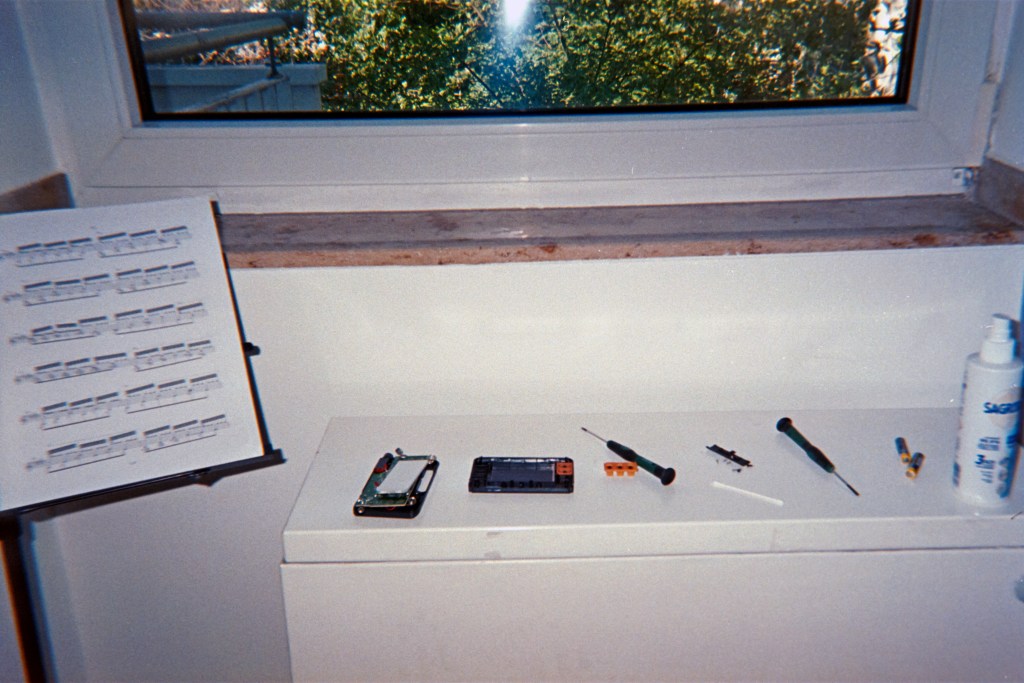
The next picture is lying between us and shows a tuner that he has taken apart to repair. He has been playing classical guitar for ten years. I ask if he has played other instruments before. In primary school he learned santur, a Persian stringed instrument where the strings are struck with a little hammer. He shows me a Youtube video on his mobile phone. He’s playing for a few years, but then he wants to do something else. „When I was younger and not working, I used to ask my father, ‚Can you buy this instrument for me?‘ and he always said no.“ – „Why?“ – „He was like, if you want to learn something, you can continue with santur.“ – „Because you started it and he told you to finish it, or why?“, I inquire. „Santur he liked himself. And he told me, ‘If you get good grades, I’ll buy a santur for you.‘ I did that, yes. When you are a child or younger, you just do that. And he also started learning santur with me. But as an adult, he quickly gave up. And I just learnt a bit more, but after that I didn’t want to.“ – „And then you just bought yourself a guitar at some point when you were older?“, I ask. The path to the guitar was not so direct. Before that, he looks at other instruments: Violin, electric guitar. Eleven years ago, when he was working as a lighting technician in a concert hall, he listened to many different instruments and finally decided on the guitar. Actually, he wanted to learn flamenco guitar, but his sister advised him to start with classical guitar first and then switch later. By now, he knows the differences between the two musical styles are very big when it comes to playing. „Maybe I should start with that“ – „Yeah, maybe as your next project“, I counter. „No, should have back then, I mean.“ – „Oh right, you mean back then! But you can always start something new, switch again.“ – „Yeah, but I always think after ten years of investing time into the instrument, it’s not worth just leaving it.“ I ask him if he only plays alone or also with other people or at gigs. „No, I play alone all the time, at home.“ – „And do you practise often?“ – „I try to practise every day. But I only do an hour. It’s not bad, but it’s not good if you want to learn real and great pieces.“

The next picture was taken at the Thursday Play & Talk meeting. He has been going there since 2020; M’s supervisor at the time had read about it on the internet and sent it to him as a tip. „It’s easy to talk, you know?“ I ask him if he finds it easier to speak in that context. „A foreign language is always hard to speak, but when you talk about everyday things, you can speak easier and with more feeling and maybe more attention. But that is partly good and partly bad. At work it’s different, you always have to speak in new situations or maybe ask something, you know, it’s not always the same. Both have advantages and disadvantages.“ Besides the weekly meeting, the group sometimes does things together, goes on excursions.
I ask him which other people there are in his life, with whom he meets or exchanges ideas. Who are the people he talks to when something is bothering him. M thinks. „In everyday life?“ I nod. „My parents, my sister, sometimes friends. Or co-workers.“ I ask him if he is someone who talks about things with other people or prefers to work them out by himself: thoughts, problems, worries, but also positive things. Again he’s thinking. „I think I sort everything out on my own. I don’t talk about my things or problems with others.“ – „Has it always been like that?“ He is silent for a moment. „I don’t know, but ever since I can remember, yes.“ I ask if his parents are similar in their communication, keeping a lot of things to themselves. „I think maybe in my family we didn’t talk that much, you know? And…“ he reflects, „meeting place for us was maybe the TV. We didn’t talk to each other.“ – „And is that okay or do you sometimes wish you talked or could talk to people more? „, I ask, „Or is that just the way it is?“ Again he pauses for a moment. „It’s both. Yeah, you know, sometimes I want to talk more, for example, with others about – I don’t know, different things. But sometimes maybe not. When I’m alone, maybe it’s easier for me.“ M tells me about an article he read yesterday. One of the things it talked about was that from the age of 30, you spend more and more time with yourself, alone. „That’s why you have to learn to love yourself and spend a lot of time with yourself. That’s why being alone might not be a bad thing.“
 Projekt "Perspektive(n) Mensch"
Hinterlasse einen Kommentar