Triggerwarnung: FGM, Vergewaltigung, Tod, Suizid
Gideon und ich treffen uns in einem Park. Bis zu diesem Zeitpunkt weiß ich kaum etwas über ihn. Seine Nummer habe ich von einer Mitarbeiterin der Ehrenamtagentur, bei der er sich vorgestellt hat, weil er sich gerne engagieren möchte. Ich schicke ihm eine Nachricht, erzähle von dem Projekt und frage, ob er Interesse hat, teilzunehmen. Zwei Mal treffe ich ihn kurz bei sich zuhause; einmal, um ihm die Kamera zu geben und einmal, um sie abzuholen. Als ich nun in den Park komme, sitzt er bereits auf einer der Bänke. Er trägt ein gebügeltes Hemd und lächelt zurückhaltend, als ich mich zu ihm setze.
Ich hole die Fotos aus meiner Tasche und frage ihn, wie das Fotografieren für ihn war. Er hat zum ersten Mal überhaupt eine analoge Kamera in der Hand gehabt, erzählt er lachend. Da er sonst immer nur mit seinem Handy fotografiert, war das Fotografieren mit der Kamera – nicht direkt sehen zu können, wie das Bild geworden ist – sehr ungewohnt für ihn.

Wir schauen uns das erste Foto an: Ein Bild aus dem Zugfenster heraus, in Essen West, auf dem Weg nach Duisburg, wie er mir jetzt erzählt. Ich frage ihn, ob er Freund:innen in Duisburg hat oder warum er dort war. „No, I was going somewhere, I was just trying to go out. To see what is there.” Wie lange lebt er bereits hier in Essen, frage ich jetzt. Sieben Jahre. „But you know, the life here isn’t easy. Before, they didn’t allow us to go to school. That’s why my Deutsch is only okay. The difficult for me here is, they don’t allow me to work, they don’t allow me to go to school, they don’t allow me – always they give me stress.” Gideon hat eine Duldung, hat deshalb keine Arbeitserlaubnis. Ich frage ihn, wie er seinen Tag gestaltet, wenn er nicht arbeiten oder zur Schule gehen kann. „Normally I go out, if I don’t have appointment, I have to go out. Because I have depression, so my psychologist advised me to go out. To find something to do by myself. If the state doesn’t allow me to work, I have to find something to do by myself. So sometimes I just go out. Maybe Düsseldorf, Cologne. The 9-Euro-ticket is – when it came, I was able to go many places, have some time to see.”
Wir sprechen über seinen Aufenthaltsstatus, darüber, warum er in Duldung lebt. „First of all, they reject my case because they say I’m from Ghana. Because they say there is no problem in Ghana. But me for instance, I had a case in Ghana, that’s why I left Ghana and I came here. Through the case, I got emotional trauma. So I have my doctor in Bochum. She wrote everything for the Ausländerbehörde that because of my case, they should allow me to stay here. But Ausländerbehörde says no, they don’t accept because I’m from Ghana. So Ghana people, they’re not allowed to stay in Germany. So they want to deport me. They are requesting for my passport and then to deport me.” Ich frage ihn, wie es ihm mit der drohenden Abschiebung geht, ob er Angst hat. „Yes, I’m scared. Sometimes I feel like to kill myself. But because of my psychologist – you know, every week I have to go to her. Most of the time every week. If I don’t go there maybe she is on Urlaub. But every week I visit her for therapy.” – „Do you feel it helps to talk to her?”, frage ich. „Ja ja ja ja ja!” Mit der Therapeutin spricht er auf Englisch. „I know English because I went to school in Ghana. So English isn’t too difficult. I didn’t go to the highest level but if I meet people, I can express myself to them. They understand me and I understand them.” Aber gibt es Dinge, die er nur auf seiner Muttersprache ausdrücken kann, frage ich nach. „Ja ja ja ja ja! You know, your language is your language. You can express yourself in every way.” Trotzdem ist Gideons Therapeutin eine große Stütze in seinem Leben. Es ist die Therapeutin, die den Kontakt zu der Ehrenamtagentur herstellt, bei der er sich vorgestellt hat. „Because I told her that I’m always at home, I don’t have anything to do. She said that she would help me find some people who I can talk to. So she has tried her best. But she doesn’t know the reason why the Ausländerbehörde doesn’t accept her report.” Die Therapeutin hilft ihm auch, einen Anwalt zu finden. Vor knapp anderthalb Jahren hat dieser für Gideon beim BAMF in Düsseldorf einen Antrag eingereicht, doch sie warten immer noch auf eine Antwort vom Gericht. „But still, Ausländerbehörde wants to deport me. Next week Friday I have to go to Ausländerbehörde. But my fear is much.”
Gideon ist 15, 16 Jahre alt, als er Ghana verlässt. Er kommt aus dem Süden des Landes, seine Freundin aus dem Norden. Im Norden, erzählt er mir, wird weibliche Genitalverstümmelung praktiziert. Als seine Freundin beschnitten werden soll, fliehen sie zusammen. „They wanted to cut her clitoris, so we had to run away. We came to Libya. Even though I’m young, my body was strong. We came through Libya. My girlfriend couldn’t survive, she died.” Obwohl es ihm sichtlich schwerfällt, erzählt er mir, was passiert ist. „When we came to Libya, the armed robbers met us. The women, they rape them, they beat them. Through that she died.” Nach ihrem Tod will er zurück nach Ghana. Doch die Familie seiner Freundin droht, ihn zu töten. „You know, the family said I shouldn’t come back. If I come back, they will kill me.” – „Because they think it’s your fault?”, frage ich. „They think it’s my fault. Because of that I lost my mother, I lost my sister.” – „How?” – „My mother went to the farm. They found her. Some people had beaten her. By the time they found her, they sent her to hospital and she died.” Hatte die Familie seiner verstorbenen Freundin damit zu tun? „We didn’t know, but if somebody threatens you and you die, definitely it’s them.” Die polizeiliche Aufklärung in Ghana sei schwierig, erklärt Gideon mir. Immer wieder verlangt die Polizei Geld. Am Ende werden die Ermittlungen einfach eingestellt. „The same happened to my sister. My sister died early in 2016.” Drei Monate, nachdem er in Deutschland angekommen ist, wird sie getötet. Wie seine Mutter wurde sie misshandelt aufgefunden. „So my family’s life there is dangerous.“ Als ihm klar wird, dass er nicht zurück nach Ghana kann, entschließt er sich nach Europa zu gehen und dort Asyl zu suchen. „I come as a refugee to seek asylum to protect my life. That’s why I came to Europe.” Doch sein Asylantrag wird abgelehnt. „I explained everything to Ausländerbehörde, my doctor wrote everything, but they don’t believe it. I don’t have any evidence.” Wir sprechen über seine Situation, darüber, wie sein Leben sich verändert hat. „Before that, life wasn’t too bad for me in Ghana. It was a little bit good. But because of this case, because of all those things, I had to come here.” Ich frage Gideon nach seiner verstorbenen Freundin. „Was she your first girlfriend?” – „Ja! She was my first and last.” Sein Verlust und das, was passiert ist, tun mir sehr leid, sage ich, und kurz sprechen weder Gideon noch ich. Dann sagt er: „It’s part of life, you know? But really I hope to find a better life here.”
Ich frage, ob er oft daran denken muss, was passiert ist. „Ja, I think about it. That gave me trauma. Before, it was very bad. So my doctor has put me in therapy. That’s why every week I have to go there. Because she understands my situation, that it was very terrible. I’ve been in Klinikum. I stayed there for three days. I’ve been with different types of psychologists, and they all told the Ausländerbehörde to allow me to stay here. But they say no, they don’t allow me.” Bei ProAsyl erhält er rechtliche Beratung. Doch der Mitarbeiter, der sich seinem Fall annimmt, fürchtet, dass seine Chancen schlecht stehen. „He told me that Ausländerbehörde would not accept my case. He told me the truth. No matter what, because I’m from Ghana, they will never accept my case. They have stated that we don’t have problems in Ghana. So no matter how your case is.”
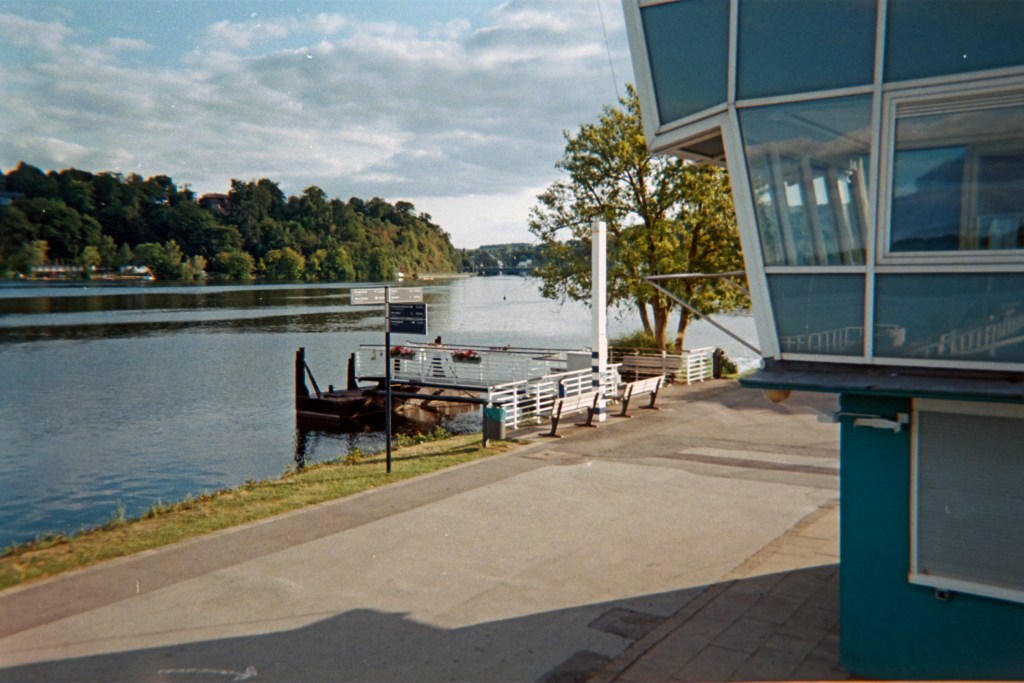

Wir wenden uns wieder den Fotos zu, schauen uns das nächste Bild an. Es zeigt die Regattabahn. „I went there and saw the environment is very nice.” Die Geflüchtetenunterkunft, in der er zuletzt lebte, bevor er in seine eigene Wohnung gezogen ist, befindet sich in der Nähe von dort. Weil er die Umgebung so schön findet, wollte er wiederkommen, um dort ein Foto zu machen. Seit es das 9-Euro-Ticket gibt, unternimmt Gideon viele Ausflüge. „With the 9-Euro-Ticket I‘ve been in Düsseldorf, Duisburg, Bochum, Dortmund. In Cologne I have not yet been but I’m trying my best to go there this week. You know, when you’re there, you see many things, different types of people. Summer has come, people do different kind of activities, a lot of things. You feel like, okay, now it’s okay. So when I go out, I feel very comfortable. I forget my stress.” Ich frage ihn, ob es ihm leichtfällt, fremde Menschen anzusprechen. „It’s very difficult. You know, you have some people, when you talk to them, they don’t even listen to you and they will pass by. If I go out and I decide to talk to people, I meet the first one and the person rejects me, it will be very difficult for me to go to another after. If I meet a person and the person didn’t get close to me, it will be very difficult for me to talk to the person.” Hat er Freund:innen hier in Essen, mit denen er etwas unternehmen kann? „Sometimes on the weekends I have my friends from Africa. We meet and we talk. But you know, everybody has their problems. So not always you get to talk to them. But most of my friends are in Berlin or other places, we only speak on the telephone. In Essen I don’t have much friends.”
Das nächste Foto, das wir uns anschauen, zeigt Häuser am Ufer des Baldeneysees. Diese Häuser direkt am Wasser findet er besonders schön. In seiner Heimat Ghana werden Flüsse und Seen anders genutzt als der Baldeneysee, erzählt er mir. Ich frage ihn, wo in Ghana er aufgewachsen ist. In einem Dorf, erzählt er, kleiner als ein Dorf, eigentlich. „Five, ten people, they have their houses. Typical village. You know, my father was a farmer, so they went there to do cacao. You know, it’s bush, you have to stay there. So you are from the bush and you come back to the nearby big town to go to school and all those things. All my lifetime I stayed in that village. So I like village more than cities”, er lacht. „It was nice. But if you were there, you thought it’s boring. But when I came here, I realised that the bush was very nice. A lot of things you see in the bush, in the city you don’t see it. And you know in the village the food is okay for you, you eat everything natural. In the city it’s very difficult to find this healthy food to eat. And you can go to somebody’s house, to go and eat there. A lot of places you can go and do things. In the city, you cannot do it. But in the village – let’s say if somebody is sick, you see all the villagers, they will gather there, they will try to find a solution for the person, maybe if they have to contribute money to give the person. But here: nothing.” Ich frage ihn, ob seine afrikanischen Freund:innen hier in Essen auch aus Ghana oder aus anderen Ländern kommen. „Ja, they are from Ghana, but because they have come here, they have learned the system here. So we don’t go to somebody’s house because it’s not the system here. When you came from Ghana, the mentality has changed here.”
„Do you miss home?”, frage ich Gideon. „Never. I just miss my family, but not the country. The country is no good.” – „Because of what happened?” – „Ja, because of what happened. And our politicians, they don’t care about the citizens. They only care about themselves. So when they are killing people, they just ignore it. If Ghanian people don’t have money, your case will not go anywhere. You know, here in Germany, the government gives you a lawyer to fight for your case. Ghana is not like that. So if you don’t have a lawyer and they kill your family member, they will not do anything about it. They will tell you: ‘Bring money, bring this, bring that.’ So if you don’t have money, they stop filing your case. So that made me not miss my country, no. But I miss my family. Especially my late mother. She died last year. I miss her very much.” Ich frage Gideon, ob er viel Kontakt mit ihr hatte. „Ja. The day she went to the farm and died, we talked. So her death was a shock, I was shocked because she was okay, we spoke, before she went to the farm. And later I didn’t hear from her. So, I was …”, er stoppt. „Sometimes I don’t – I try not to think about her. Because the more I think about her, my situation gets worse. So I try to forget everything about her.” Nach einer kurzen Pause frage ich ihn, ob sein Vater noch lebt. „Ja, my father is alive. He is alive.” Sind sie im Kontakt? „Ja, sometimes, but you know, he’s old so he’s not into mobile phones”, er lacht. „So maybe once or twice in a month we talk. Not like my mother. With my mother – everyday we spoke on the phone.”
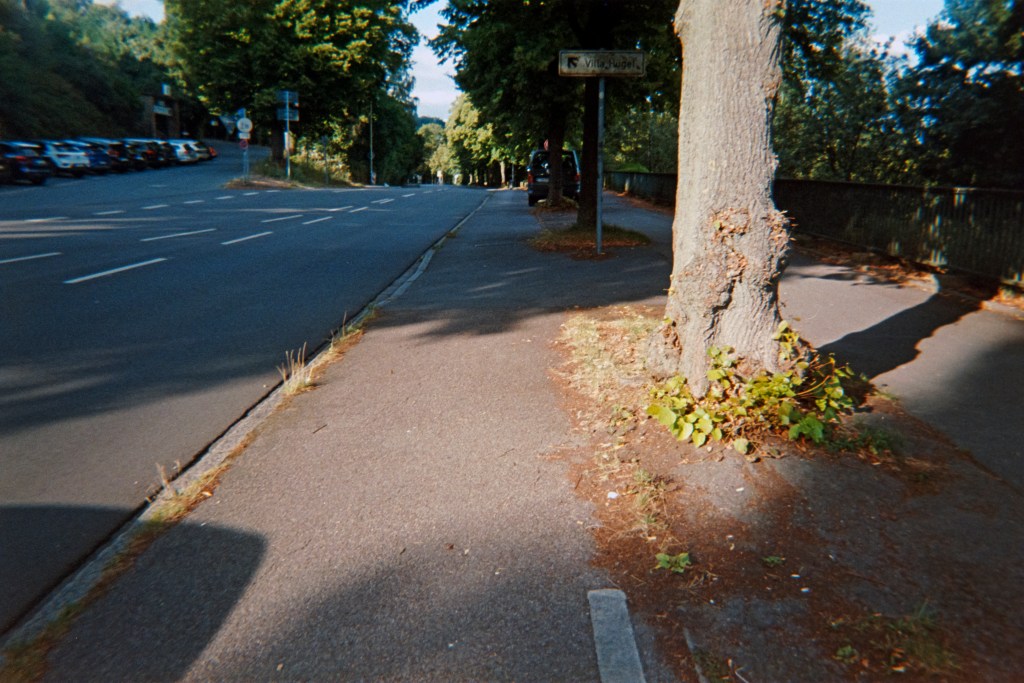
Auf dem nächsten Bild ist die Straße zu sehen, die Gideon gegangen ist, um zu seiner Unterkunft zu kommen. Damals verbrachte er viel Zeit am Baldeneysee. Zweieinhalb Jahre hat er in dieser Unterkunft gelebt, sechs Jahre in Unterkünften in Essen insgesamt. „All my time in Essen I lived in Heim.“ Ich frage ihn, warum er nach Essen gekommen ist. Das war nicht seine eigene Entscheidung, erzählt er. Als er in Deutschland ankommt, wird er nach München gebracht, dann nach Dortmund, nach Düsseldorf, nach Solingen, bis er schließlich nach Essen kommt, wo er registriert wird und seinen Asylantrag stellt. „It’s them who choose for us.“ Ich frage ihn, ob er lieber woanders leben würde. Wenn er könnte, würde er nicht in Essen wohnen, ja. Der Druck und Stress, den er von der Ausländerbehörde erfährt, sind zu groß für ihn.
Als Gideon in Essen ankommt, ist er zunächst für ein Jahr in einer Zeltunterkunft, wird dann in eine andere Unterkunft gebracht. Dort fängt er einen Deutschkurs an. Nach vier Monaten wird ihm wieder eine neue Unterkunft zugeteilt. Dieses Mal weit im Süden, in Schuir, in der Nähe des Flughafens. Seinen Deutschkurs kann er von dort aus nicht mehr besuchen. Drei Jahre lang ist er in dieser Unterkunft. „It’s a long time. But it’s part of life, you have to go through all these things.” In dieser Zeit ist er selten in der Innenstadt; eigentlich nur, um Lebensmittel einzukaufen. Die Unterkunft ist schlecht angebunden, weit weg. „I didn’t come out frequently, only just once or twice in a week.” Ich frage ihn, wie es ihm dort gefallen hat. „I liked the environment, but most of the workers I didn’t like there.” Warum, frage ich nach. „Because some of them were racist. Most of them were Arabic people, they value their people more than the Blacks.” Immer wieder gibt es unfaire und ungleiche Behandlungen. Gideon versucht, in eine andere Unterkunft zu kommen, wendet sich wiederholt ans Sozialamt. Schließlich wird er versetzt. In der neuen Unterkunft fühlt er sich sehr wohl; die Mitarbeiter:innen sind freundlich und unterstützend, helfen ihm schließlich, eine eigene Wohnung zu finden. „I love them, they were very good! Everybody there was good. They treat us like equal. They don’t say: ‘You are black, you are this or that’. But in Schuir the people were no good. I would say their boss was friendly, but the rest of them wasn’t good.” Ich füge hinzu, dass es wahrscheinlich kein guter Vorgesetzter war, wenn er das rassistische Verhalten der Mitarbeiter:innen nicht unterbunden hat. „Maybe it’s because we didn’t complain. If you don’t complain about something, how can the person know? You know in our situation we could not go there and complain. Because if you go there and complain, maybe you become the person’s enemy. So you have to live with it.” – „And you stayed there for three years?” – „Three years.”
Wir sprechen darüber, wie es ihm nun in seiner eigenen Wohnung geht, wie er sich fühlt, nachdem er so lange in Sammelunterkünften gelebt hat. Manchmal wünscht er sich, nicht allein zu leben, sondern gemeinsam mit einer Partnerin. Ansonsten ist er froh, sich endlich nicht mehr nach anderen Vorgaben oder Personen richten zu müssen. „You have lived in camp with two people, three or more. But now that I have my own flat, I have my freedom. The life is okay. Nobody will tell you: ‘Don’t cook at this time’, ‘Don’t do this’, ‘Don’t do that’. Here I can play music, I can do everything I want. So I feel comfortable here.”
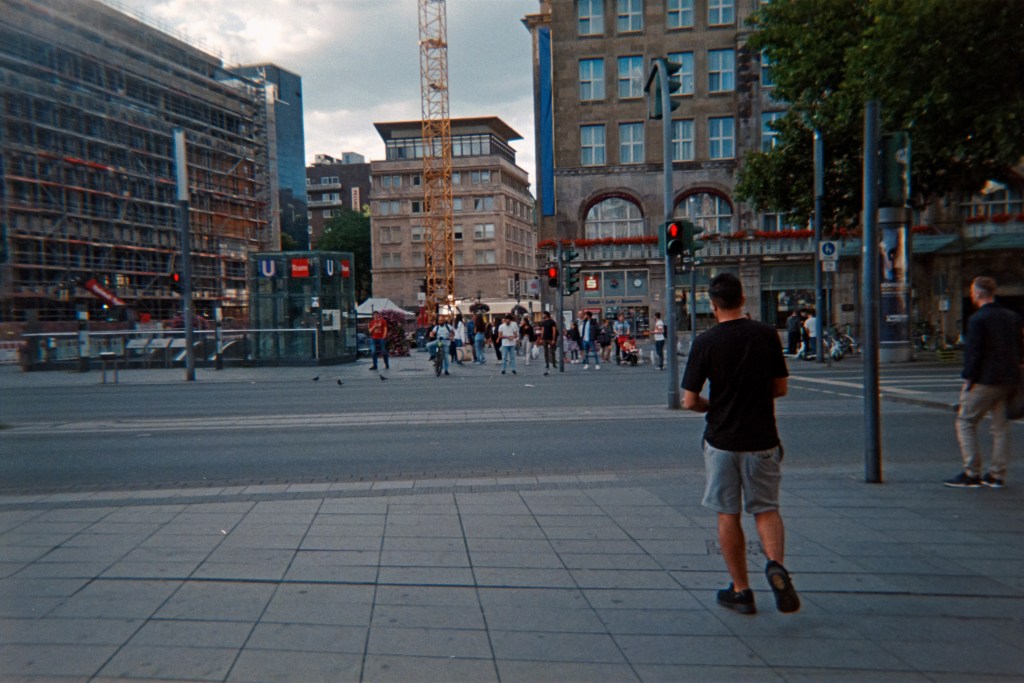
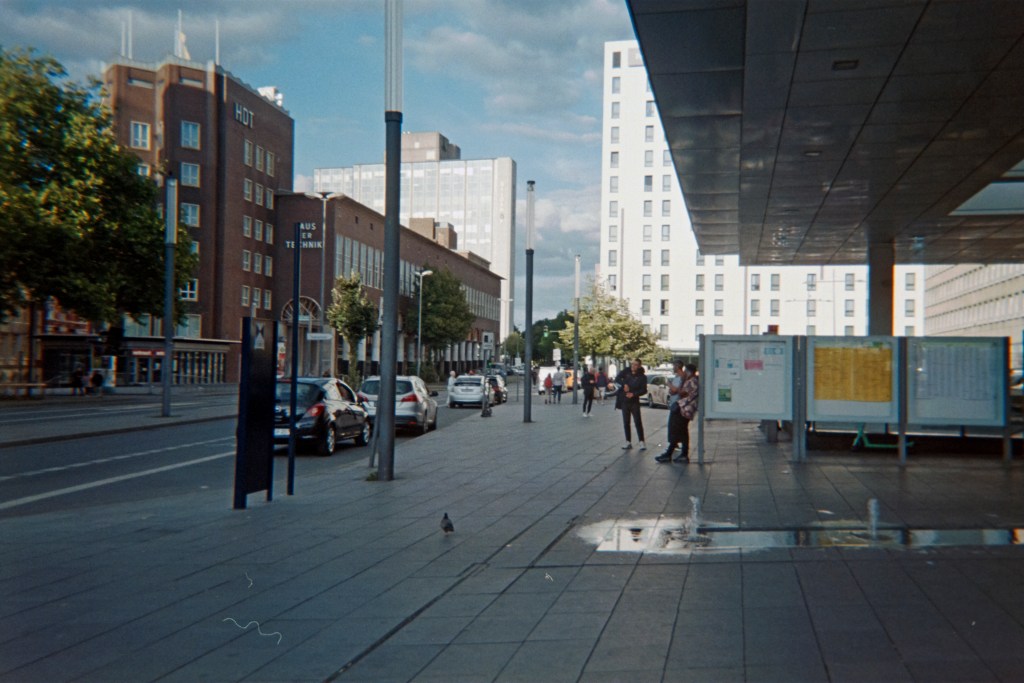
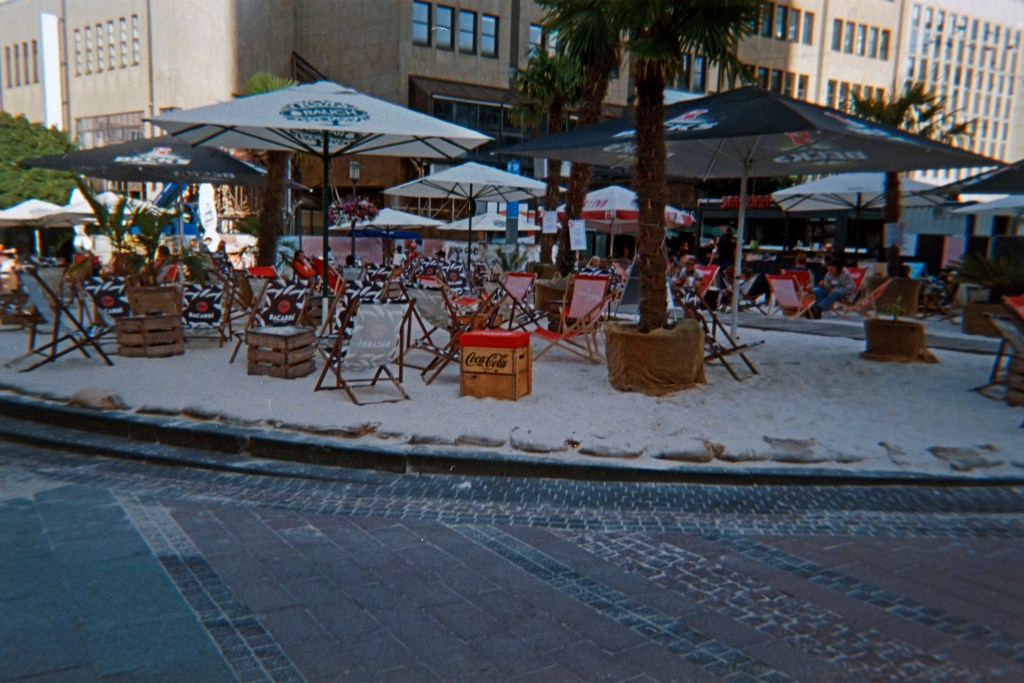
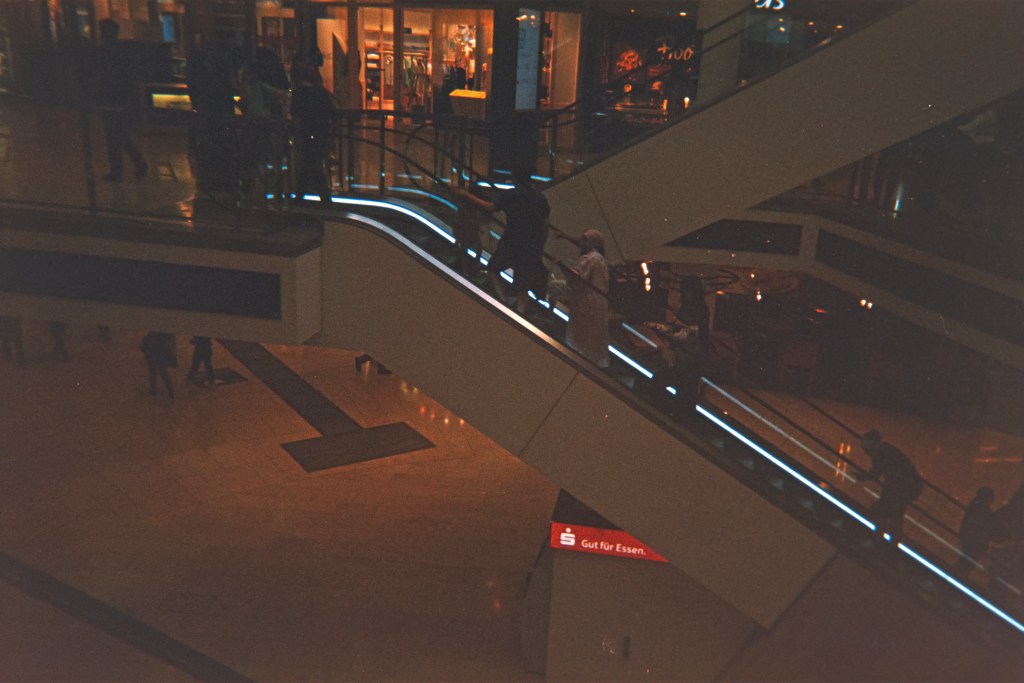
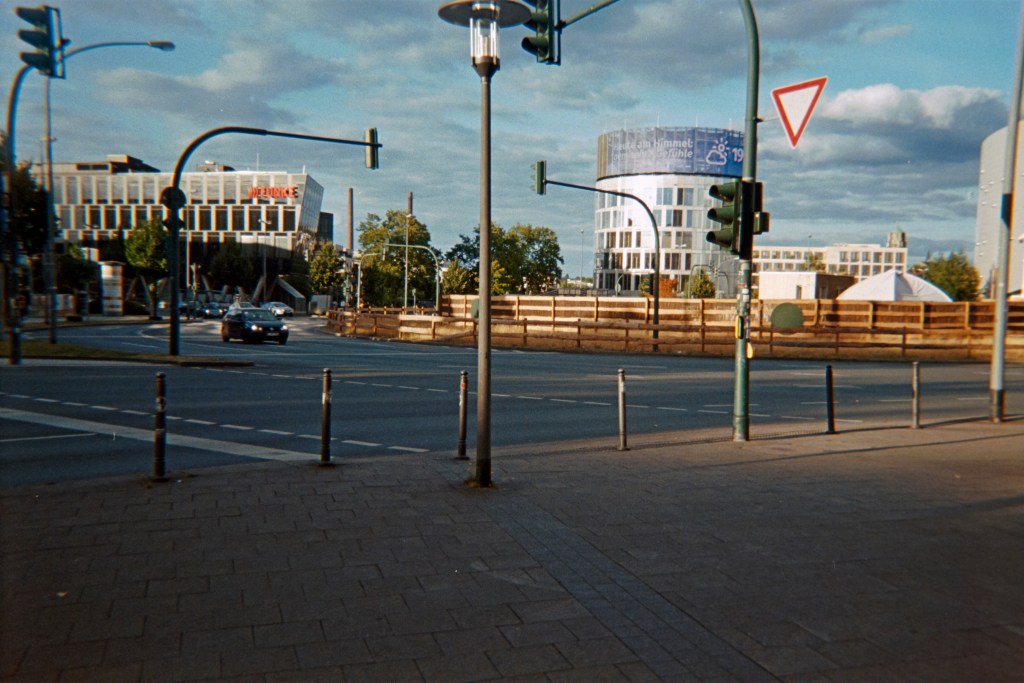
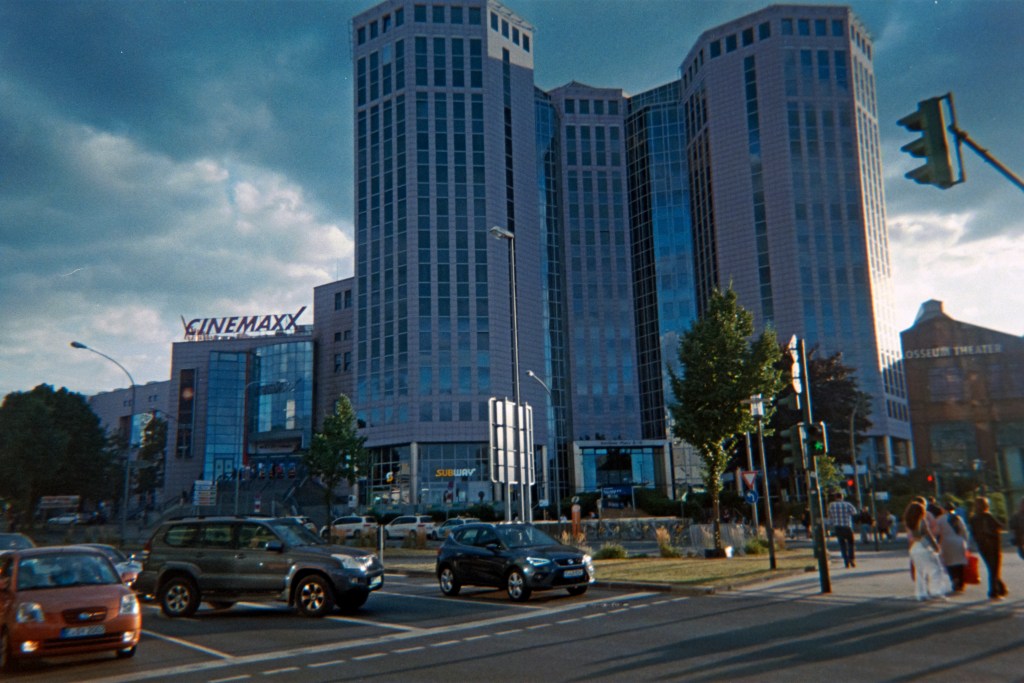
Die nächsten Bilder zeichnen seinen Weg nach, vom Essener Hauptbahnhof, durch die Innenstadt, über den Kennedyplatz, den Limbecker Platz. Hier geht er oft hin, schaut, ob vielleicht etwas runtergesetzt ist, was er kaufen kann. Er geht gerne im Stadtteil spazieren, ist gerne draußen. Als er hierhingezogen ist, hat er angefangen, Fußball zu spielen. Aufgrund seiner psychischen Erkrankung hört er jedoch wieder auf. Ihm fällt es schwer, sich verbindlich für das regelmäßige Training anzumelden, da er oft nicht weiß, wie es ihm an dem Tag geht. Wenn seine Symptome stark sind und es ihm schlecht geht, kann er nicht trainieren; die Aufforderungen, seiner Mitspieler, zum Training zu kommen, setzen ihn unter Druck. Eigentlich würde er sich gerne in einem Fitnessstudio anmelden, selbst entscheiden, wann und wie lange er trainiert. Allerdings weiß er nicht, ob seine Papiere bei der Anmeldung akzeptiert werden. „I don’t know, but I will try it and see.”
Ich frage ihn, ob er auch nochmal einen Deutschkurs machen möchte. „I decided to take it, but because of the stress I have been through, I cannot learn anything. Maybe one day it’s okay, I can focus, but then they send you a letter that will stress the whole of you, everything, you cannot do anything.” Er erzählt mir von einem Brief, den er am Wochenende von seinem Anwalt erhalten hat. Vor einiger Zeit, fährt Gideon fort, musste er zu einem Arzt, zu dem die Ausländerbehörde ihn geschickt hat. Dieser Arzt habe nun befunden, Gideon könne abgeschoben werden, teilt sein Anwalt ihm per Brief mit. Bei dem Gespräch mit dem Arzt stellt dieser Gideon keine Fragen zu seiner Traumatisierung oder zu den Symptomen, die er aufgrund seiner psychischen Erkrankungen hat. Trotzdem wird er für reisefähig befunden. Die Gutachten seiner Therapeutin sowie die der anderen Psychiater:innen aus der Klinik, in der er vor seiner ambulanten Therapie war, werden dabei außer Acht gelassen. Wenn er über die Ausländerbehörde und seine rechtliche Situation spricht, wirkt Gideon angespannt, verzweifelt. Er bemüht sich, trotzdem ruhig zu sprechen.
Ich frage ihn, was er sich wünschen würde, für seine aktuelle Situation und für sein Leben. „You know, in this life everybody needs a good life. If they’ll allow me to stay here, then I’ll have the energy to go to school to learn Deutsch. I will find something, maybe I’ll do an Ausbildung to do something to help the country to develop. So I depend on the German government to maybe to help me to get documents to stay here, so I can life a better life. So I can come out from my depression and all those things. That’s what I need. If not that, it’s very difficult. Because I always think about my situation, so my depression and my trauma go up. So I will not get the mind to go to school, to learn something. And always I think about committing suicide. Sometimes I feel like I’ve been neglected by everybody. They say the German people are good – how come they know my situation and still they say they will deport me? So I see they’re not ready to help me. They want me to go Africa. Sometimes this comes to my mind. My therapist always advises me to not kill myself because I have a better life in the future. That’s the only hope I have.”
Zurück zu allen Werken
 Projekt "Perspektive(n) Mensch"
Hinterlasse einen Kommentar